Weekend Watch: Visual Storytelling Lessons – What Filmmakers Can Learn from “Don’t Move” on Netflix
(You can learn anything from anything.)
Over the weekend, I watched “Don’t Move” on Netflix. What stood out to me wasn’t only the suspense—it was how much the film says without actually saying much at all.
“Don’t Move” may not have been a major mainstream hit, but what can you say about its unique approach to suspense and horror? The film demonstrates how minimal dialogue and visual storytelling can carry a narrative. Rather than relying on traditional exposition, it communicates its story through body language, silence, and the surrounding environment, allowing the visuals to do much of the heavy lifting.
Creative Team Background
“Don’t Move” is directed by Brian Netto and Adam Schindler, who deliver a thriller that trades shadows and nightfall for something more arresting: survival in plain sight. The film opens with Iris (Kelsey Asbille), a grieving mother, preparing to end her own life — wracked with guilt over her son’s death. But in a dark twist, she’s interrupted by Richard (Finn Wittrock), a stranger who talks her out of suicide, only to abduct her moments later in broad daylight.
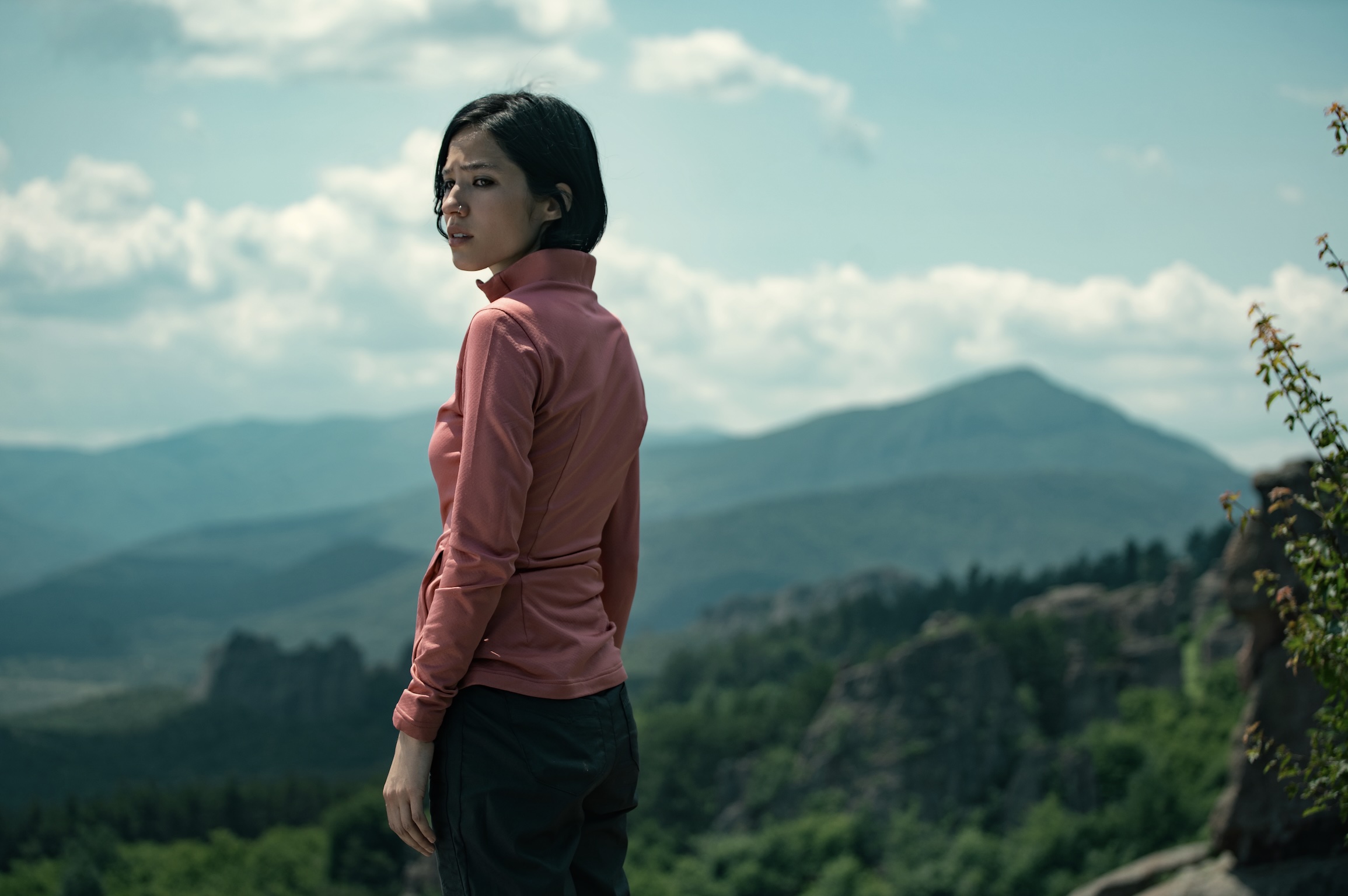
What follows is a relentless series of physical and psychological trials. She’s tied up the majority of the movie, dragged/rolling/crawling through forest terrain, and forced into rivers, finding them to be her only means of escape from her captor. She is hidden under shallow pits and furniture, trapped in a burning house and later forced into a rowboat, facing death. Cinematographer Zach Kuperstein doesn’t hide the violence in darkness—he confronts it head-on in the light of day, using the environment’s openness to heighten dread and exposure.
The screenplay by T.J. Cimfel and David White is spare and intentional, allowing the physicality of the performances to dominate. Asbille’s portrayal of Iris is an exploration of resilience: from a woman who once felt as though giving up was her only option, to one who discovers in the most extreme circumstances that she doesn’t want to die. The film resonates with those defining moments in life when, no matter how hard things get, something inside us refuses to give up. It’s that fierce, unyielding resolve—the feeling of ‘there’s no way I’m going down like this,’ even when staring down our greatest fears.
If you’re a new or aspiring filmmaker, this is one to study. “Don’t Move” relies almost entirely on visual storytelling: body language, facial expression, environment, and sound design all take center stage. Dialogue, when it appears, is sparse and deliberate.
Let’s unpack why this kind of storytelling can be powerful—and how you can start using it in your own work.
Visual Language Is the Heart of Cinema
From the beginning, cinema has been a visual medium. The earliest films—silent films—had no choice but to convey everything through images, movement, and music. Today, many filmmakers rely heavily on dialogue to explain plot and emotion, but “Don’t Move” reminds us of the strength in returning to the basics.
Throughout the film, we watch characters process fear, confusion, and resolve without a single word. A tense glance. A sudden stillness. A brief hesitation. A poker-faced fake-out. These small moments speak volumes—and they’re often more effective than monologues.
For filmmakers, this means trusting your actors, trusting your camera, and trusting your audience. Don’t over-explain. Direct your actors with intention and precision. Show us what’s happening internally by letting the external gestures carry that weight.
Let the Space Do the Talking
One of the most striking things about “Don’t Move” is how the environment functions almost like a character itself. The physical spaces in the film—sunlit forest with plenty of trees, but little cover in the daylight; rivers where you’re exposed and easily seen—build tension simply by existing.
That’s mise-en-scène at its best. Whether it’s a constructed set or a real location, every visual choice matters—how the space is framed, what elements are highlighted, and how the characters move through it. These tools can communicate theme, emotion, and even plot, often without a single word of dialogue.
Another key storytelling element is how the film uses the seclusion of the setting to heighten tension. Though much of the story unfolds in broad daylight, the environment still feels isolated—this isn’t the middle of suburbia; it’s the kind of remote location people escape to, where cabins and winding roads create a sense of being off-grid. Scenes shot inside a car also make powerful use of confined space, capturing both literal and emotional entrapment. These daylight sequences replace traditional darkness with the loneliness and exposure of being truly alone—physically and psychologically—where no help is coming.
Ask yourself: Is the location helping to tell the story, or is it just a backdrop? In “Don’t Move”, it’s the former. The environment is exposed and unforgiving, echoing the protagonist’s emotional rawness and the relentless danger she faces. There’s a lesson there.
Silence Isn’t Empty—It’s Charged
As a new filmmaker, don’t fall into the trap of filling every moment with music or dialogue, afraid that silence will feel like a void. But silence—or even just pulling back on sound—can be one of the most powerful tools in visual storytelling depending on your story.
When there’s no dialogue, you have options. Let ambient sounds take the lead: wind through the trees, the rustle of clothes, water moving nearby. Or go with a sparse score that lingers under the surface. In some cases, true silence can be the boldest move, sharpening the viewer’s senses and making every creak or sudden sound feel magnified.
Sometimes, the opposite works just as well—a jarring, overly loud noise that shatters the quiet. It can startle the viewer, snap them to attention, or mirror the character’s fear or disorientation.
It’s not about sound versus silence—it’s about using both with intention. When every sound (or lack of it) matters, the audience leans in—and that’s when they really start to feel something.
Emotion Comes Through Behavior, Not Just Words
Here’s one of the biggest takeaways: the most honest moments in film often come from behavior, not dialogue. In real life, people rarely say exactly what they’re feeling—especially when they’re afraid or vulnerable. They show it instead. Good actors understand this. Great directors use it.
In “Don’t Move”, characters are constantly communicating—just not verbally. A character’s stillness may signal terror. A subtle retreat could suggest a sudden loss of trust. The smallest gesture can hold tremendous emotional weight if your camera is paying attention.
This kind of emotional restraint creates a more immersive viewing experience. It pulls the audience in, gives them space to interpret, and respects their intelligence. As a filmmaker, when you “show, don’t tell,” you allow the story to live beyond the script.
Why This Matters (and Why It Works)
So why does any of this matter? Why go to the trouble of constructing scenes that rely so heavily on visual cues and nonverbal expression?
Because when you do it well, it:
- Transcends language barriers. Visual storytelling is universal.
- Draws your audience in emotionally. Viewers engage more deeply when they’re trusted to interpret.
- Increases rewatch value. Subtle storytelling rewards viewers who come back and catch what they missed.
- Makes you a better filmmaker. It forces you to think like a visual artist, not just a writer.
“Don’t Move” doesn’t try to dazzle with dialogue. It doesn’t try to impress with big set pieces or flashy exposition. Instead, it leans into the quiet confidence of filmmakers who understand the language of cinema—and trusts the audience to follow.
A Challenge to New Filmmakers
If you’re working on a short film, scene study, or even just learning how to direct actors, try this: write a scene with no dialogue. Use only visuals, sound, and body language to tell a story. Watch how much you can convey. Watch how powerful it becomes.
Better yet, watch “Don’t Move” again with the sound off. What do you see that you didn’t notice before? Then listen to a scene with your eyes closed. What do you feel from the silence, the subtle sounds, the breaths?
That’s filmmaking. That’s what it means to speak through images.
That’s why “Don’t Move”—quietly and confidently—offers one of the best lessons you might come across in a film you stumbled upon on Netflix one day, perhaps when you thought you’d seen everything else.