
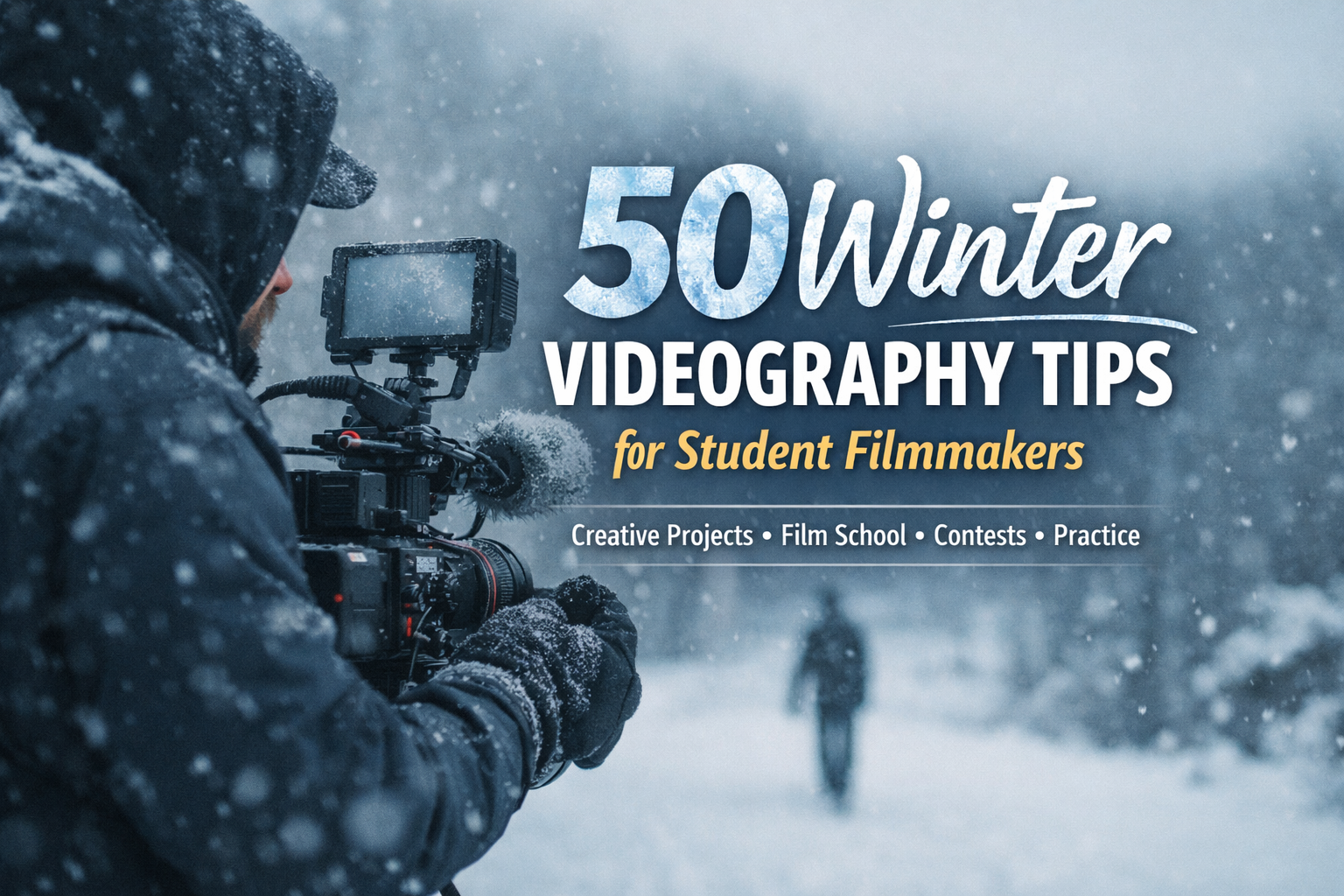
50 Winter Videography Tips for Student Filmmakers: Smarter Projects, Stronger Stories, Better Practice
Winter has a reputation among student filmmakers as a problem to work around. The days are short. The weather is unpredictable. Gear is harder to manage. People don’t want to stand outside and repeat takes.
But that reputation misses something important: winter quietly teaches discipline, intention, and visual restraint—three skills student filmmakers often struggle to develop early.
If you’re creating video projects for film school assignments, student film contests, portfolio work, or deliberate practice, winter can sharpen your craft faster than any other season. The constraints force you to plan. The light demands attention. The environment adds production value without adding budget.
These 50 winter videography tips are not recycled advice about shooting snow or “embracing the cold.” They’re built for students who want their work to feel considered, purposeful, and emotionally grounded.
Why Winter Is a Strategic Advantage for Student Filmmakers
Winter simplifies the frame. Locations lose visual clutter. Sound behaves differently. People move with intention. All of this works in your favor if you’re learning visual storytelling.
Instead of fighting winter, design projects that depend on it.
50 Winter Videography Tips
Story & Concept Development
- Write stories where silence matters.
- Let physical discomfort influence performance.
- Build narratives around waiting, transitions, or return.
- Avoid default “cozy” themes.
- Use weather as story pressure.
- Design scenes that work without exposition.
- Let clothing shape character behavior.
- Explore isolation without explaining it.
- Choose simple story arcs.
- Let time pass on screen.
- End scenes earlier than usual.
- Write for what’s available.
Composition & Visual Language
- Use wider frames than you think you need.
- Embrace negative space.
- Let subjects move slowly through frame.
- Compose with vertical elements.
- Use snow as a neutral backdrop.
- Underexpose slightly to preserve texture.
- Let skies carry mood.
- Avoid flat midday light.
- Use silhouettes intentionally.
- Hold shots longer than feels comfortable.
- Don’t over-stabilize.
- Let gray stay gray.
- Frame entrances and exits deliberately.
Sound & Atmosphere
- Record winter room tone everywhere you shoot.
- Capture footsteps as narrative elements.
- Use wind as punctuation.
- Let silence lead scenes before music.
- Record breath separately when possible.
- Notice how fabric muffles sound.
- Avoid over-cleaning audio.
Lighting & Exposure
- Use windows as primary interior light.
- Turn off overhead lights more often.
- Rely on practical lights for warmth contrast.
- Expose for faces, not snow.
- Let shadows fall naturally.
- Prioritize blue hour.
School Projects, Festivals & Contests
- Design projects shootable in one or two sessions.
- Limit locations intentionally.
- Use weather continuity structurally.
- Make winter essential to the concept.
- Choose themes audiences can physically feel.
- Prioritize emotional clarity over polish.
- Finish early to protect creative energy.
Skill-Building & Practice
- Shoot fully manual exposure.
- Return to the same location weekly.
- Limit yourself to one lens.
- Edit slower than usual.
- Review footage immediately.
Companion Checklist: Winter Videography Project
Pre-Production Checklist
- My project requires winter to function.
- The concept works without dialogue.
- I am using no more than three locations.
- I have a plan for weather changes.
- I accounted for limited daylight.
- Clothing affects character behavior.
- I identified at least one moment of stillness.
- The emotional arc is simple.
- The ending is achievable in available light.
- The project can be shot in 1–2 sessions.
Production Checklist
- I am exposing for faces.
- I am holding shots longer than usual.
- I am recording room tone.
- I am capturing footsteps and breath.
- I am using natural or practical lighting first.
- I am embracing negative space.
- I allow honest imperfections.
- I am monitoring batteries closely.
- I review footage briefly on location.
- I prioritize performance over coverage.
Post-Production Checklist
- I let silence exist before music.
- I avoided heavy color grading.
- I preserved natural contrast.
- I used winter sound intentionally.
- I cut scenes earlier than usual.
- I evaluated pacing emotionally.
- I did not “warm up” footage unnecessarily.
- The film feels lived-in, not styled.
- I watched the cut without sound.
- I watched the cut without picture.
Assignment Prompt: Winter as a Story Constraint
Objective: Create a short video project where winter is essential to the concept, not merely a backdrop.
Project Requirements
- Length: 2–4 minutes
- Genre: Narrative, documentary, experimental, or hybrid
- Maximum of three locations
- Dialogue optional
- Music optional
- Any camera allowed
Concept Constraints (Choose at Least Two)
- One uninterrupted shot of stillness
- Environment alters character behavior
- Weather affects the outcome of a scene
- Use of natural winter sound
- Story remains clear without dialogue
Reflection Questions
- Why did this project need winter to exist?
- What did winter make easier creatively?
- What did winter make harder?
- Which choice felt most intentional?
- How would this project change in another season?
Technical perfection is not the goal. Intentional decision-making is.