
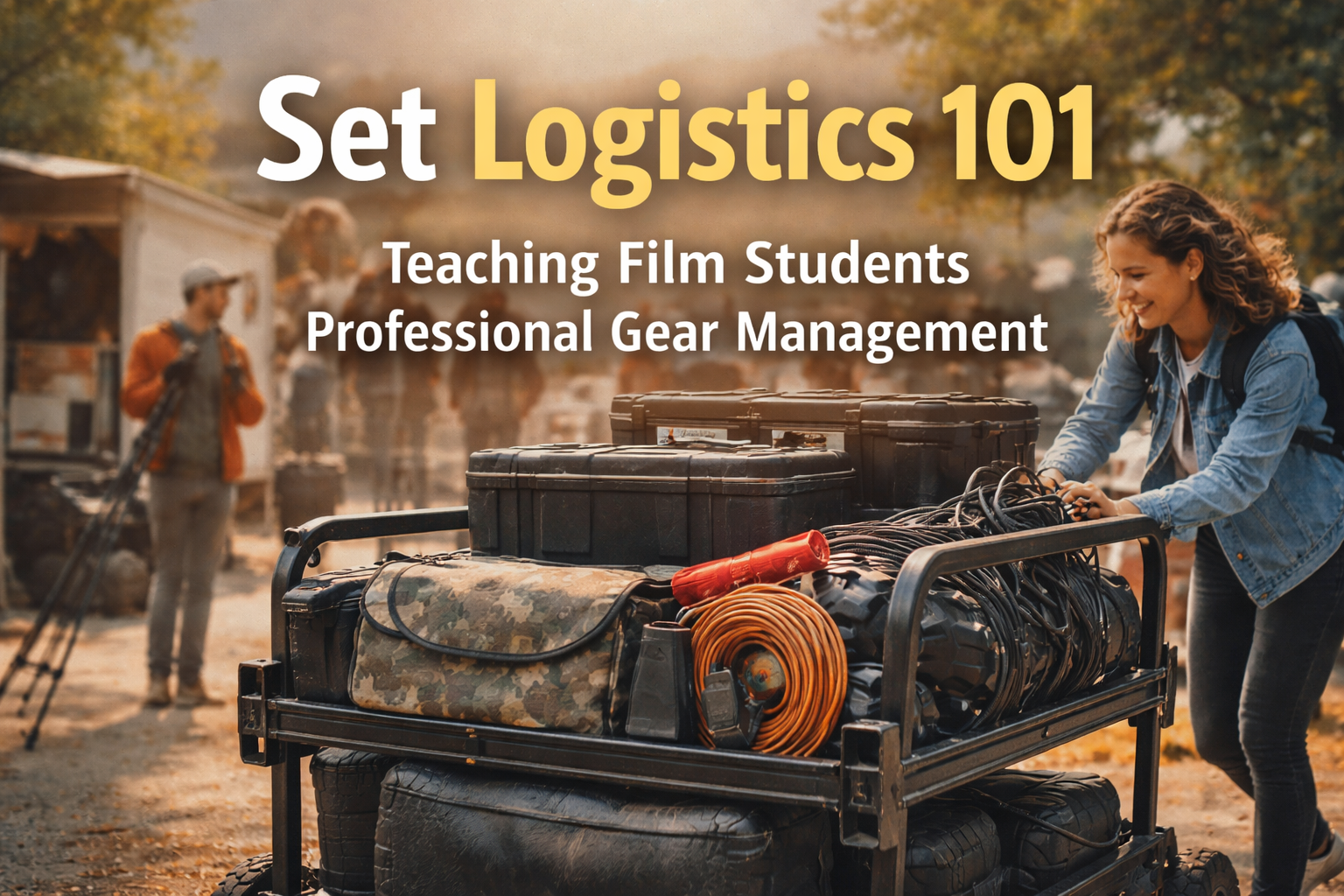
Set Logistics 101: Teaching Film Students Professional Gear Management
Film education spends a lot of time teaching students what to shoot and how to shoot it. Far less time is spent teaching them how to move, organize, and protect their gear—even though those skills quietly shape every production day.
On student film sets, poor logistics show up as wasted time, rushed setups, misplaced equipment, and unnecessary physical strain. On professional sets, logistics are treated as part of the craft.
This article explores why gear management and set logistics deserve a formal place in film education—and how teaching these skills prepares students for real-world production while making sets safer, calmer, and more efficient.
Why Set Logistics Matter More Than Students Realize
Students often see carts, cases, and transport systems as accessories—things you worry about once you “go pro.” In reality, logistics influence:
- How fast a crew can move between setups
- How much energy remains for creative decisions
- How safely equipment is handled
- How professional a set feels to collaborators
Disorganization doesn’t just slow production. It increases stress, shortens tempers, and pulls focus away from storytelling.
What Professional Sets Do Differently
On professional film and television sets, gear movement is intentional. Equipment has a place. Pathways are clear. Load distribution is planned.
This isn’t about having expensive gear—it’s about respecting the physical reality of production.
Students who learn this early transition more easily into professional environments because they already understand that logistics are not separate from creativity—they support it.
Teaching Gear Management as a Creative Skill
For educators, set logistics offer a powerful teaching opportunity. They reinforce:
- Planning over improvisation
- Team communication
- Physical sustainability on set
- Professional responsibility
When students understand how gear flows through a set, they become more thoughtful filmmakers—and better collaborators.
Common Logistics Problems on Student Film Sets
- Gear scattered across locations
- Repeated trips back to vehicles
- Overloaded backpacks and unsafe carrying
- Lost or damaged equipment
- Fatigue before the creative work even begins
These problems are rarely caused by lack of effort. They’re caused by lack of systems.
Introducing Professional Standards Without Overcomplicating
Teaching logistics doesn’t require turning student sets into studio replicas. It requires introducing simple, scalable habits:
- Designating a central gear hub
- Assigning responsibility for equipment movement
- Planning load order before the shoot day
- Using carts or transport systems instead of carrying everything by hand
Professional tools—such as production carts used across the industry, including solutions from Krane Carts—exist to support these habits, not replace them.
The lesson isn’t about brand loyalty. It’s about understanding why professionals prioritize efficiency and physical sustainability.
Why This Matters for Student Health and Longevity
Film production is physically demanding. Students often underestimate how quickly fatigue affects judgment, communication, and morale.
Teaching smarter gear movement reduces:
- Physical strain and injury risk
- Mental overload early in the day
- Burnout during long shoots
Sustainable practices help students focus on storytelling—not survival.
Companion Classroom Assignment: Set Logistics in Practice
Assignment Objective
Students will analyze how gear management affects efficiency, safety, and creative focus on a film set, then propose a practical logistics plan for a student production.
Assignment Parameters
- Format: Written plan + reflection
- Length: 600–900 words
- Project Type: Narrative, documentary, or multi-camera shoot
Student Tasks
- Describe a past production where logistics created stress or delays.
- Identify three moments where better gear organization would have helped.
- Design a simple gear movement plan for a future shoot.
- Explain how this plan improves safety and efficiency.
- Reflect on how logistics impact creative decision-making.
Evaluation Criteria
- Clarity of logistical thinking
- Realistic solutions for student-scale productions
- Understanding of physical and creative sustainability
- Connection between logistics and professionalism
Why Teaching Logistics Is Teaching Respect
Respect for gear. Respect for bodies. Respect for time. Respect for collaborators.
When students learn professional gear management, they’re not just learning how to move equipment—they’re learning how to run a set responsibly.
Good logistics don’t call attention to themselves. They make better filmmaking possible.