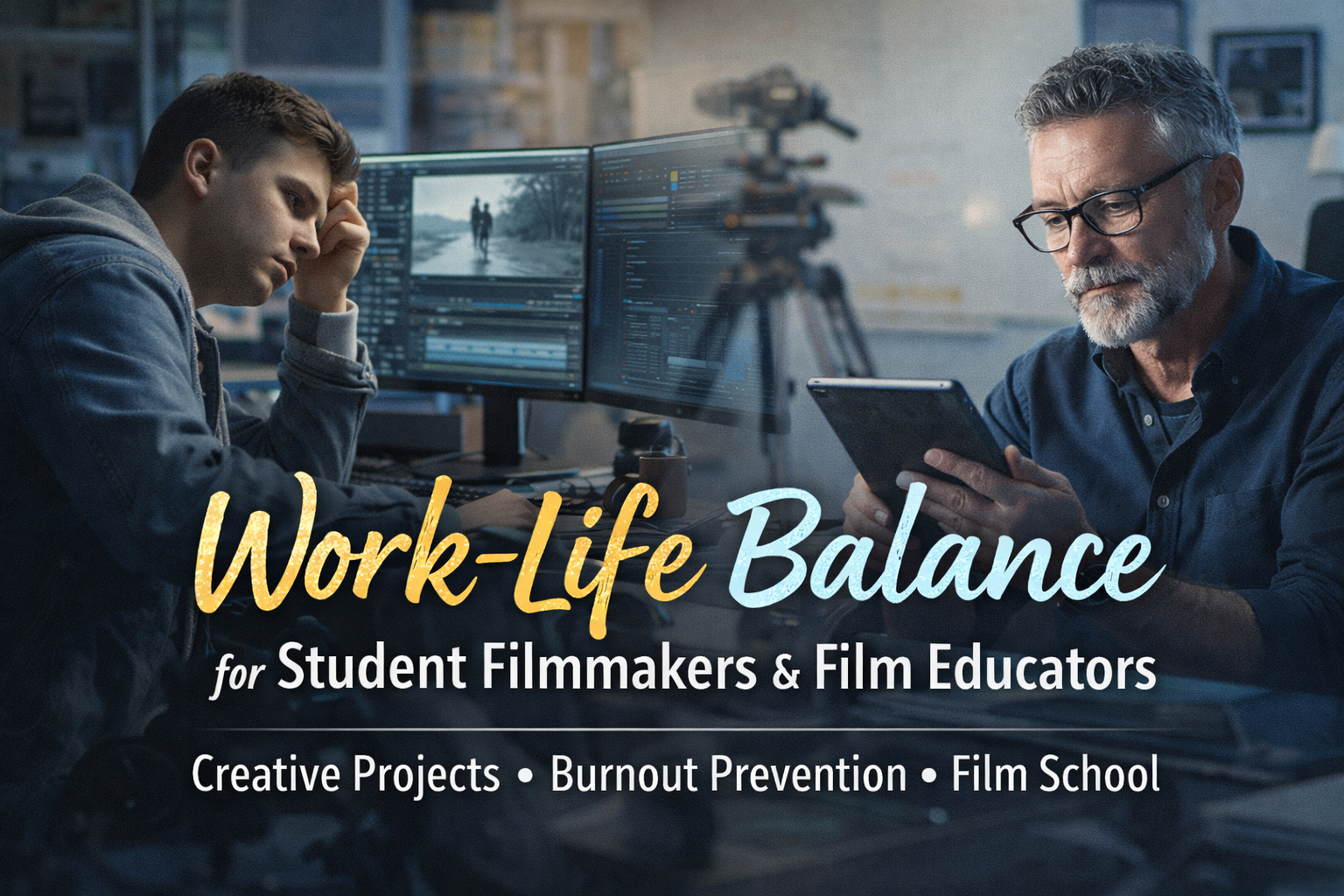
Work–Life Balance for Student Filmmakers and Film Educators: Sustainable Habits in a Burnout-Heavy Field
Film culture has a quiet problem it doesn’t like to admit: exhaustion is often mistaken for commitment.
For student filmmakers, the pressure shows up as all-nighters, missed deadlines in other classes, and the belief that if you’re not overwhelmed, you’re not trying hard enough. For film educators, it appears as endless feedback cycles, emotional labor, and the unspoken expectation to be constantly available.
Work–life balance in filmmaking isn’t about doing less. It’s about working in a way that doesn’t hollow you out before your career even begins and achieving a true Work-Life Balance. Understanding the importance of Work-Life Balance will set you up for long-term success.
Understanding the concept of Work-Life Balance is crucial for those entering the demanding field of filmmaking.
Emphasizing Work-Life Balance can lead to a more fulfilling and sustainable career in filmmaking.
Embracing Work-Life Balance is essential for maintaining creativity and passion in your filmmaking journey.
This article focuses on sustainable creative habits for film school environments—habits that help students finish projects without burning out and help teachers guide them without absorbing that burnout themselves.
Why Film Education Makes Work–Life Balance Harder
Filmmaking combines three factors that complicate balance:
- Irregular schedules
- High emotional investment
- Subjective evaluation of creative work
Unlike a traditional academic assignment, a film project never truly feels finished. There is always another cut, another adjustment, another idea. This ambiguity can be creatively freeing—but mentally exhausting.
For students, it leads to overworking without clarity. For educators, it leads to over-giving without boundaries.
For Student Filmmakers: Sustainable Habits Without Losing Ambition
Separate “Project Time” From “Thinking Time”
Mental rehearsal, anxiety, and constant ideation drain energy just as much as editing or shooting. Build intentional breaks where problem-solving is off-limits.
Stop Equating Suffering With Seriousness
Long hours do not automatically produce better films. Exhaustion narrows creative choices and increases indecision.
Schedule Around Energy, Not Availability
Plan creative work during high-energy periods and technical tasks during low-energy windows. This is time management—not laziness.
Limit Revision Rounds on Purpose
Decide in advance how many cuts you’ll allow and which feedback matters most. Professionals do this to protect both clarity and sanity.
Protect One Non-Film Identity
Maintaining an identity outside filmmaking helps critiques feel informational rather than personal.
For Film Educators: Supporting Students Without Absorbing Burnout
Model Boundaries Clearly
Students learn balance more from what instructors do than what they say. Visible boundaries are instructional.
Replace Urgency With Clarity
Clear expectations reduce panic-driven overwork and emotional spirals.
Normalize Imperfect Work
Reward intentional decisions, not just polished outcomes. This teaches sustainability.
Create Structural Pauses
No-feedback weeks, reflection assignments, or process check-ins prevent burnout escalation.
Stop Being the Emotional Processing Center
Caring does not require self-erasure. Referral and boundaries are part of ethical teaching.
Shared Practices for Healthier Film Education
- Define productivity as decision-making, not hours logged
- Build reflection into projects, not just critique
- Discuss burnout openly without glamorizing it
- Design assignments that fit real student lives
- Remember that film careers are long
Work–life balance does not weaken filmmakers. It protects their ability to keep making work.
Companion Classroom Discussion & Assignment
This companion section is designed for use in film school classrooms, production courses, and educator-led workshops. It can be assigned directly or adapted for discussion.
Classroom Discussion: Redefining Balance in Film Culture
Discussion Prompts
- Where did you first learn what “being serious” about filmmaking looks like?
- How does exhaustion show up in student film projects?
- What behaviors do students unconsciously model from instructors?
- How does unclear feedback contribute to overworking?
- Can a project be successful without burnout?
Assignment: Sustainable Creative Practice in Film School
Objective: Students will analyze their current filmmaking habits and propose sustainable workflow changes.
Assignment Requirements
- Length: 600–900 words
- Format: Written reflection
- Focus: Specific habits, not general feelings
Reflection Questions
- Describe a film project that felt overwhelming.
- Which habits increased stress without improving the work?
- How did fatigue affect your decisions?
- What boundary could realistically improve your next project?
- How might balance support long-term creative growth?
Optional Educator Reflection
- How do my habits model balance for students?
- Where might I unintentionally reward overwork?
- What structural pauses could improve my course?
Why This Matters
Teaching work–life balance in film education is not about lowering standards. It is about ensuring students and educators can meet those standards without burning out.
Technical perfection is not the goal. Sustainable creative practice is.