
Top 10 Screenwriting Schools
Do you want to write movies, television series, streaming shows, or original stories for the screen? A great screenwriting program should do much more than teach screenplay formatting. It should teach you how to create characters, build dramatic structure, write dialogue, develop scenes, rewrite intelligently, pitch ideas, work with notes, collaborate with directors and producers, and turn a promising screenplay into professional-level work.
The United States has many excellent film schools, but the most famous film school is not automatically the best school for screenwriting. For this list, we looked specifically at the strength of the writing program itself. We considered dedicated screenwriting and dramatic-writing programs, the professional success of instructors, the depth of the writing curriculum, access to the entertainment industry, and — especially — the number and quality of alumni who have gone on to write successful feature films, television series, and other professionally produced work.
Professional outcomes matter. A screenwriting school should be able to point to writers who left the program and actually wrote movies and television that audiences have watched.
The strongest programs also put students in contact with professors who understand professional writing because they have done it themselves. That can mean Academy Award winners and nominees, WGA members, television writers and producers, showrunners, playwrights, feature screenwriters, and writer-directors.
Here is our Top 10 Screenwriting School List.
#1. University of Southern California (USC) School of Cinematic Arts — Writing for Screen & Television
Website: https://cinema.usc.edu
Address: 930 W. 34th St., SCB-105, Los Angeles, CA 90089-2211
Contact: 213-740-8358 | [email protected]
Program: Writing for Screen & Television
USC earns the #1 position because few schools can match the combination of a dedicated screenwriting program, professional faculty, Los Angeles industry access, and generations of graduates who have become successful working writers.
Writing for Screen & Television is its own division within the USC School of Cinematic Arts rather than simply a few writing courses attached to a general filmmaking degree. Students study feature-film writing, television writing, character development, story structure, rewriting, pitching, and the professional realities of developing material.
The location also matters. Students are writing only miles from major studios, agencies, management companies, production companies, and television writers’ rooms.
Professional Screenwriters Teaching at USC
USC’s writing faculty has long included writers with substantial professional experience.
David Isaacs built an extraordinary television career with writing and producing credits associated with series including MASH*, Cheers, Frasier, and other major television productions.
Howard A. Rodman is a screenwriter whose credits include Savage Grace, Joe Gould’s Secret, and other film work. He has also served as president of the Writers Guild of America West, providing students with insight into both the creative and professional sides of screenwriting.
USC has repeatedly brought working film and television writers into the classroom, which is one of the reasons its writing program has remained so connected to the industry.
Notable Screenwriting Alumni
USC’s record of producing professional writers is exceptional.
Shonda Rhimes earned her MFA at USC and became the creator and writer behind Grey’s Anatomy and Scandal and one of the most influential writer-producers in modern television.
John Singleton developed Boyz n the Hood while studying at USC. The screenplay led to his historic Academy Award nominations for writing and directing.
David S. Goyer went on to write major films including Blade, Batman Begins, and Man of Steel.
Ryan Coogler, another USC School of Cinematic Arts graduate, wrote and directed Fruitvale Station and co-wrote films including Creed and Black Panther.
That combination of dedicated writing education, professional faculty, industry proximity, and successful writing alumni puts USC at the top of our list.
#2. UCLA School of Theater, Film and Television — Screenwriting

Website: https://www.tft.ucla.edu
Address: 225 Charles E. Young Dr. East, Los Angeles, CA 90095
Contact: 310-206-8441 | [email protected]
Program: MFA Screenwriting and screenwriting study within Film, Television & Digital Media
UCLA has one of the longest and strongest traditions of screenwriting education in the United States.
Its graduate screenwriting program places heavy emphasis on actually writing scripts. Students develop feature screenplays, television material, character, structure, dialogue, and rewriting skills in an intensive workshop environment.
UCLA also benefits from something difficult to reproduce elsewhere: Los Angeles.
Students can study dramatic writing while gaining access to screenings, visiting professionals, internships, industry events, production communities, and alumni already working in Hollywood.
Professional Screenwriters Teaching at UCLA
UCLA has built much of its screenwriting reputation around teachers who treat writing as both a craft and a profession.
Richard Walter, longtime chairman of UCLA’s screenwriting program, became one of the best-known screenwriting teachers in the country and helped shape generations of professional writers.
Hal Ackerman also became closely associated with UCLA’s screenwriting curriculum and the teaching of character, story construction, and screenplay development.
UCLA’s strength has never depended on one famous professor. Its workshop culture and long connection to professional writers have allowed generations of students to repeatedly write, receive criticism, rewrite, and develop their voices.
Notable Screenwriting Alumni
UCLA’s larger film and writing alumni record is extraordinary.
David Koepp became one of Hollywood’s most commercially successful screenwriters, with credits including Jurassic Park, Mission: Impossible, Spider-Man, and War of the Worlds.
Shane Black wrote Lethal Weapon, The Last Boy Scout, Kiss Kiss Bang Bang, and co-wrote and directed Iron Man 3.
Dustin Lance Black won the Academy Award for Best Original Screenplay for Milk and went on to create and write major television projects.
Alexander Payne co-wrote acclaimed films including Election, Sideways, and The Descendants.
Gina Prince-Bythewood wrote and directed Love & Basketball and developed a long career as a professional filmmaker and storyteller.
The sheer depth of successful writers to come through UCLA makes it one of the strongest places in America to study writing for the screen.
#3. New York University Tisch School of the Arts — Dramatic Writing

Website: https://tisch.nyu.edu
Address: 721 Broadway, New York, NY 10003
Contact: 212-998-1900 | [email protected]
Program: Dramatic Writing
NYU stands apart because its Dramatic Writing program does not isolate screenwriting from other forms of dramatic storytelling.
Students study writing for film, television, and theater, developing a broader understanding of character, dialogue, conflict, structure, and dramatic voice.
For the right writer, that interdisciplinary approach can be extremely valuable. The entertainment industry increasingly rewards writers who can move between feature films, episodic television, streaming, theater, and other forms of scripted entertainment.
NYU also gives students something Los Angeles cannot: New York’s enormous theater, independent film, publishing, television, comedy, and arts communities.
Professional Writers Teaching at NYU
NYU’s Dramatic Writing faculty has included accomplished screenwriters, playwrights, television writers, and creators.
Richard Wesley built a professional writing career that includes screenplays such as Uptown Saturday Night, Let’s Do It Again, and Native Son.
Daniel Goldfarb has worked professionally across television and theater and created the television series Julia, demonstrating the kind of movement between dramatic forms that NYU encourages.
The program’s combination of screenwriting, television writing, and playwriting is particularly valuable for students who do not want their writing education confined to one medium.
Notable Screenwriting Alumni
NYU’s broader Tisch alumni community contains an extraordinary number of writer-directors and creators.
Donald Glover graduated from NYU’s Dramatic Writing program and went on to write for 30 Rock, work on Community, and create, write, direct, and star in Atlanta.
Charlie Kaufman studied filmmaking at NYU before becoming one of the most distinctive screenwriters of his generation with Being John Malkovich, Adaptation, and Eternal Sunshine of the Spotless Mind.
M. Night Shyamalan graduated from NYU Tisch and wrote films including The Sixth Sense, Unbreakable, and Signs.
Spike Lee also came through Tisch and built a career as a writer-director whose work includes Do the Right Thing, Malcolm X, and BlacKkKlansman.
NYU’s combination of dedicated dramatic writing and a huge professional creative community earns it the #3 position.
#4. American Film Institute (AFI) Conservatory — Screenwriting
Website: https://conservatory.afi.com
Address: 2021 North Western Avenue, Los Angeles, CA 90027-1657
Contact: 323-856-7600 | [email protected]
Program: MFA Conservatory — Screenwriting
AFI is fundamentally different from most universities on this list.
It is a graduate conservatory built around professional filmmaking disciplines, and Screenwriting is one of those dedicated disciplines.
AFI Screenwriting Fellows work alongside directors, producers, cinematographers, editors, and production designers. That collaboration matters because professional screenwriting does not happen in isolation. Writers must understand how directors interpret scripts, how producers develop material, what production demands do to story decisions, and how a screenplay eventually becomes a film.
The program emphasizes writing, rewriting, character, structure, collaboration, and the creation of professional-quality material.
Professional Screenwriters Teaching at AFI
AFI has historically used working professional writers as faculty and mentors.
Writers associated with its screenwriting instruction have included professionals such as Ed Decter, whose feature work includes There’s Something About Mary, as well as other working film and television writers who bring professional development experience directly into the Conservatory.
That professional-conservatory model is a major reason AFI ranks so highly.
Notable Screenwriting Alumni
Susannah Grant is one of AFI’s most prominent screenwriting alumni. Her credits include Erin Brockovich, Ever After, and major television work including Unbelievable.
Scott Frank developed one of the most respected careers in modern screenwriting, with credits including Get Shorty, Out of Sight, Minority Report, Logan, and The Queen’s Gambit.
AFI’s broader alumni community also includes highly successful writer-directors whose ability to write their own material became central to their careers.
Because AFI accepts relatively small classes, its alumni numbers may be smaller than those of a large university. But the percentage of graduates entering serious professional filmmaking makes its outcomes especially impressive.
#5. Columbia University School of the Arts — Film

Website: https://arts.columbia.edu
Address: 305 Dodge Hall, 2960 Broadway, New York, NY 10027
Contact: 212-854-2134 | [email protected]
Program: MFA Film — Screenwriting/Directing
Columbia earns a high position because writing is deeply integrated into its graduate film program.
The Film MFA develops writers and directors through intensive work in story, screenplay structure, character, directing, and filmmaking. Students develop original scripts while learning how written material changes through development and production.
Columbia also places unusual emphasis on storytelling before technology. That philosophy can be especially valuable for writers who want to become writer-directors or who want to understand how scripts actually function once filmmakers begin turning them into images.
Professional Screenwriters Teaching at Columbia
Columbia’s writing faculty has included screenwriters with significant produced credits.
David Klass has written professionally for film and television, with credits including Kiss the Girls and Walking Tall.
Andy Bienen co-wrote Boys Don’t Cry, which became one of the most critically recognized independent films of its era.
Trey Ellis has written across film, television, fiction, and other forms, including work on The Tuskegee Airmen.
Columbia’s faculty reflects the school’s emphasis on writers who can work across different forms of storytelling.
Notable Screenwriting Alumni
Columbia’s alumni record is one of its greatest strengths.
Jennifer Lee became the writer and co-director of Disney’s Frozen and later worked on Frozen II.
Simon Kinberg wrote and produced major studio films including Mr. & Mrs. Smith and multiple films in the X-Men franchise.
James Mangold developed a major career as a writer-director, with writing credits including Walk the Line and Logan.
Beau Willimon became a prominent television writer and creator through projects including House of Cards.
Nicole Holofcener has built a distinguished career writing and directing films and co-writing screenplays including Can You Ever Forgive Me?
That is a substantial concentration of professionally successful writers from one graduate film program.
#6. Chapman University Dodge College of Film and Media Arts — Screenwriting
Website: https://www.chapman.edu/dodge
Address: One University Drive, Orange, CA 92866
Contact: 714-997-6765 | [email protected]
Program: BFA and MFA Screenwriting
Chapman has developed one of the strongest film programs outside Los Angeles proper, and screenwriting is an important part of Dodge College rather than an afterthought.
Students can pursue writing as their principal filmmaking discipline and develop feature and television scripts through workshops, rewriting, story development, and collaboration with other Dodge students.
The Orange County location places Chapman close enough to Los Angeles for substantial entertainment-industry access while allowing the school to maintain its own concentrated filmmaking community.
Professional Screenwriters Teaching at Chapman
One of the strongest names associated with Chapman’s writing education is David S. Ward.
Ward won the Academy Award for Best Original Screenplay for The Sting and later wrote and directed Major League. His writing credits also include major studio projects such as Sleepless in Seattle.
Learning from a writer who has taken original material all the way from the page to successful professional feature films gives students a perspective that cannot be learned from screenplay theory alone.
Notable Screenwriting Alumni
Chapman’s broader Dodge College alumni include a growing group of successful professional writer-directors and creators.
Matt and Ross Duffer, the creators, writers, and directors behind Stranger Things, are Chapman alumni.
Justin Simien wrote and directed Dear White People and subsequently developed television and studio projects.
Chapman’s alumni body is younger than USC’s, UCLA’s, or NYU’s, but its professional impact has increased dramatically over the last two decades.
That upward trajectory, combined with dedicated writing degrees and strong professional instruction, puts Chapman securely in our Top 10.
#7. Northwestern University — Writing for Screen and Stage
Website: https://communication.northwestern.edu
Address: 70 Arts Circle Drive, Evanston, IL 60208
Contact: 847-491-7023 | [email protected]
Program: MFA Writing for Screen and Stage
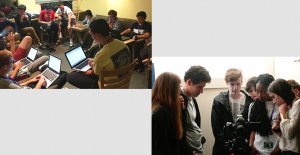
Northwestern deserves special attention because its program is explicitly centered on writers.
The MFA in Writing for Screen and Stage develops writers across film, television, and theater. Like NYU’s Dramatic Writing program, it recognizes that strong dramatic writers increasingly move between different storytelling forms.
Students work intensely on character, structure, dialogue, rewriting, and the development of a distinctive voice.
Northwestern also provides access to Chicago, one of America’s major theater, television, comedy, and production communities.
Professional Writers Teaching at Northwestern
The program has included working playwrights, television writers, screenwriters, and creators such as Zayd Dohrn, Rebecca Gilman, and Brett Neveu.
Its faculty culture emphasizes the actual practice of writing and rewriting rather than treating screenwriting primarily as an academic study.
Notable Screenwriting Alumni
Northwestern’s wider alumni network includes a remarkable number of successful writers.
Greg Berlanti became one of television’s most prolific writer-producers, creating or developing major series and building one of the largest television production portfolios in Hollywood.
Gillian Flynn wrote the bestselling novel Gone Girl and adapted it into the acclaimed David Fincher film. Her screenwriting work also includes Widows and television projects.
Mara Brock Akil created and wrote major television series including Girlfriends, The Game, and Being Mary Jane.
Zach Braff wrote, directed, and starred in Garden State.
Not all of these writers graduated from the MFA Writing for Screen and Stage program itself, but their success demonstrates Northwestern’s broader culture of developing professional storytellers.
#8. University of North Carolina School of the Arts (UNCSA) School of Filmmaking — Screenwriting
Website: https://www.uncsa.edu/filmmaking
Address: 1533 South Main Street, Winston-Salem, NC 27127-2738
Contact: 336-770-1330 | [email protected]
Program: Filmmaking with Screenwriting study
UNCSA may not have the name recognition of USC or NYU among the general public, but anyone seriously researching film-school outcomes should pay attention to what has happened there.
The School of Filmmaking places writers in a highly collaborative filmmaking environment. Students learn story development while working alongside directors, cinematographers, producers, editors, production designers, and other filmmakers.
That matters because professional screenwriters benefit enormously from understanding what happens to a screenplay after it leaves the writer’s hands.
Professional Writing Education at UNCSA
UNCSA’s writing instruction exists inside a conservatory-style filmmaking culture, where scripts are connected closely to student production and collaboration.
The program’s strongest evidence may ultimately be its alumni.
Notable Screenwriting Alumni
David Gordon Green developed from UNCSA into a filmmaker whose writing and directing credits span independent cinema and major studio filmmaking.
Jeff Nichols became the writer-director of acclaimed features including Shotgun Stories, Take Shelter, Mud, and Loving.
Danny McBride became a prolific professional writer, actor, and producer through projects including Eastbound & Down, Vice Principals, The Righteous Gemstones, and feature-film work.
Jody Hill, another UNCSA alumnus and frequent McBride collaborator, has written and directed film and television projects including Observe and Report and Eastbound & Down.
That is a remarkable cluster of professional writers and writer-directors emerging from a relatively small filmmaking school.
#9. Florida State University College of Motion Picture Arts — Writing
Website: https://film.fsu.edu
Address: 600 W. College Avenue, Tallahassee, FL 32306
Contact: 850-644-8524 | [email protected]
Program: Motion Picture Arts with professional writing development
Florida State’s College of Motion Picture Arts has built its reputation around intensive filmmaking and collaboration.
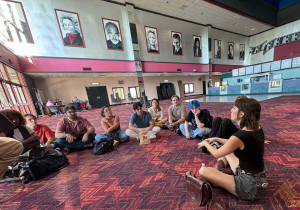
Writers develop stories inside an environment where student films are actually being produced. That can be extremely valuable because a screenwriter learns quickly when scenes, characters, locations, production realities, and visual storytelling move from the page onto a set.
FSU also distinguishes itself through a production model that provides significant support for student filmmaking.
Professional Writing Education at FSU
FSU’s screenwriting education is closely connected to directing, producing, cinematography, editing, and actual production rather than existing as a completely separate academic exercise.
For aspiring writer-directors in particular, that integration can be extremely useful.
Notable Screenwriting Alumni
Barry Jenkins is one of FSU’s most important alumni. He wrote and directed Moonlight, which won the Academy Award for Best Picture, and received an Academy Award for the screenplay. He later adapted and directed If Beale Street Could Talk.
David Robert Mitchell built a distinctive career as a writer-director with films including It Follows and Under the Silver Lake.
Wes Ball moved from FSU into major feature filmmaking and has worked as a writer and director on large-scale studio projects.
FSU may produce fewer writers than some enormous universities, but the professional success of its writer-director alumni deserves serious consideration.
#10. University of Texas at Austin — Radio-Television-Film Screenwriting

Website: https://rtf.utexas.edu
Address: 2504 Whitis Avenue, Austin, TX 78712
Contact: 512-471-4071 | [email protected]
Program: Radio-Television-Film with graduate screenwriting study
The University of Texas at Austin completes our Top 10 because it combines serious writing education with one of America’s most important independent film communities.
Austin gives young writers and filmmakers an environment very different from Los Angeles or New York. The city has a deep culture of independent film, festivals, production, television, animation, technology, and emerging media.
UT students studying screenwriting work on story structure, character, feature writing, television, rewriting, and professional development within the Department of Radio-Television-Film.
Professional Screenwriting Instruction at UT Austin
Screenwriting instruction has included working writers such as Cindy McCreery, whose professional experience spans film and television.
UT also benefits from Austin’s unusually active professional filmmaking community, allowing students to encounter filmmakers, writers, festivals, and independent production outside the classroom.
Notable Writers and Filmmakers from UT Austin
Wes Anderson studied at UT Austin before becoming one of America’s most recognizable writer-directors. His screenwriting credits include Bottle Rocket, Rushmore, The Royal Tenenbaums, Moonrise Kingdom, and The Grand Budapest Hotel.
Robert Rodriguez developed his filmmaking career while studying at UT, eventually writing and directing films including El Mariachi, Desperado, Spy Kids, and Sin City.
Owen Wilson, who met Anderson while both were at UT, co-wrote Bottle Rocket, Rushmore, and The Royal Tenenbaums.
That creative group alone had a significant impact on independent and studio filmmaking, illustrating the kind of creative collaboration that can begin while writers are still students.
What Should You Look for in a Screenwriting School?
Do not choose a screenwriting school merely because the university has a famous name.
Look closely at the writing department.
Find out who actually teaches the workshops. Read the instructors’ credits. Determine whether they have written professionally produced films or television or whether their careers have been primarily academic.
Then investigate the alumni.
Do graduates become professional writers? Are they getting feature films produced? Are they writing television episodes? Have graduates become staff writers, creators, showrunners, writer-directors, or working members of the Writers Guild?
Also investigate how much you will actually write.
A serious screenwriting program should require repeated writing and rewriting. One screenplay class is not enough.
Students should be developing features, pilots, scenes, treatments, pitches, outlines, and revisions while learning how to receive and interpret criticism.
A good school should teach you how to rewrite, because professional screenwriting is rewriting.
Another important question is whether the writing program interacts with the production program.
Having a script produced — even imperfectly — teaches a writer things that cannot be learned from reading a screenplay in a classroom. You discover which scenes play, where dialogue feels unnatural, what information an audience understands visually, and what happens when actors and directors interpret your words.
Finally, look at the community.
The director sitting beside you today could hire you five years from now. The producer reading your class screenplay could eventually develop a television series with you.
Screenwriting is writing, but professional screenwriting is also collaboration.
- No Limitations: The Screenwriter as Writer
https://studentfilmmakers.com/the-screenwriter-as-writer/ - Create Realistic Dialogue Now: 17 Fast Tips
https://studentfilmmakers.com/17-screenwriting-tips-for-dialogue/ - The Blank Page: 4 Ways to Overcome Writer’s Block
https://studentfilmmakers.com/the-blank-page-4-ways-to-overcome-writers-block/ - 12 Inspirational Screenwriting Quotes for Filmmakers and Creatives
https://studentfilmmakers.com/12-inspirational-screenwriting-quotes/ - How to Kick Off a Film: Where Do You Start?
https://studentfilmmakers.com/how-to-kick-off-a-film-where-to-start/
FAQ
Q: What is the best screenwriting school in the United States?
There is no perfect school for every writer, but USC earns our #1 position because of the combination of a dedicated Writing for Screen & Television division, highly experienced professional instructors, Los Angeles industry access, and an unusually large number of alumni who have become major film and television writers.
UCLA, NYU, AFI, and Columbia also have exceptional reputations and professional outcomes.
Q: Is screenwriting school the same as film school?
Not necessarily.
Some of the best screenwriting programs exist inside major film schools, but screenwriting is a separate discipline.
A great cinematography program does not automatically mean the school has a great writing program. Likewise, a school with famous directors may not have the strongest screenwriting faculty.
When researching screenwriting, look specifically at the writing department, writing curriculum, instructors, and writing alumni.
Q: Should I study screenwriting or filmmaking?
That depends on your goal.
If you primarily want to write scripts for other directors and producers, a dedicated screenwriting or dramatic-writing program may give you more intensive writing experience.
If you want to write and direct your own films, a program that combines screenwriting with production can be extremely valuable.
Many successful filmmakers eventually do both.
Q: Do professional screenwriters need a degree?
No.
There is no professional license required to become a screenwriter, and many successful writers never attended film school.
A strong program can provide structure, deadlines, criticism, professional mentors, collaborators, industry connections, and years dedicated to developing your writing.
But ultimately you are hired because of the quality of your writing, not because of the name printed on your diploma.
Q: What should I look for in a screenwriting professor?
Look at what the professor has actually written.
Has the instructor written produced features? Television episodes? Pilots? Plays? Streaming series?
Has the writer worked with producers, studios, networks, directors, actors, and executives?
Professional credits are not everything — an accomplished writer is not automatically a great teacher — but professional experience gives an instructor firsthand understanding of the realities students are preparing to enter.
Q: How important are successful screenwriting alumni?
Very important.
Alumni outcomes are one of the most useful ways to evaluate whether a writing program consistently develops professional talent.
One famous graduate is interesting.
A long pattern of graduates writing successful features, television programs, and streaming series is much stronger evidence.
Look beyond celebrity names and investigate the broader alumni community. Are graduates working as staff writers, story editors, producers, creators, script coordinators, and professional screenwriters?
Q: Should screenwriting students learn television writing?
Yes.
The distinction between feature-film writers and television writers is increasingly fluid. Professional writers may move between features, episodic television, streaming series, limited series, animation, and other formats during their careers.
Learning how to write both a feature screenplay and a television pilot can significantly expand a writer’s opportunities.
Q: How many screenplays should I write in film school?
As many as you can write well.
A student should ideally graduate with more than one polished piece of material.
That might include a feature screenplay, television pilot, additional feature or pilot, short scripts, treatments, pitches, and other work.
Your goal is to leave school with writing samples that demonstrate your voice and can actually be shown to managers, agents, producers, executives, directors, or potential collaborators.
Q: Is Los Angeles the best place to study screenwriting?
Los Angeles offers obvious advantages because so much film and television development takes place there.
USC, UCLA, AFI, and Chapman all benefit from proximity to Hollywood.
But NYU and Columbia give writers access to New York’s film, television, theater, comedy, and publishing communities. Northwestern provides access to Chicago. UT Austin operates inside one of America’s strongest independent filmmaking communities.
The quality of the program should come before geography.
Q: Can screenwriting actually be taught?
Yes — but nobody can manufacture talent.
A good teacher can teach dramatic structure, scene construction, character development, dialogue, visual storytelling, rewriting, professional screenplay conventions, and methods for diagnosing why a script is not working.
Teachers can also expose students to great writing and provide experienced criticism.
What cannot simply be handed to a student is voice.
Developing a distinctive voice comes from writing repeatedly, reading, living, observing people, taking creative risks, and discovering what you have to say.
Q: Is screenwriting mostly about screenplay format?
No.
Formatting is one of the easiest parts to learn.
Professional screenwriting is about storytelling.
A perfectly formatted screenplay with weak characters and no dramatic momentum is still a weak screenplay.
The difficult work is creating characters audiences care about, building conflict, developing scenes that change something, controlling information, writing dialogue that feels alive, creating visual storytelling, and sustaining an audience’s interest for an entire film or series.
Learn More About Screenwriting
StudentFilmmakers has covered screenwriting, directing, filmmaking, production, cinematography, and the professional filmmaking process for years.
Screenwriters should also study directing, cinematography, editing, acting, and producing.
Understanding those disciplines will change the way you write.
A screenwriter who understands what actors need will write differently.
A writer who understands editing will recognize unnecessary scenes.
A writer who understands cinematography will begin thinking visually rather than explaining everything through dialogue.
And a writer who understands production will become much better at recognizing what can actually be accomplished on the screen.
In Conclusion
The best screenwriting school is not necessarily the most famous film school.
Look at the writers.
Look at the faculty. Look at what they have written professionally. Look at the graduates and determine whether the program consistently produces people who go on to write movies and television.
USC earns our #1 position because the evidence exists on several levels: a dedicated writing division, professional instructors, proximity to the entertainment business, and generations of successful alumni.
UCLA has produced an extraordinary group of professional screenwriters and writer-directors. NYU combines film, television, and dramatic writing in one of the world’s great creative cities. AFI provides an intensive conservatory environment designed specifically around professional filmmaking disciplines. Columbia has developed a remarkable group of writer-directors and professional screenwriters.
Chapman continues to grow as a major Hollywood-connected writing program. Northwestern demonstrates the value of teaching screen and stage writing together. UNCSA and Florida State show that some of America’s most distinctive writer-directors have developed far from Los Angeles and New York. UT Austin demonstrates what can happen when talented writers find collaborators inside a powerful independent filmmaking culture.
But none of these schools can write your screenplay for you.
The most important thing a screenwriter can do is write.
Finish the script.
Then rewrite it.
Listen carefully to criticism without surrendering your own judgment. Study films. Read professional screenplays. Watch how audiences respond to stories. Learn why scenes work. Learn why they fail.
Write characters who want something badly enough to act.
Create conflict that forces them to make difficult choices.
Learn to enter scenes late and leave early.
Remove dialogue that the audience can understand from an image.
And keep writing after the excitement of the first idea disappears.
A screenwriting school can give you teachers, deadlines, workshops, collaborators, professional knowledge, industry access, and a community of other writers.
What you eventually put on the page is still yours.