Photo taken by Marina Vitale. Follow Instagram @marina_mv08
Written by Jack Anderson
On the surface focusing seems simple enough.
Hitting Your Marks
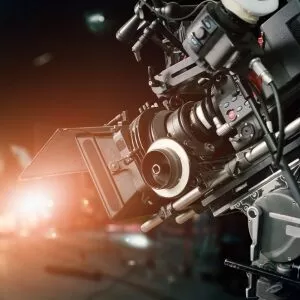
During a blocking rehearsal, marks are laid (that’s the job of the second) to indicate the places on the set where the actors will be stopping and standing during a scene. The first assistant measures the distance from the focal plane (on the camera) to each actor’s position using a cloth or fiberglass tape. The first makes notes or memorizes the distances that will need to be set when the scene is shot. The director calls “Action,” and the first, using the geared knob attached to the barrel of the lens, adjusts the focus to whatever distance the actor is from the camera as the scene proceeds. Voila!
Well, not so fast, my friend. The first thing that can go wrong is that actors often don’t hit their marks; or they lean; or they move suddenly. You need to have a really good mental measuring tape in your head. You have to react to errors by actors and to erratic moves and to moves that were never rehearsed. You have to know which of several actors in the scene is most important and make sure you keep the focus on them. You have to try to keep several actors in a shot in acceptable focus all the time—even though this is impossible, according to the laws of physics.
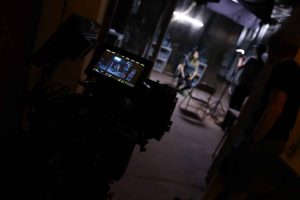
All this time, you are standing next to the camera, eyes at the film plane (the precise place where the film is when it’s exposed). One eye is on the actor, one eye is on the lens. This leaves no eyes to look at the video monitor, so forget it. It’s just a distraction anyway. It’s also tough to see the scene and the lens unless you’re walleyed. We all develop routines to deal with it. (I look at the corner of the matte box, so the actor is in my left peripheral vision and the lens markings are in my right. It’s tricky.) You may have gotten the idea by now that the job of focusing is a hard job that takes a long time to learn.
Free for members
Sign up free to keep reading
It’s free and takes less than 30 seconds. You’ll also get our Interstellar issue free, free webinars with award-winning filmmakers, and a community of filmmakers sharing their work.
No credit card. Continue with Google or your email.