Reference: StudentFilmmakers Magazine, December 2007. When Cheating is Good by M. David Mullen, ASC. Pages 16 – 18.
Cinematographers routinely cheat – when lighting, that is. The trick, as always, is to not get caught.
Many producers and directors have often wondered why a room cannot be lit once for all directions, rather than have the lighting be altered for individual set-ups, which can be a time-consuming process. The simple answer is the same for why you cannot always shoot the scene in one single wide shot: just as we direct a viewer’s eye to what is dramatically important in the scene by the choice of camera angle and movement, we also direct the eye through how we manipulate light. So as the camera angle changes in different set-ups, the lighting may also need adjusting so that the dramatic intent of each shot is clear, that the emotions of the actors can be seen, that the mood is maintained, etc.
There is also the reoccurring problem that sometimes the lighting of a wide shot, for various reasons, is compromised to accommodate the view of the camera. A common scenario is when we would prefer that the scene be lit with soft sources which are too large to hide in a wide shot. So we have to use smaller, easier-to-hide lights with the intent to bring out the larger soft sources once the camera set-ups get narrower in view. Besides being physically smaller, the light units in the wide shot may also have to be placed below or above the frameline in order to be hidden, even though it would be better to have them closer to eye-level for the actors’ faces. Therefore the lighting in this wide master shot may be too hard and too high (or low) to suit the cinematographer; however, because important details like the actors’ faces are smaller in size, these compromises can be acceptable as long as the camera does not move into a closer view.
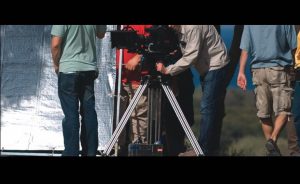
After the blocking for the master shot is completed and the actors have temporarily stepped off the set, many cinematographers have stared long and hard at an interior space just trying to imagine where to hide the movie lights, where to move or add practical lamps, etc. They have in their minds a concept of how the space should be lit, but they are also faced with the practical reality of how the space can be lit. They also have to factor in the coverage of the scene and how much time will be lost having to re-light the tighter set-ups after the master is completed, so the goal is to light the master in such a way that any additional shots will involve minor adjustments, or perhaps none at all. This also makes sense artistically and logically because all of the shots in a sequence should feel like they were shot in the same lighting as the master shot.
The key word here is “feel” – as long as we generally match the color, direction, tone, and texture of the lighting on the subject from wide to tight, we have some leeway to play around with the specifics. This falls under the concept of “continuity”, the notion that recognizable elements of the scene should match from shot to shot. And like continuity in editing, our flexibility to make hidden lighting changes, a.k.a. “cheating”, is dependent on how the camera set-ups differ from each other in view and shot size. For example, if you have two camera set-ups looking in totally opposite directions in a space, then it is very easy to make the lighting set-ups for each camera position very different since the two angles do not share the same visual elements. The other end of the spectrum are two camera set-ups that very similar; for example, if one camera is shooting a frontal angle of an actor framed waist-up and the next camera set-up is from the same direction but framed chest-up. These two shots are not only so similar that it would be hard to cut between them, but it would also be hard to get away with any changes to the lighting of both set-ups. So cinematographers learn that the more a new set-up is different from the previous one in angle and size, the more leeway they will have to make a lighting change that is hard for the viewer to notice. For example, if after shooting the wide master, you had two tighter set-ups of an actor and the first was a waist-up frontal angle and the second was a close-up angle but in profile, then the lighting can altered more freely for the profile close-up since it has a different background and is a big change in shot size as well.
Obviously as each set-up gets tighter and tighter, we have greater ability to bring in our lights and grip equipment while keeping them off-camera (just as the boom operator can now bring in the microphone for better sound). As I said, a common problem in the lighting of the master shot is that the lights are too hard and too high, so now in the tighter shots, it is usual to use larger soft sources closer to the actor, and lowered as well. Again, how much of a change you can get away with depends on how different theMany producers and directors have often wondered why a room cannot be lit once for all directions, rather than have the lighting be altered for individual set-ups, which can be a time-consuming process. The simple answer is the same for why you cannot always shoot the scene in one single wide shot: just as we direct a viewer’s eye to what is dramatically important in the scene by the choice of camera angle and movement, we also direct the eye through how we manipulate light. So as the camera angle changes in different set-ups, the lighting may also need adjusting so that the dramatic intent of each shot is clear, that the emotions of the actors can be seen, that the mood is maintained, etc.
There is also the reoccurring problem that sometimes the lighting of a wide shot, for various reasons, is compromised to accommodate the view of the camera. A common scenario is when we would prefer that the scene be lit with soft sources which are too large to hide in a wide shot. So we have to use smaller, easier-to-hide lights with the intent to bring out the larger soft sources once the camera set-ups get narrower in view. Besides being physically smaller, the light units in the wide shot may also have to be placed below or above the frameline in order to be hidden, even though it would be better to have them closer to eye-level for the actors’ faces. Therefore the lighting in this wide master shot may be too hard and too high (or low) to suit the cinematographer; however, because important details like the actors’ faces are smaller in size, these compromises can be acceptable as long as the camera does not move into a closer view.
After the blocking for the master shot is completed and the actors have temporarily stepped off the set, many cinematographers have stared long and hard at an interior space just trying to imagine where to hide the movie lights, where to move or add practical lamps, etc. They have in their minds a concept of how the space should be lit, but they are also faced with the practical reality of how the space can be lit. They also have to factor in the coverage of the scene and how much time will be lost having to re-light the tighter set-ups after the master is completed, so the goal is to light the master in such a way that any additional shots will involve minor adjustments, or perhaps none at all. This also makes sense artistically and logically because all of the shots in a sequence should feel like they were shot in the same lighting as the master shot.
The key word here is “feel” – as long as we generally match the color, direction, tone, and texture of the lighting on the subject from wide to tight, we have some leeway to play around with the specifics. This falls under the concept of “continuity”, the notion that recognizable elements of the scene should match from shot to shot. And like continuity in editing, our flexibility to make hidden lighting changes, a.k.a. “cheating”, is dependent on how the camera set-ups differ from each other in view and shot size. For example, if you have two camera set-ups looking in totally opposite directions in a space, then it is very easy to make the lighting set-ups for each camera position very different since the two angles do not share the same visual elements. The other end of the spectrum are two camera set-ups that very similar; for example, if one camera is shooting a frontal angle of an actor framed waist-up and the next camera set-up is from the same direction but framed chest-up. These two shots are not only so similar that it would be hard to cut between them, but it would also be hard to get away with any changes to the lighting of both set-ups. So cinematographers learn that the more a new set-up is different from the previous one in angle and size, the more leeway they will have to make a lighting change that is hard for the viewer to notice. For example, if after shooting the wide master, you had two tighter set-ups of an actor and the first was a waist-up frontal angle and the second was a close-up angle but in profile, then the lighting can altered more freely for the profile close-up since it has a different background and is a big change in shot size as well.
Obviously as each set-up gets tighter and tighter, we have greater ability to bring in our lights and grip equipment while keeping them off-camera (just as the boom operator can now bring in the microphone for better sound). As I said, a common problem in the lighting of the master shot is that the lights are too hard and too high, so now in the tighter shots, it is usual to use larger soft sources closer to the actor, and lowered as well. Again, how much of a change you can get away with depends on how different the set-ups are from each other. Generally you can’t go too far. For example, an extremely hard light in a wide shot and an extremely soft light in a close-up can be such a change in tone and texture that it just feels like a mismatch. You have to find a happy balance between the two extremes. To some extent, this is a matter of experience, knowing what you can get away with. A beginner may be afraid to alter the degree of softness of the key light at all from set-up to set-up for fear of a visual mismatch, or they may make too much of a change because they weren’t paying attention to keeping the feeling of the light in a similar realm as the set-ups changed.
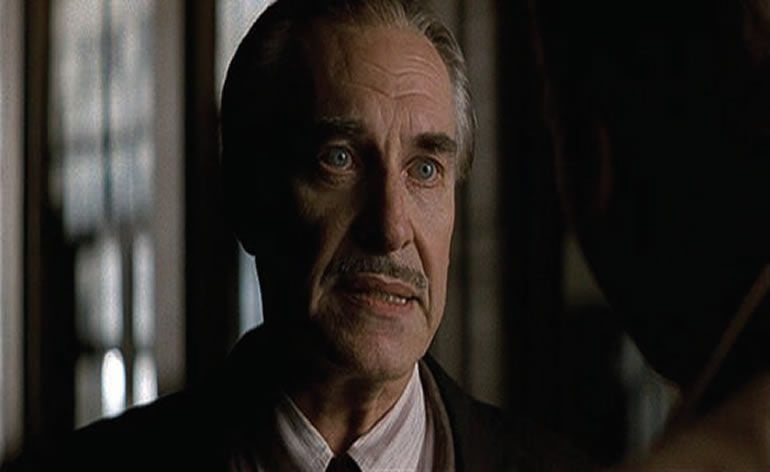
There is a sequence from the movie Tucker, shot by Vittorio Storaro, that demonstrates just how far a brilliant cinematographer can go in altering the lighting during a sequence while maintaining a sense of continuity. And what’s particularly great about the work here is that the lighting changes are not just for sake of making “prettier” close-ups, but they actually serve the dramatic meaning of the scene. The scene is set outside the Tucker factory at night and the character Karatz (Martin Landau) is nervously pacing as he tries to give Tucker (Jeff Bridges) some bad news. Karatz is a somewhat shady businessman and at first, the lighting on him is also somewhat shady and noir-ish, compared to the soft glowing light on Tucker.
The first set-up shown is of Karatz, his face partially in shadow:
This is intercut with a matching angle on Tucker:
Karatz, in the same set-ups as before, walks into the background, hiding something from Tucker:
He gets the nerve to make a confession to Tucker and steps forward; as he does, the camera dollies left, crossing behind Tucker’s back:
This creates a new screen direction on Karatz, symbolically suggesting that we are seeing a “new side” of his character. He also is now in a more “revealing” side light which Storaro probably faded up on a dimmer, creating a new key light:
Now we cut to Tucker’s reaction, shot from a new angle to match the new screen direction on Karatz. You see that Storaro has flopped the key light around 180 degrees to match the look of the previous angle on Tucker:
Next is a tighter angle on Karatz, the key light coming from the same direction as before, but now softened further for a gentler effect as Karatz confesses something very personal and painful to him:
So in effect, the lighting changes throughout the sequence on Karatz serve to gradually humanize him, move him from a shady to a sympathetic figure, a transition also marked by the on-camera switch in screen direction halfway through the scene. So in this case, the lighting adjustments on Karatz serve a symbolic and dramatic purpose. And the 180 degree flop of the key light on Tucker demonstrate just how far you can go in changing the lighting while maintaining the same feeling for the light.
There are not many professions where being a good “cheater” is both rewarded and respected, so learn to do it well – and enjoy!
Photos courtesy of Paramount Home Video and Lucasfilm. From the film, “Tucker: The Man and His Dream” (1988); Francis Ford Coppola (Director), Vittorio Storaro, ASC (Director of Photography).
M. David Mullen, ASC has earned two Independent Spirit Award nominations for best cinematography, for Twin Falls Idaho in 1999 and for Northfork in 2003. Photographing over thirty-five films, his filmography includes Assassination of a High School President (2008), Big Love (2007), The Astronaut Farmer (2007), Solstice (2006), and Akeelah and the Bee (2006).