Camera tips and tricks, and inspiration, from master cinematographers Daryn Okada, ASC and Patrick Cady, ASC, and more…
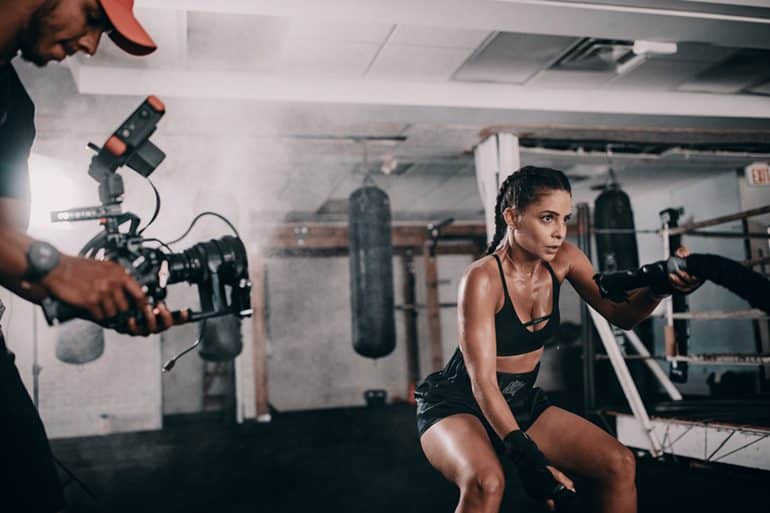
Pictured above: United Boxing Club, Bloor Street West, Toronto, ON, Canadá. Boxing Commercial “Making of”.
Photo by Marcos Paulo Prado. Follow @tio.mp
7 Expert Camera Tips for Filmmakers
1. What does the Action mean?
“The first thing you have to look at when you’re thinking about how to photograph an action sequence is, what does the action mean? What is it saying about the story? It’s not just a matter of recording an event. What you’re trying to do is get the audience so involved and propelled into what is happening on screen, but you must know what the meaning of that is to the story. That’s what I do first. I’ll write it on a piece of paper, and I’ll map it out. To me the way action works is like the way music happens. I’m listening for the introduction. Is it supposed to crescendo here? You don’t want it to be its own mini-movie, but it must have that energy that makes you forget about the cuts, makes you forget that you’re sitting in that theater, in that dark room. So I try to figure out what that is first.”
~Daryn Okada, ASC
2. “Story tops everything.”
This is really my main overriding approach. I like when I’m prepping with the director, to ask some questions I think that the actors are gonna have. If I can get a really good feel for the story and I know what the director thinks that the most important parts of each scene are, then I know where to put the camera and how to light it. If we don’t know those things, then we don’t really know what we’re trying to do. I think it’s really helpful as a cinematographer to ask questions about the story you are trying to tell, figure out the why before you decide on the how.”
~Patrick Cady, ASC
3. Less is more sometimes
“Keep the shots in line with the story and what the story is conveying. Less is more sometimes.”
~Paige Thomas, SOC
4. Practice Practice Practice
“Practice your craft as much as possible.”
~David E. Elkins, SOC
5. Be Versatile
“I’ve always preferred using a remote zoom control if I were to shoot anything with any type of movement. When doing handheld, I like to use my monopod for extra stability, and it still gives me the ‘off the tripod’ look. Propping myself up against a tree or a wall is always best to get steady, handheld shots. Having a strong midsection such as core and abs are good to have for accomplishing steady shots.”
~Rich Prepuse
6. Multiple Camera Timecode Tip
“When shooting with multiple cameras that are in conditions where they can’t be linked to receive timecode, try resetting the cameras timecode to a value of your choice, for example, 01:00:00:00, and then simultaneously selecting ‘Free Run’ instead of ‘Rec Run’ on each camera. You will have virtually the same timecode. Even if one camera stops recording and the other doesn’t. Just remember not to turn the camera off or plan to re-sync if you have to change batteries.”
~Mike Greenberg
7. “Learn everything there is to learn about your camera.”
Of course, devour the user guide, but beyond this, I always conduct extra research by looking up articles from people who used the same camera, and even forum postings in cinematography blogs. The user guide can only give you basic operation guidelines and not field-tested information. I want to know about the idiosyncrasies of how my camera behaves when used in unconventional situations, with a variety of equipment/lenses, in extreme cold/heat/humidity etc., before the first day of production. I normally do this as part of my workflow/lighting and lens tests.”
~Gustavo Mercado
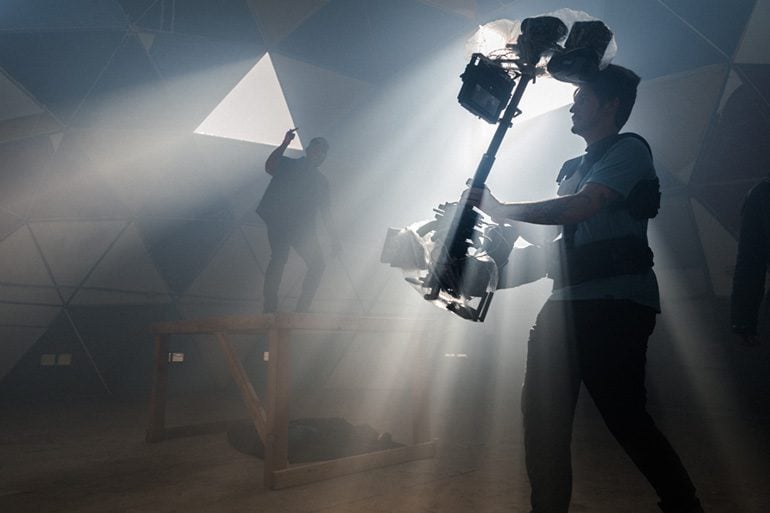
Pictured above: Steadicam shoot. Photo by Jakob Owens, Filmmaker and Photographer, LA-PHX. Follow @JakobOwens.