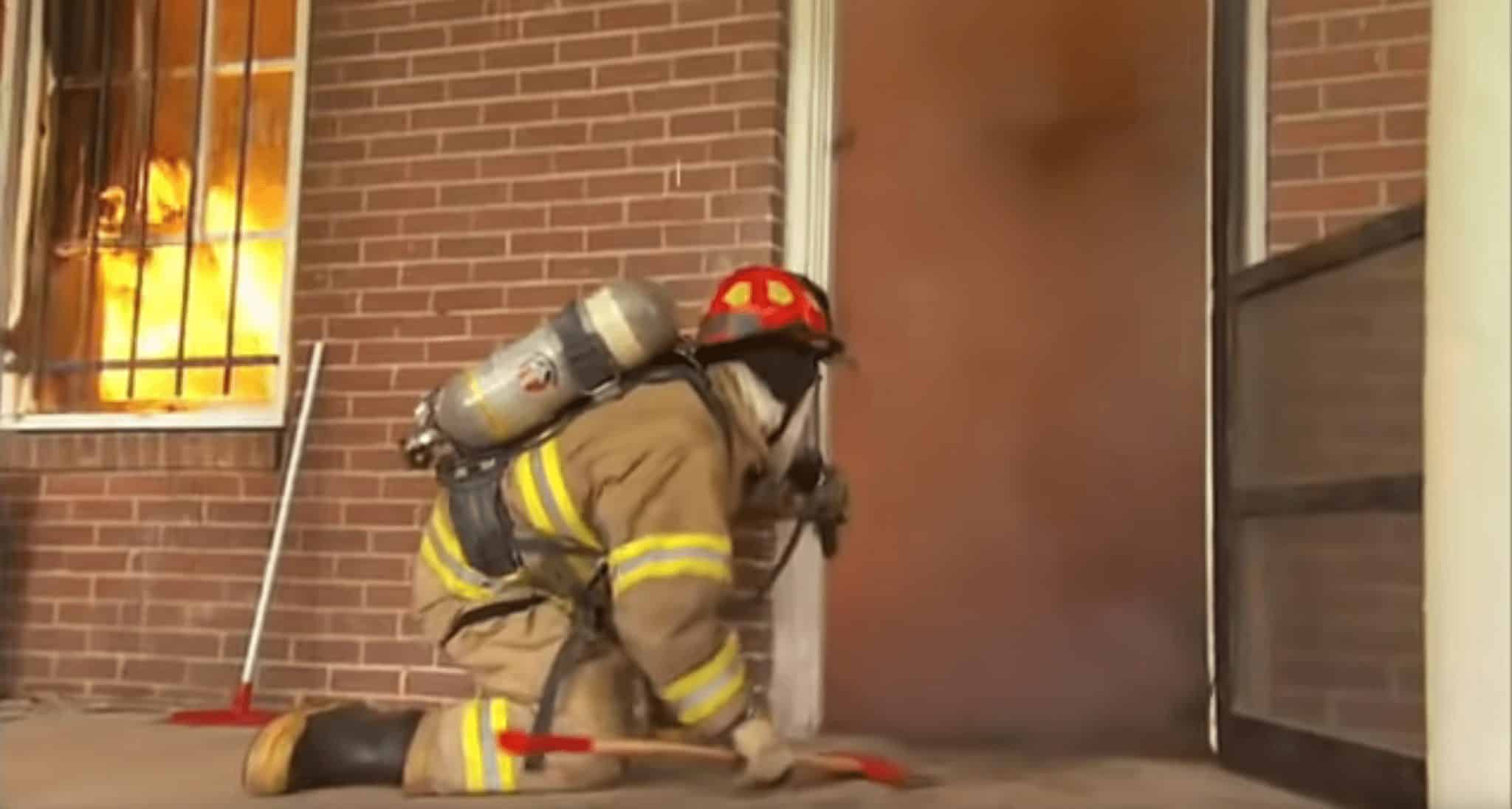
Shooting Flames on the Set of “Fireproof”
by Julia Camenisch
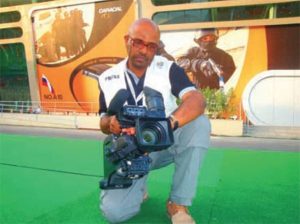
For Cinematographer Bob Scott, this was a first. A veteran of sports and action features (Friday Night Lights, Gridiron Gang, Talladega Nights), he was much more comfortable shooting a football tackle than a burning building. But as he read the script of Fireproof, the latest project of filmmakers Alex and Stephen Kendrick, he knew he was going to be stretched.
This Sony/Provident Pictures film follows the story of firefighter Captain Caleb Holt, a hero at work, but a failing spouse at home. One of the picture’s key scenes involves a rescue sequence that takes place in a home engulfed in flames. “When I read a script, I read it very technically the first time because I really want to know what I’m getting myself into. I had never shot a fire sequence like the one in this film, so I was pretty nervous about exactly how to make it look real…from a safety, visual and logistical standpoint, it’s very challenging, and you have to have the right personnel in the right departments in order to pull it off and make it look realistic.”
In preparation for shooting the film, Scott dug out a bunch of DVDs in order to watch fire sequences in other movies. “I started out looking at different firefighter movies as well as other types of films for visual references. I then cut some scenes together from various movies that I felt would fit the cinematic style of Fireproof. I approached the film by asking myself, ‘If this was my script, how would I want it to look visually?’” He also began researching ways other filmmakers had shot fires, but most of the information he found was geared towards productions with a much higher budget than Fireproof. “A lot of articles that I read were relevant to fifty-million dollar movies. I’d be like, ‘Can’t have the city of Chicago burn down a 20-story building – nope, can’t do that.’”
But notwithstanding a small budget, they still had to have something to burn down, and the city of Albany, Georgia had the perfect location. “We ended up using three buildings that had been condemned. They were just going to be bulldozed down, but the Albany Fire Department said, ‘Hey, we want to train on these houses, so we’ll burn them down ourselves.’ And so they got the permission to do that. And then we got involved too,” says Scott. The filmmakers asked the fire department for permission to use the houses for the film’s fire scenes. Permission was given and the Albany fire department supervised the shoot and helped out the film’s pyro team. Once principal photography was finished, the crew filmed cutaways of the Albany firefighters training on the houses before they were burned to the ground.
With only a day and a half to shoot fire scenes that would normally take a week, Scott knew pre-production planning held the key to success. “I forced everybody to look at these scenes from a storyboard perspective. That’s how I attacked the fire – one shot at a time. Then you can kind of drop back and not think ‘this is going to be incredibly difficult!’ Logistically, what that did for us was help us know exactly what we needed to do. We had to be efficient so that we would have everything needed for the edit.” Scott then used the storyboards to keep focused during the burning house shoot. One crew member had a C-stand with the storyboards on it, and when a shot was finished, an “X” would be put through its storyboard picture and Scott would move on to the next shot needed. This “shot-by-shot” storyboard approach also provided a visual schedule for Scott and director Alex Kendrick. “It helped us see what we needed to accomplish during the day. So by lunch, if we didn’t have so many shots done, we knew we needed to modify or drop a shot or change something.”
Handling the logistics of the shoot wasn’t the only challenge Scott faced. Lighting also proved a problem. “Fire is very, very bright. It’s like shooting the sun. You have to expose it at a certain stop in order to make it look rich. Shooting at that exposure then makes the rest of the set look dark,” he explained. “You have to really light the rest of the set very bright. When you’re pouring all this light into the scene, to the human eye the set looks very bright – almost too bright. But from the camera’s point of view, everything looks closer to reality. Film doesn’t adjust to light and dark like your eye does, so you have to compensate. That was a big challenge. And I’m not just talking about one extra light – I’m talking about a lot of lights.”
Once the shoot was underway, Scott had to contend with the potential havoc the fire, smoke and heat could inflict on the gear and crew. “Because of the intense heat, we had the occasional BNC cable melt. And the rubber on our sneakers was getting soft and our feet would feel hot,” laughed Scott. “But the big thing I was worried about was the smoke and the humidity. When you put water on fire, it creates steam, and electronics aren’t happy when you get smoke on them. We wrapped the camera in Saran Wrap so that the larger particles of dust wouldn’t seep into the tape mechanism or whatever.”
Admitting everyone was excited at first, he said the initial thrill soon wore off. “That was a long, long, very tense day. It was probably the most tense day I’ve had on a set for a long time. It’s a very hard shoot because you’re inside this building that’s dusty and smoky. You’ve got wear a breathing apparatus. Sometimes we had to wear fire coats because we were right in the fire. A couple times I had to walk through a doorway that was on fire. Communications were tough between inside and outside.” Shooting the fire scenes took Scott twice as long as other scenes in the film because of all that went into set-up. “You’d spend a lot of time figuring out how to shoot it, rigging it to shoot, and then the pyro guys would come in and set everything on fire. You’d literally have 30-40 seconds to film what you had to film and then they’d have to come in and put everything out again. We were constantly setting things on fire and putting them out.”
Looking back, Scott said it was the pre-planning that kept the shoot on track. “What worked great was that we had plans in place. We treated it like an invasion of a beach or something. Everybody knew what they were supposed to do when we arrived that day, and everybody pulled it off really, really good. You may have half a dozen technicians inside that day, but you also have sixty other people that are supporting what they’re doing and if one person doesn’t do their job, then something suffers. We worked really well that day.”
Julia Camenisch is a producer and editor with EyeReach Productions based in Charlotte, NC. Her work has been seen in venues ranging from a national TV special to local promo videos and everywhere in between.