What was one of the most important things you learned while working on set?
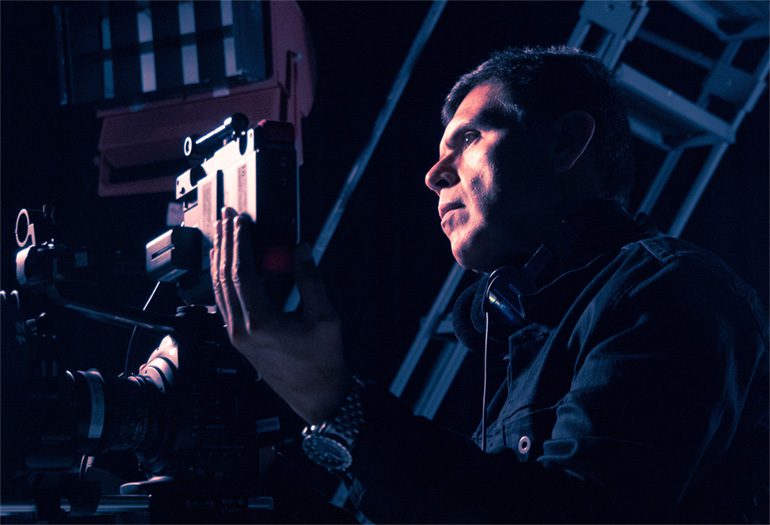
Gustavo Mercado: The most important lesson I have learned in every shoot I have ever been in is that it is virtually impossible to overprepare for a production. No matter how big or small your budget or your crew is, how difficult or simple the logistics might seem, there will always be something that can potentially derail your shoot. “Putting out fires” is a qualification that applies to everyone on set, from production assistants to department heads, director, actors, everyone. This is why I always try to plan ahead as much as possible, not only as it pertains to my role in a production as a director or cinematographer, but also physically and mentally. Knowing how to expertly operate a piece of equipment won’t matter if you’re too tired to function, or if you’re too stressed at the first sign of trouble. For these reasons, I put myself through a technical and physical “boot camp” of sorts heading up to the beginning of a production, making sure I get plenty of sleep, eat well, and practice with whatever piece of equipment I will operate as much as I can so I can be as ready as possible to deal with the many unknowns that will inevitably show up.
What was the most challenging problem solved on set?
Gustavo Mercado: I remember one time when we were shooting a psychological thriller out in a house in the middle of nowhere, miles from the nearest town. We were using a 35mm lens adaptor in front of our camera to achieve a special effect, which had a vibrating groundglass that used these four really tiny shock absorbers. Right in the middle of production, the device stopped working, and upon taking it apart we found one of the tiny rubber shock absorbers had disintegrated. It was the beginning of a weekend that was preceded by a holiday, so it would have been impossible to get the part until a few days later. We had about 15 crew members, a ton of equipment, actors, extras, the entire production grinded to a halt because of a tiny piece of rubber! We scrambled to jerry rig a replacement by disassembling lamps, flashlights, anything that had an o-ring that we could fashion into a shock absorber, using vaseline applied with a toothpick to soften the rubber so it would perform like the other shock absorbers until we got it working again, 6 hours later. After the shoot, I bought a whole bunch of these rubber pieces that I still keep as a reminder of this experience. (They cost $3 each).
What are some common mistakes new filmmakers should avoid in relation to camera operation and camera movement?
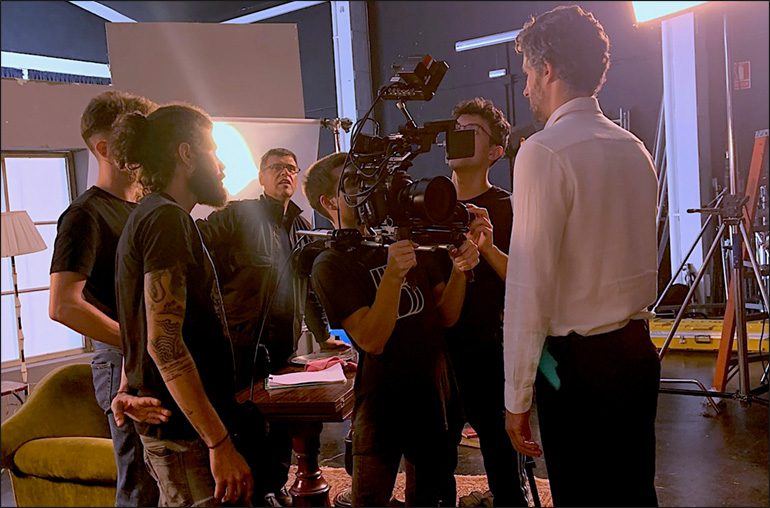
Gustavo Mercado: A common issue I see in movies by beginner filmmakers is using unmotivated camera movement, meaning they move the camera without having a narrative purpose, seemingly just for aesthetic reasons. Moving the camera should always mean something; it should reveal or conceal information, or it should comment on the scene in which it is used. It doesn’t matter if the move is complex, like a dolly zoom, or simple, like a tilt; if it does not have a function, not only does it confuse the audience but also robs you of the ability to make it mean something if you want to use it again later to add tension, or drama, or to support a theme of your story.
Free for members
Sign up free to keep reading
It’s free and takes less than 30 seconds. You’ll also get our Interstellar issue free, free webinars with award-winning filmmakers, and a community of filmmakers sharing their work.
No credit card. Continue with Google or your email.