By Scott Essman
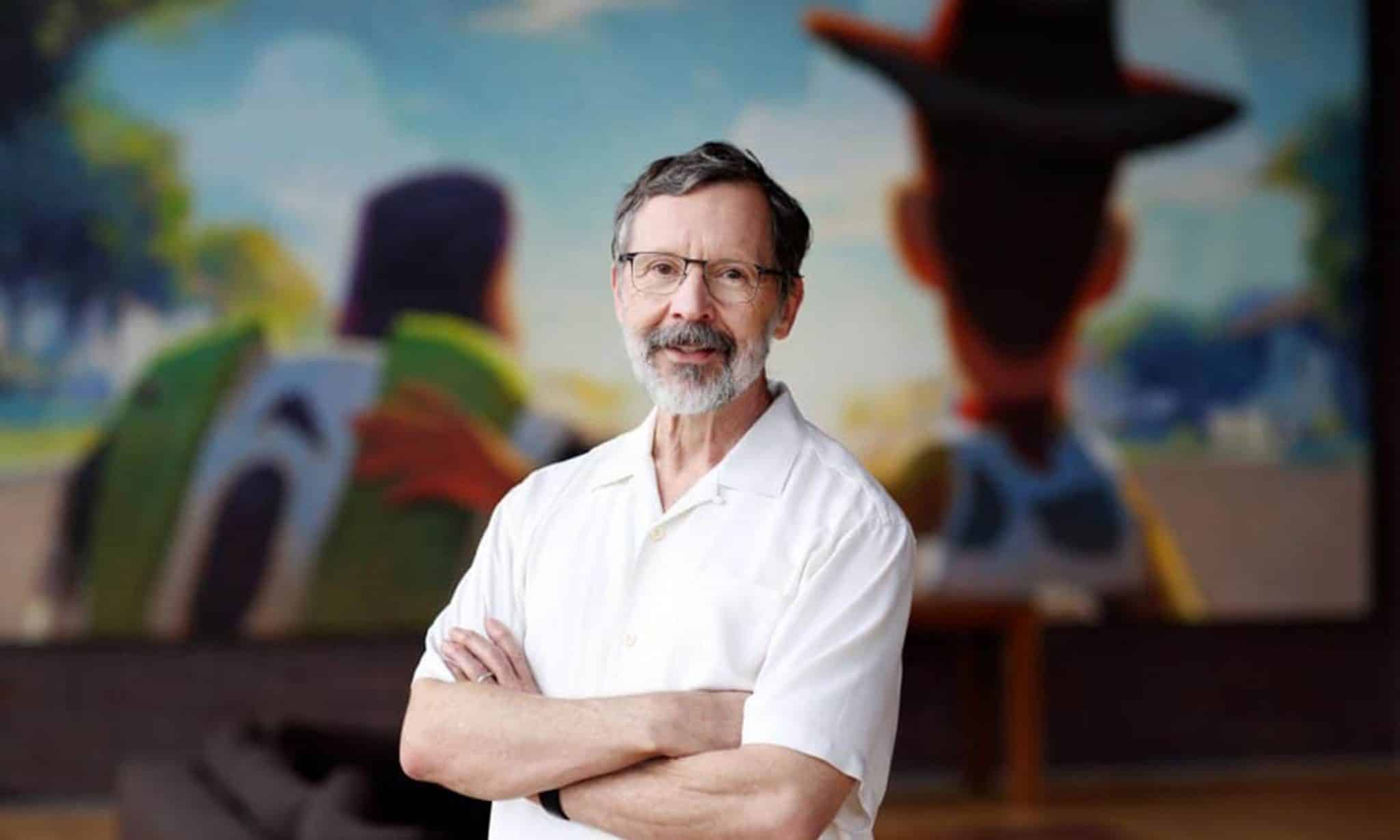
After beginning his career as director of the Computer Graphics Lab in Long Island at the New York Institute of Technology in 1975, Ed Catmull became vice-president of northern California-based Lucasfilm’s fledgling computer division in 1979. By the time of Lucasfilm’s sale of the computer division to Steve Jobs in 1986, it was renamed Pixar Animation Studios with Catmull as co–founder and chief technical officer. After ten years of extensive research and development and the production of a host of amiable short films, Pixar released “Toy Story” in 1995 and was on its way to becoming the top computer-animation feature film company in the world, with Catmull installed as full president since 2001.
Jobs sold the company to Disney in 2006 for approximately $7.4 billion in an all-stock deal, and Catmull became president of Pixar and Walt Disney Animation Studios. He is now an advisor, set for official retirement next month, but before the announcement to his stepping down, he spoke about the state of Pixar in its new world as one of Disney’s flagship properties on the heels of the release of the widely anticipated “Toy Story 4”.
Though Disney distributed all of Pixar’s films from the outset, Catmull noted a key difference in the relationship now that Disney is their parent company. “Our philosophy coming in,” Catmull reflected, “we were going to have the studios all be independent from each other. So, except for John (Lasseter, former chief creative officer of Walt Disney Animation Studios, Pixar and Disneytoon Studios) and me going back and forth [between Disney in Burbank, California and Pixar in Emeryville, California], there’s nothing else that goes back and forth between Pixar animation and Disney animation. Two different personalities, two different groups of people, two different creative drives — and that’s the way we want it to be.”
In addition to supervising Pixar, Catmull oversaw the aforementioned Disneytoon Studios, whose output included Pixar’s “Cars” offshoot, “Planes”. “We have Disneytoon studio which is the third studio, and what we do with Disneytoon studios is they take whole series in a world,” Catmull described. “So, they’ve had one series which is in the [Disney] ‘Fairies’ world, and now there’ll be a series in the ‘Cars’ world. So, the realization is just have a world of ‘Cars’, and they’ll just keep making things in that world and growing it and expanding it and building it. That is what Disneytoon studios will do for us.”
[Ed. note: After “Planes’” sequel, “Planes: Fire & Rescue”, Disney reorganized its animation divisions, leading to the announced shuttering of Disneytoon Studios in January of 2018, not long after this interview was conducted.]
Catmull was clandestine when speaking about technical developments in Pixar, leading to new levels of realism in films such as “Toy Story 4”, which include a variety of newly developed tools—unthinkable 24 years ago when the first “Toy Story” film was made. “We never stop changing the tech,” Catmull revealed. “It’s just integrated in what we do, so, to me, it’s all mixed together. It’s part of changing things up all the time.”
Lastly, when pointing to his long-term goals, specifically for Pixar, Catmull was pat in his response. “It’s always been to make great films,” he stated. “That’s all it is. Nothing else matters.”