Build the Best Lighting Scheme for Your Subject
by Saro Varjabedian
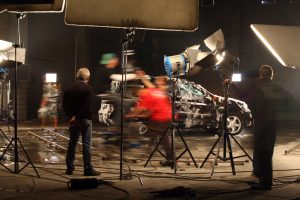
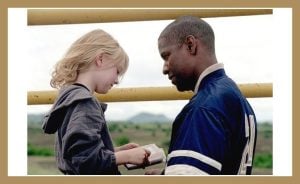
Intuitively knowing where to place lights to light your subject’s face, while simultaneously lighting your environment, is a skill which will take some time to develop. However, this little tip may be a helpful way to start thinking about it. There is a science to the way in which we light a person’s face for the most flattering or most dramatic effect based on their facial type. While there are no hard and fast rules in general, the most flattering lighting setup is obtained when the key light falls on the side of the face furthest from the camera. But at what angle and what height should the light be placed in relation to the subject? And what if the subject moves and how does the set lighting affect the subject’s light? These are the questions that need to be answered when building your lighting scheme for a particular scene.
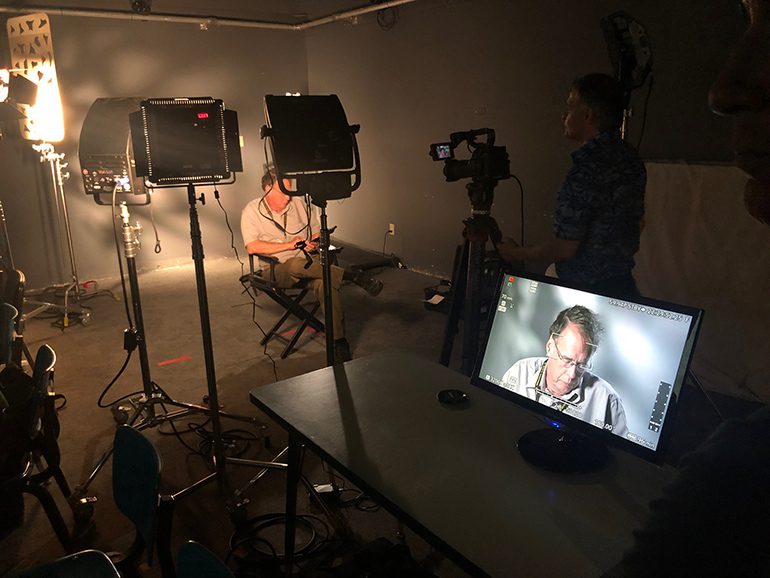
To answer them, let’s start by deciding the best lighting scheme for your subject. This can be done by doing a simple lighting test. Place the subject in front of the camera turning their head slightly away. Now take one light which will serve as the key and just start rotating the light in a 180 degree arch around the subject’s head and study how the light creates shadows along the face. As you are doing this, raise or lower the light to get a sense of the best height. Once you find a lighting position which produces the desired effect, try adding a fill light, kicker or backlight until you’ve devised the perfect combination. Now that you have an understanding of your subject’s face, you can think about lighting your set and quite possibly use the set lights as some of the lights for your subject. To do this, you will need to see how the Director plans on blocking the actions of your subject. Next, light the scene keeping in mind the actor’s location. It may be possible that your ambient light is sufficient enough to act as your subject’s fill, or a light on the table can also be your subject’s backlight, or a window can act as your subject’s key light. You can even suggest to the Director to block the actor in such a way as to use the set lights as one of your subject’s light.
Saro Varjabedian is a New York-based director of photography and has worked on numerous independent films, music videos and corporate videos. Saro can be reached at www.sarodp.com.