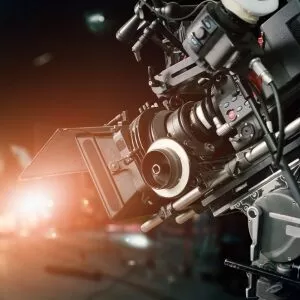
There are a lot of great new books on cinematography on my shelf now, and every one of them teaches me something each time I sit down to read a few chapters. I find myself examining each lighting set-up and trying to determine what components make up the myriad of camera rigs that have hit the market in the digital age. And, so my students won’t have to purchase more than one text, I’m also looking for how well the author covers the basics as well as the minutia of day-to-day practice.
But my favorite, most dog-eared and worn out text – the book I turn to when looking for inspiration or a creative boost – does none of these things. It doesn’t have any photographs. It won’t teach you the zone system, and it doesn’t care what camera you use. What it does do is present a list of ideas jotted down in no particular order by the great filmmaker, Robert Bresson. His Notes on Cinematography was first published in 1975, and my early edition is full of scribbles and exclamations pointing out the entries that struck me, at one time or another, as helpful on whatever project I was in the midst of at the time.
Here are just a few of Bresson’s thoughts on cinematography:
- Hide the ideas, but so that people find them. The most important will be the most hidden.
- Style: Whatever is not technique.
- If the eye is entirely won, give nothing or almost nothing to the ear. One cannot be at the same time all eye and all ear.
- Make visible what, without you, might never have been seen.
- The things we bring off by chance – what power they have!
And, of course:
Free for members
Sign up free to keep reading
It’s free and takes less than 30 seconds. You’ll also get our Interstellar issue free, and a community of filmmakers sharing their work.
No credit card. Continue with Google or your email.