For most of cinema’s history, the third act was sacred. It was where the money went, where the spectacle arrived, where the promises made in the opening scenes were finally redeemed. Filmmakers trusted that audiences would stay long enough to be rewarded. Audiences, in turn, trusted that patience would matter.
That contract is quietly being rewritten.
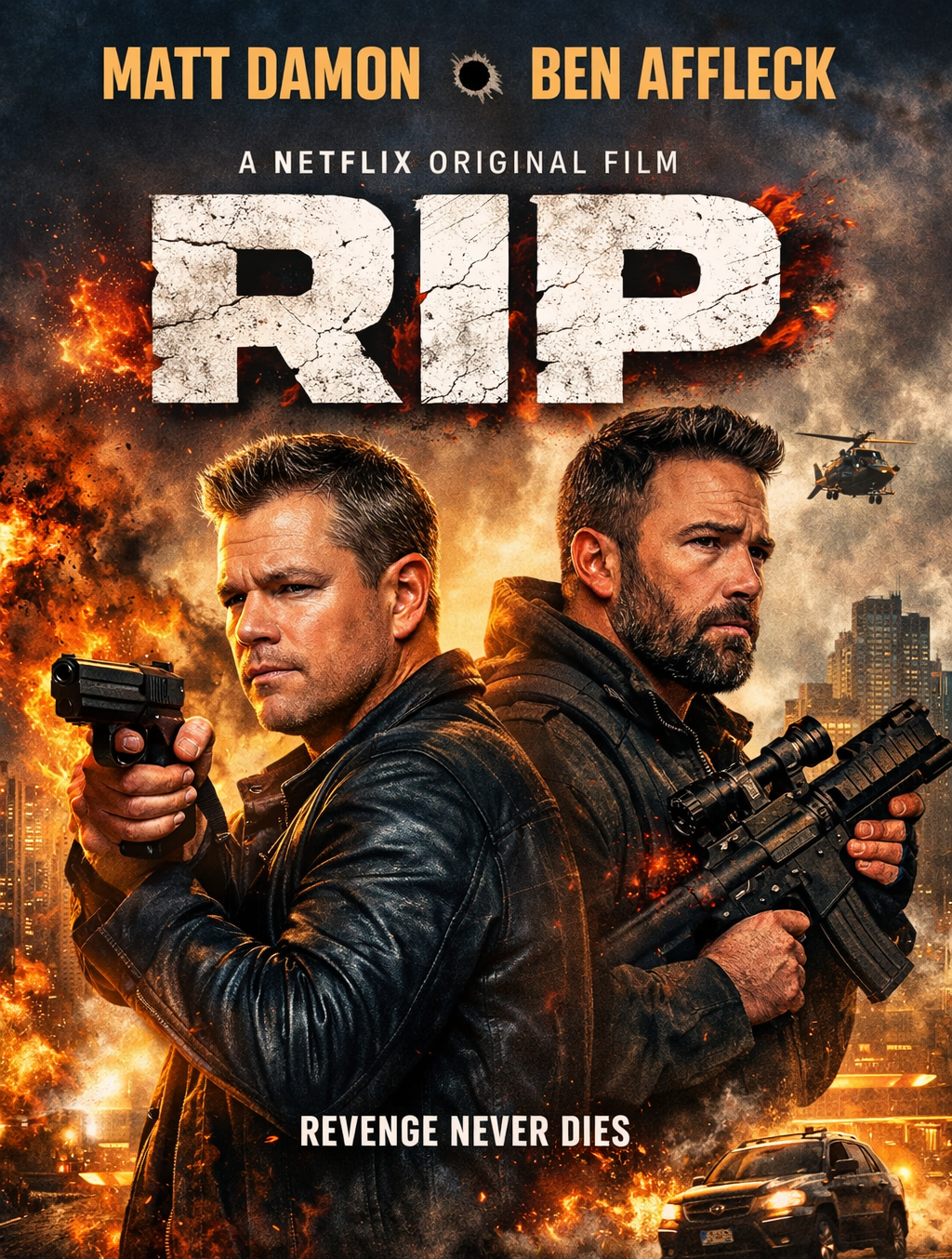
When Matt Damon recently remarked that Netflix encourages filmmakers to put a major action sequence within the first five minutes of a movie—and to restate the plot several times in dialogue to accommodate distracted viewers—he wasn’t offering a provocation so much as a diagnosis. The comment, made during an appearance with Ben Affleck on The Joe Rogan Experience, revealed a shift in storytelling gravity: the climax is no longer something you build toward. It is something you must deliver immediately, or risk losing the audience altogether.
(Source: Variety, “Matt Damon Says Netflix Wants Movies to Restate the Plot Three or Four Times”
https://variety.com)
Classical Hollywood structure depended on delay. The first act oriented the viewer, the second complicated matters, and the third resolved them—often with the most expensive and elaborate sequence in the film. This was not merely aesthetic convention; it was an expression of confidence. Filmmakers assumed the audience would stay seated, phones dark, attention sustained. The theatrical environment reinforced that assumption. Leaving early meant missing something irretrievable.
Streaming has altered that logic. At home, nothing is irretrievable. Movies compete not only with other films but with messages, feeds, and parallel screens. In that context, Netflix’s emphasis on early spectacle is not irrational. It is defensive. The opening minutes now function less as an invitation than as a test: Is this worth my time right now?
Data, not doctrine, drives this change. Netflix has long been open about its reliance on viewer metrics—completion rates, early drop-off points, and engagement curves—to shape programming decisions. While the company rarely discusses how these metrics influence script development in detail, industry reporting suggests that retention in the opening minutes carries disproportionate weight in determining a film’s visibility and perceived success.
(Source: Entertainment Weekly, “Matt Damon Says Netflix Wants Plot Repeated for Viewers on Their Phones”
https://ew.com)
The result is an inversion of narrative priorities. Action scenes once designed as culmination now serve as proof of competence. The film must demonstrate, almost immediately, that it can deliver spectacle, clarity, and momentum. Suspense is compressed. Setup is abbreviated. Characters are introduced in crisis before they are fully known.
Dialogue shifts accordingly. Exposition, once considered a necessary evil to be disguised or delayed, becomes structural reinforcement. Plot points are reiterated not because writers lack confidence, but because the viewing environment demands redundancy. If a viewer looks away, the film must be able to recover them without penalty.
(Source: No Film School, “Is Streaming Ruining the Way Movies Are Written?”
https://nofilmschool.com)
This has aesthetic consequences. Silence becomes riskier. Ambiguity becomes harder to justify. Scenes that rely on accumulation rather than immediacy—on mood, implication, or gradual revelation—are less easily defended in a system that measures attention minute by minute. The slow burn has not disappeared, but it now survives largely as exception, prestige offering, or anomaly.
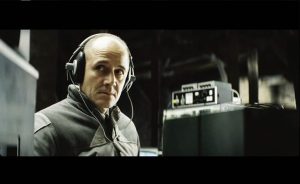
Ben Affleck pointed to one such anomaly when he cited Netflix’s limited series Adolescence, a show that resists early spectacle and relies instead on long takes, withheld information, and emotional restraint. Its success complicates any simple claim that streaming requires narrative bluntness. Yet its very status as an exception proves the rule. Projects like Adolescence succeed despite the dominant incentives, not because those incentives have vanished.
(Source: Variety
https://variety.com)
It would be a mistake, however, to frame this shift as cultural decline. Cinema has always adapted to its conditions of exhibition. The arrival of sound, the rise of television, and the proliferation of home video all reshaped storytelling norms. Each transition produced losses and innovations. Streaming is no different. Front-loaded action can sharpen pacing. Clear exposition can reduce indulgence. Accessibility is not inherently an enemy of craft.
What is changing is not quality in any simple sense, but emphasis. The third act no longer anchors the film’s meaning or value. That work has been redistributed to the opening minutes, which must now function as hook, proof, and promise all at once. The question is not whether this makes movies worse, but what kinds of movies this system rewards—and which it quietly filters out before they have time to unfold.
Theatrical cinema once assumed a shared space and a shared discipline of attention. Streaming assumes solitude, interruption, and conditional engagement. Films are now designed around that assumption. Attention itself has become a co-author, shaping narrative structure as decisively as budgets once did.
Cinema is not dying. But it is renegotiating what it asks of its audience—and when. And in that renegotiation, the first five minutes have inherited a responsibility that once belonged to the end.