Your career as a cinematographer includes a wonderfully diverse body of work. What are some of the differences between filming styles for feature films, TV movies, episodics, and documentaries?
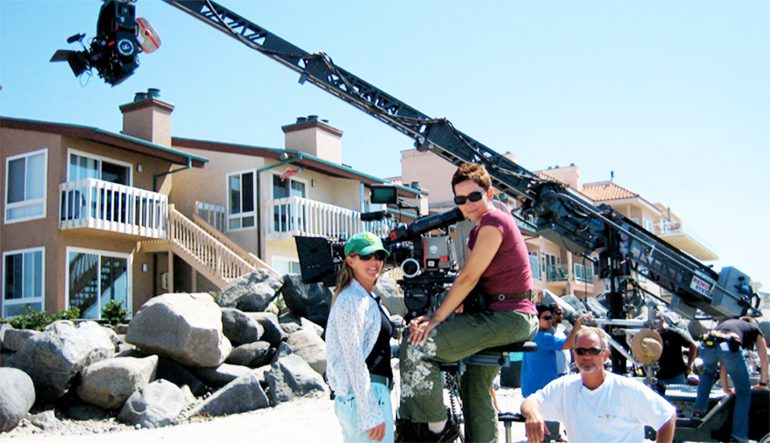
Uta Briesewitz, ASC: In feature films for theatrical release you can live more in wide shots since the big screen of a movie theatre allows the audience to discover things in the frame; even small details. You can see several actors in a wide shot and make your own decision who to look at, and it might not always be the person who delivers the line. Still, the image is large enough that you can clearly read performances even when seeing people from a distance. TV has very much been regarded as a writer’s medium where editing strongly guided you where to look. Many shows have been ruled by the spoken word, meaning visually the show lived in close ups of actors and a DP or director had to make sure to capture every line on camera. The world around those characters very often fell away. Maybe a quick establishing shot at the beginning of a scene… That was it.
How Television Has Changed
But television has changed tremendously over the last decade. Bigger TV screens with a 16:9 aspect ratio didn’t only make the framing and composition of shots way more interesting for cinematographers, the increase in size of the screen also supports wide shots without losing details. All that plus the higher resolution allows DP’s to photograph their TV shows with a big screen in mind.
There is an incredibly vast variety of TV shows out now; anything goes.
CGI and Bigger Budgets in TV
Computer generated images have become such a huge part of our TV storytelling these days, that certain TV shows look like big budget features and several years ago those shows would have only been created for the big screen, e.g. Game of Thrones, Black Sails, Vikings and an endless list of superhero shows…
Free for members
Sign up free to keep reading
It’s free and takes less than 30 seconds. You’ll also get our Interstellar issue free, free webinars with award-winning filmmakers, and a community of filmmakers sharing their work.
No credit card. Continue with Google or your email.