By David Landau
Composition is selecting placement of everything within the frame and deciding what has emphasis. If we fail to do this, if we just shoot a shot, the frame could become visually dense, filled with details that turn out to be extraneous to the story and prevent the audience from getting the point the cinematography is trying to make. Conversely, the shot could become too sparse, not using the framing to communicate the feeling of the story and leaving it all up to the dialog, which can visually bore a viewer. The eye and the camera do not see the same thing. The brain is actively and constantly processing information from the eye and cuts out unwanted details that, in the camera’s passive view, is given equal importance.
Camera Placement
First is camera placement. Before you can decide where to place the camera, you need to understand exactly what should dominate the composition, what should be included and what should be excluded from it, and what meaning will be conveyed by the shot beyond what is contained in the frame. Effective stories have strong core ideas. So, what is this story about? What is the film’s theme? What is the director’s focus? Once a cinematographer knows this, then she/he can make every composition support the core idea of the film, the story and the scene.
A Visual Strategy
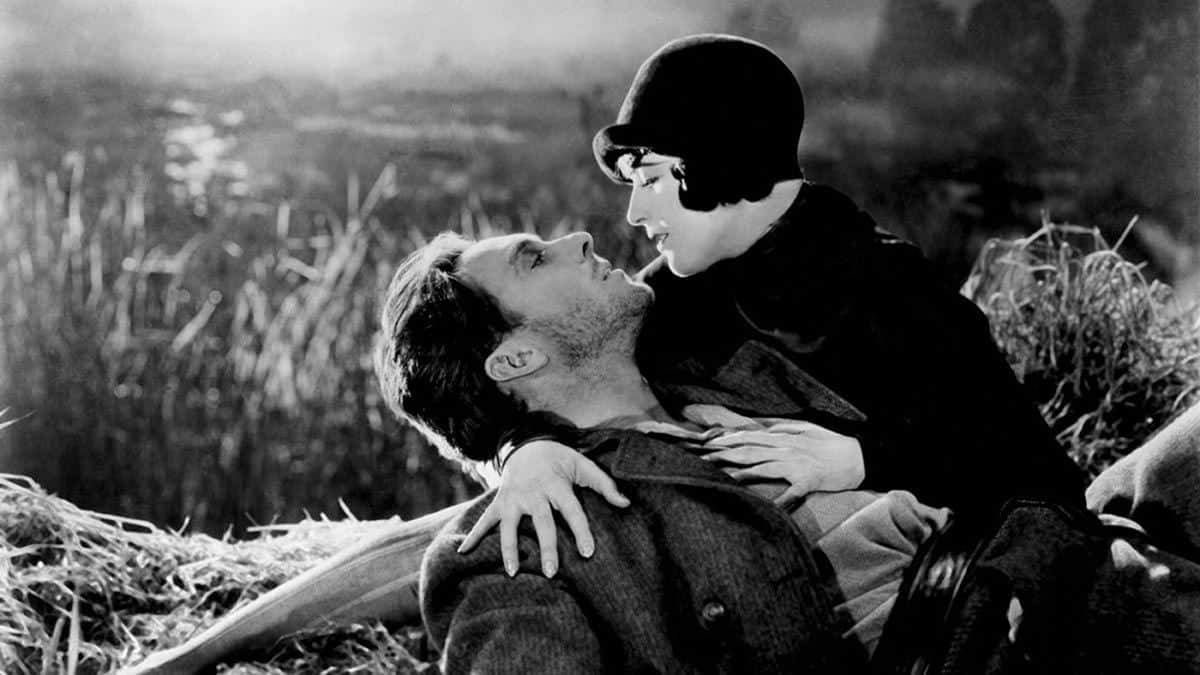
A DP can create a visual strategy where the placement of the character in the frame is also plotted throughout the film to match his/her journey and change. Perhaps he is off-center and in unbalanced framings until he begins to learn and change, then he starts to be in more balanced framings, such as in the work of Karl Struss, ASC, in the great silent film, “Sunrise,” where the main character is framed at beginning in the boat, and then, differently at end in the boat at night. Perhaps depth of field changes as the character changes, perhaps lenses change, beginning with wide angle and moving towards telephoto as in the work of John Bailey, ASC, in the film, “Ordinary People,” where he photographed the teenager with the counselor with wide angle lens at the beginning of the story, but as they grew closer, he shot them with longer and longer lenses to close the distance visually and blur away the background. Color palettes can change as well. Angles can change – such as always dolly behind the characters until they learn something or change – then the camera dollies in front of them – as again in “Sunrise.”
Free for members
Sign up free to keep reading
It’s free and takes less than 30 seconds. You’ll also get our Interstellar issue free, and a community of filmmakers sharing their work.
No credit card. Continue with Google or your email.