By Saro Varjabedian
Conrad Hall, ASC called them happy accidents. Saro Varjabedian explains how camera operators stay ready to capture the unexpected, beautiful shot.
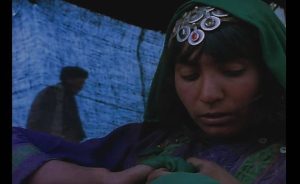
Probably every aspiring filmmaker has at one point heard the story of how Conrad Hall, ASC got one of his most memorable shots through a term he coined the “happy accident.” At the risk of sounding redundant, I’ll just briefly explicate the incident. In the film, In Cold Blood, a light shining through a window peppered with rain, cast shadows of tears on the character, played by Robert Blake, who is sentenced to death for committing murder. Conrad Hall noticing the shadowy tears acted on the moment rendering the emotional state of the character through his photography. In fact, it would seem that many of Mr. Hall’s most memorable shots came from these free flowing moments when things developed less from planning but from a visceral feel for the shot. Mr. Hall once said about his work that he’s, “looking for the accident, the joyous happenstance that comes with filmmaking, rather than go through some tortured manufacturing of an image.”
Trying to embody Mr. Hall’s words of wisdom, I found myself searching for those same joyous happenstances on a recent shoot. I was working on a spec for the feature of Art House Film. The movie is a narrative mocumentary/ dramedy about a totally clueless group of filmmakers trying to make a movie. Talking with the director, it became very clear that the style called for the raw feel of a documentary. In fact, the movie is supposed to look like the filmmakers behind the documentary were equally as inexperienced as the cast. So the camera had to convey its own personality as if it is a character in the movie.
The director, Kit Bihun, wanted to keep the acting very organic and real. The plan was to pretty much block the actors, and then, without rehearsal let them run free with the scene. The photography’s style was to take elements such as the camera work from shows such as the The Office or Curb Your Enthusiasm and merge it with the visual look of classic film documentaries like Sherman’s March.
Knowing ahead of time that my focus during production was going to be placed on the camera work and capturing happy accidents, I scouted out the locations with Kit on several occasions. My primary goal was to try Like twins, Panasonic’s new AG-HPX170 and AG-HVX200A full production quality P2 HD handheld camcorders are as alike as they are different. They both offer a 13X Leica Dicomar zoom lens; 1080i/p and 720p and 4:2:2 independent-frame recording; variable frame rates; a new, advanced 3-CCD progressive imager with spectacular quality; and the reliability and fl exibility of a fast, fi le-based workfl ow.
Why might you prefer one over the other? The HVX200A features a DV tape drive in addition to two P2 card slots, allowing you to move easily from SD to HD and from tape to solid-state. If you have already transitioned to a solid-state fi le-based workfl ow, the two-slot HPX170 offers additional high-end features, including HD-SDI, metadata input, Dynamic Range Stretch and a 5-year limited warranty (upon product registration).
The HVX200A and HPX170. Distinctly different, yet uniquely alike.
even twins have their own personalities.
Learn more at www.panasonic.com/p2hd. when it counts AG-HPX170 s VARIABLE FRAME RATES s MM n MM s ,IGHTWEIGHT n LBS s 7AVEFORM 6ECTORSCOPE s FOCUS ASSIST FUNCTIONS AG-HVX200A s VARIABLE FRAME RATES s MM n MM s ,IGHTWEIGHT n LBS s m IP OUT ,#$ s ($ AND 3$ FORMATS to use as little light as possible, so when I would go to the locations, I would watch to see how daylight affected light levels. This helped determine the shooting schedule and call time for each scene. On the final test shoot before the commencement of productions, Kit, the gaffer, Miranda Feldmann, and I went over the look of the project. To get the washed out look of old 16mm film, we adjusted the gamma settings of the camera (Sony PMW-EX1) and added nude stockings to the front of the lens. Once we tested light levels, planned for the lighting setups and defined the picture’s look, I felt comfortable knowing that during production I would no longer need to worry as much about those areas, freeing me to spend the rest of my time focusing on the camera work.
The intention of the camera work was to time well-placed zooms and pans with the comedic actions of the actors. To prepare for the timing of the camera work, I pretty much memorized the script to a point where I could anticipate the responses from all the actors. During the entire course of production we were usually shooting 2 to 3 takes per shot to ensure that the acting stayed fresh and organic.
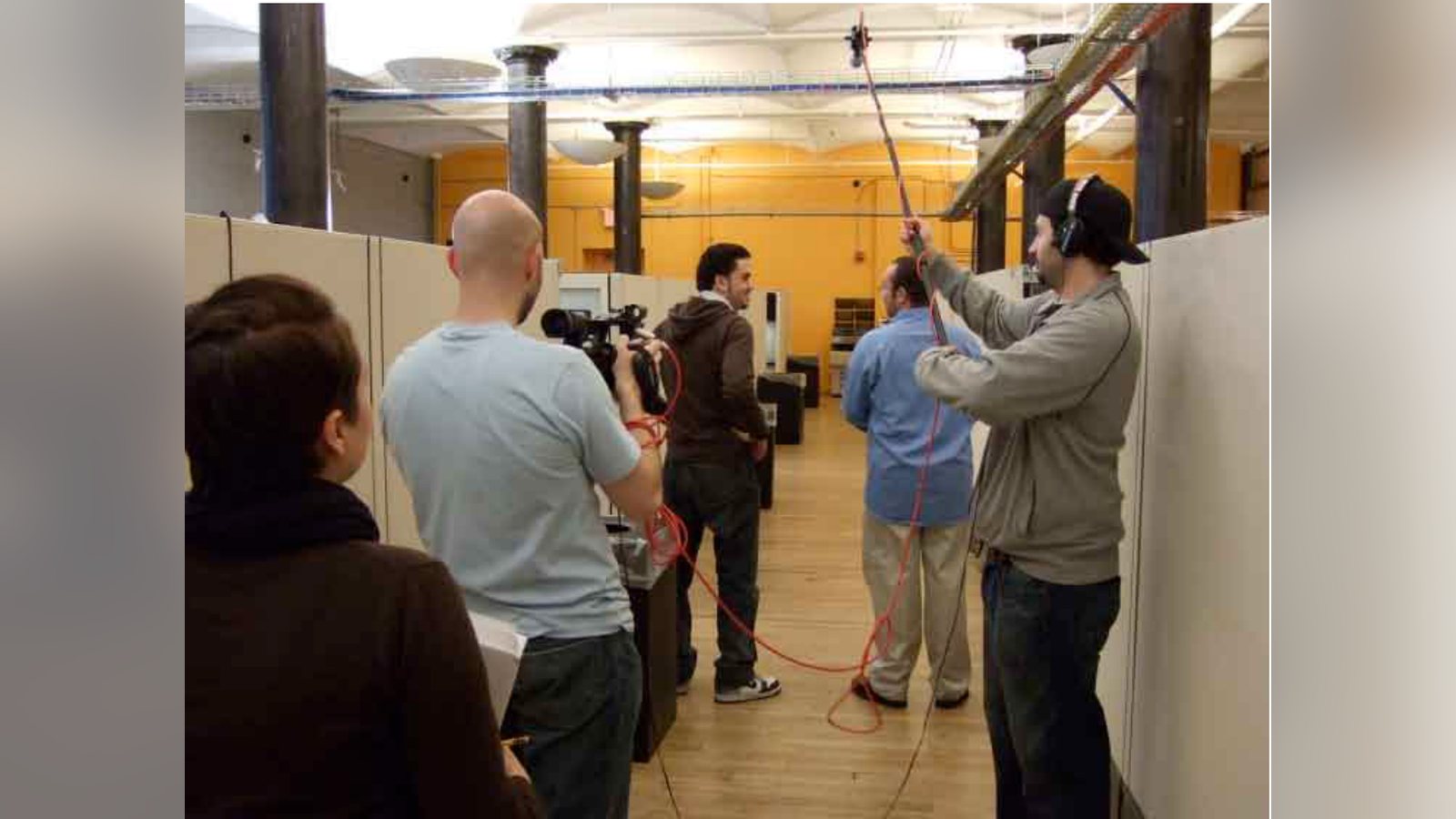
Since there was no rehearsal other than blocking, the shooting became free formed, almost like a documentary. As is the case with any documentary that rushes to capture a moment, there are natural mistakes that occur as the cameraman tries to keep pace with the unfolding of events. For instance, one of my favorite shots came when we were following an actor to a meeting and by accident the actor closes the door behind him before the boom operator and myself can get through. The door was a tinted glass window and our reflection was caught in the door as we basically slammed into it. I loved the shot because it becomes this really funny amateur moment that perfectly depicts the ineptitude of the camera crew making the documentary. This was just one of the instances that was not planned for but once occurred worked perfectly for the movie.
Ironically, I found that it was all the planning during pre-production which fundamentally allowed me the added time during production to seek those joyous happenstances through experimentation with shots, focusing on following the acting, and simply feeling free to make mistakes.
Saro Varjabedian is a New York-based director of photography and has worked on numerous independent films, music videos and corporate videos. He has recently finished production of the spec for Art House Film and is currently in production on the short film, Lake Living Dead. Saro can be reached at www.sarodp.com.
Related filmmaking guides
Keep learning filmmaking
Want more lessons like this? Join StudentFilmmakers free for live webinars with working pros, and stream on-demand filmmaking classes in cinematography, directing, screenwriting, sound and post.