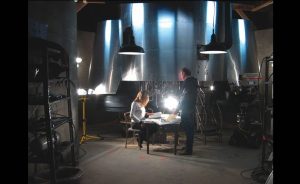

Filming everything from Academy Award-Winning Documentaries, National Spots, Network TV, Ad Agency Videos, and Music Videos. On set with a 60-person crew, X-Games, dodging bullets and jumping out of Black Hawks, or on the side of a mountain in Patagonia, there is simply no substitute for experience.
How did you get into being a drone pilot, and what would you say are the most important skills every drone operator needs to succeed?
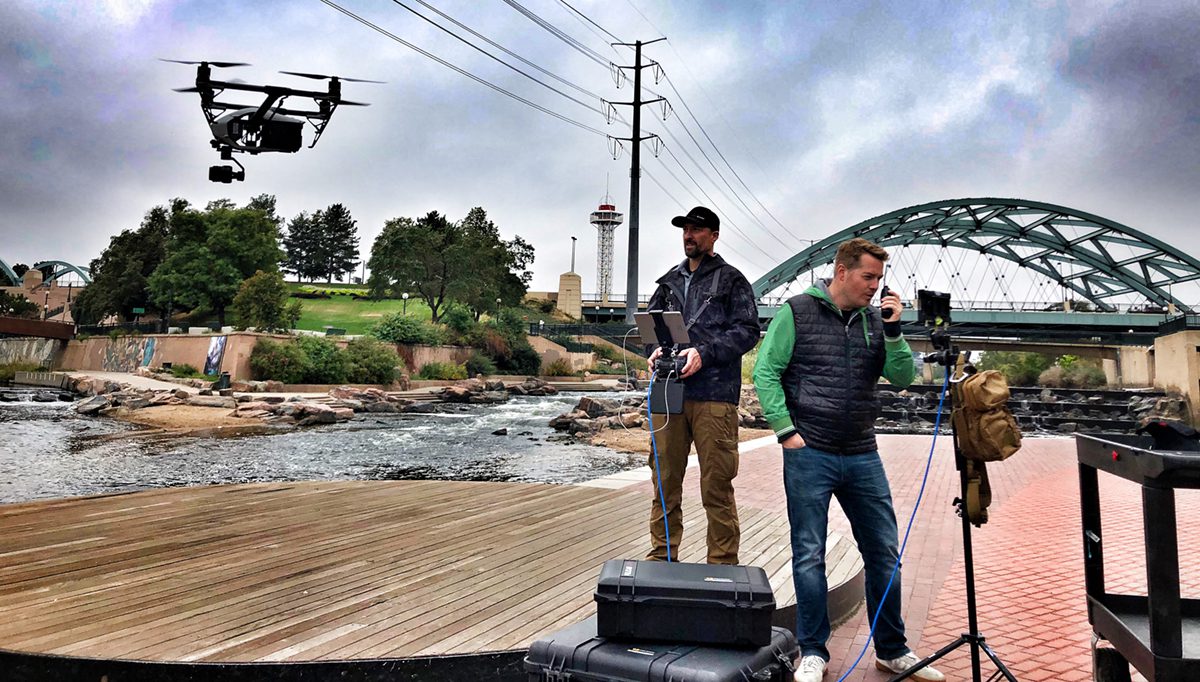
Brook Aitken: I have been a cinematographer for over 20 years, and occasionally my job would have me shooting out of a helicopter, and in the last 8 years or so, I was hiring drone pilots more and more. Eventually the technology improved and allowed quality filming from lower altitudes with better and better cameras attached, and I began to assist in the drone operations myself. Next thing you know I bought a drone and learned how to do it all myself.
I feel like most drone ops usually come from either a hobbyist background or a filmmaking background and both sides have their weaknesses. I think you really need to learn the technical aspects, as well as laws and regulations, as well as the basics of cinematography in order to really capture cinematic aerial images.
When it comes to getting certain kinds of shots, what are your preferred camera settings, frame rate, and resolution that you like to fly and operate your drones?
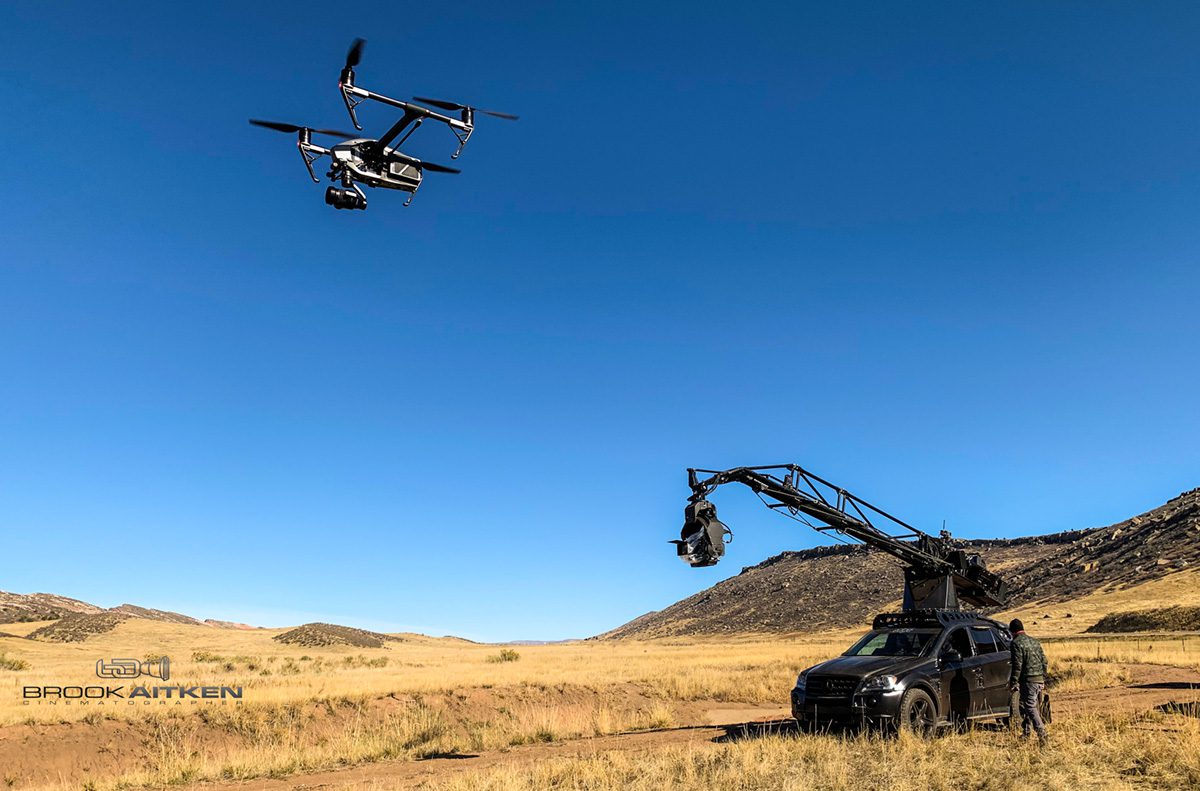
Brook Aitken: I don’t think you can have a preferred setting necessarily, it’s what the client wants and needs. If they need a little guidance on what works better and what doesn’t work at all, then you might have to educate them. I would say 4k 23.98 Pro-Res LOG is the most often format requested, but really it’s all over the place. For car commercials, they usually want the highest resolution possible and the most neutral color space to work with in post. Often times, they really prefer 180-degree shutter 1/48 (or 1/50 depending on your drone) because it allows for natural motion blur while the car really remains “registered” in the shot. It’s often the same using an ARM CAR, but each director has their own magical formula!
If you could share some important Drone Operating Do’s and Don’t’s, what would they be?
Brook Aitken: Firstly, obey all the local laws and FAA regulations. Do this for your own sake and the safety of others. Nobody wants to have a situation or accident because of an illegal flight. It also ruins things for everyone else who are following the laws and gives us all a bad rap.
Prep and Test Your Gear
Prep your gear, test it all out in advance. Don’t just show up thinking, ‘my gear was working perfectly last week…’
Scout the Location
Do scout the location in advance and know your flight paths looking for possible hazards.
Speak Up About Safety
When you know there might be an issue, speak out and speak up! Directors or producers may try to pressure you into doing something that you are not comfortable with, this happens all the time!
How are you navigating and keeping active and creative during these COVID pandemic months?
Brook Aitken: Fortunately for me I have stayed fairly busy between shooting on the ground and in the air. The challenge is to stay safe and keep everyone safe while filming with a crew. Make sure you have external monitors if you have clients on set, so they are not looking over your shoulder [they never should be anyways]. The crews in Colorado do not mess around, everyone always has a mask on, period, and we all sanitize regularly, hands and gear included. It really helps to slow down, plan, and prepare, think for a moment, and don’t rush in the COVID world of production. Luckily, the Drone unit is naturally socially distanced! 
www.coloradoaerialdrone.com
www.brookaitken.com
IG: @brookaitken

Interview conducted by Jody Michelle Solis. Associate Publisher for StudentFilmmakers Magazine (studentfilmmakers.com), HD Pro Guide Magazine (www.hdproguide.com), and Sports Video Tech (www.sportsvideotech.com) Magazine. “Lifelines, not deadlines. Motion Arts. Fusion Everything.”