By William Donaruma
William Donaruma describes three years documenting an archaeological project on the islands of Inishark and Inishbofin off Ireland’s west coast.
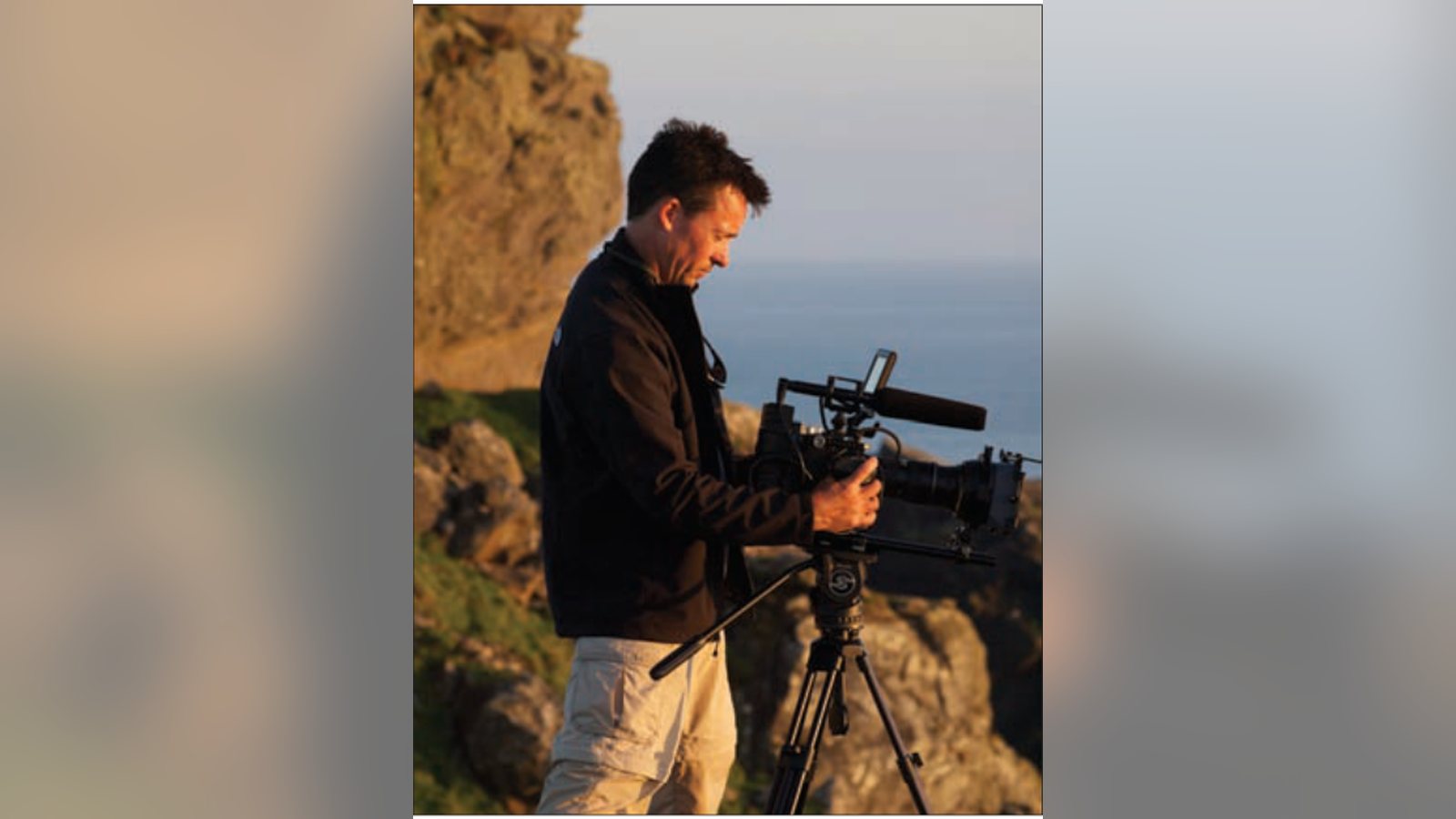
For the last three years I have been fortunate to become involved with an ongoing archeological project off the Irish west coast on the islands of Inishark and Inishbofin. A team led by Professor Ian Kuijt have been researching the history and the people as well as digging artifacts from prehistoric to medieval to as recent as 1960 when the remaining 24 residents of the remote island of Inishark were evacuated by the government and it was left abandoned. This has proven to be a challenging and rewarding experience both in terms of the logistics of solo travel with my production gear that involved planes, busses and boats, but also in working to capture the austerity of the place and the feel of the people living there.
My last venture was in June, 2014 when we were to embark on a two week dig on Inishark, which involves camping with a crew of about 20 people with no power, unpredictable weather and lots of electronic gear. While I, and many of us in production, have learned to handle adverse weather conditions, there is usually refuge at the end of a day or possibly three, but seven to eight days with one day off island in between was new to me. This is also a solo production in handling the gear, workflow, etc. although my pal Ian is always excited to put down his trowel and help when he can and we have made a great team working to capture the essence of these islands.
Getting to the nuts and bolts of handling this production involved keeping most equipment dry, re-charging batteries and off-loading footage on a daily basis. I always bring my RED Epic, which is instrumental for dynamic range, detail in landscapes as well as time-lapse and slow motion. This time, however, I knew I would be shooting more interviews and wanted to achieve a different perspective from angles and motion that would require a lighter camera on a portable jib. I haven’t been too keen on adopting DSLR style shooting, but after having success using a Canon 6D (helmed by an experienced DP, John Klein) as a second camera in Rome, I decided to jump in with a Nikon D600 and Tascam DR-60D audio recorder. This would enable smaller file sizes with longer interviews, as well as floating the camera over the top of the dig site on a Kessler Pocket Jib Traveler. I would also have a back up camera if something happened to either one. You cannot go all that way and then not be able to shoot!
This strategy worked out well as I was also using the new Kessler Pocket Dolly with Parallax attachment with my Epic to achieve a different motion point of view and a RigWheels dolly for longer runs on 12 foot pipe we bought at a hardware store in Clifden. Knowing how to pack efficiently and keep everything dry involved a learning curve as I began to figure out what I would keep along side me in my tent and what I could store outside my tent under a tarp. All of my computer equipment, laptop, hard drives, power supplies, card readers, were sealed tight in a Pelican case that I could flip open and immediately start storing media at the end of day. We did run a generator during certain times, so I would monitor what else needed charging for the crew and added batteries and my laptop accordingly. I always managed to stay ahead of that game and backed up media to Lacie Thunderbolt Rugged drives initially with an internal drive dock as back-up. Once off the island I would back everything up again to a larger Lacie drive and worked off of that to get a quick cut of footage for a community event a few days after the expedition.
The biggest variable was actually learning how to pack so that I could carry everything I needed from site to site and also knowing that weather could shift at any moment, so having a waterproof equipment bag and Cinebag backpack with rain cover proved to be essential. (I have a picture of me carrying all of the gear at once.) These kinds of productions make for constant learning experiences, which is why we all love to get out there and shoot. Both physically and mentally demanding, with sunrises at 4am and sun sets at 11pm, it has been great to push myself beyond a comfort zone and come away with great footage of those memories and great friends along the way. Many shared pints at Murray’s Bar on Inishbofin doesn’t hurt either!
Related filmmaking guides
- Film directing: getting good performances
- Coverage and the master shot
- Camera angles in film: a beginner’s guide
Keep learning filmmaking
Want more lessons like this? Join StudentFilmmakers free for live webinars with working pros, and stream on-demand filmmaking classes in cinematography, directing, screenwriting, sound and post.