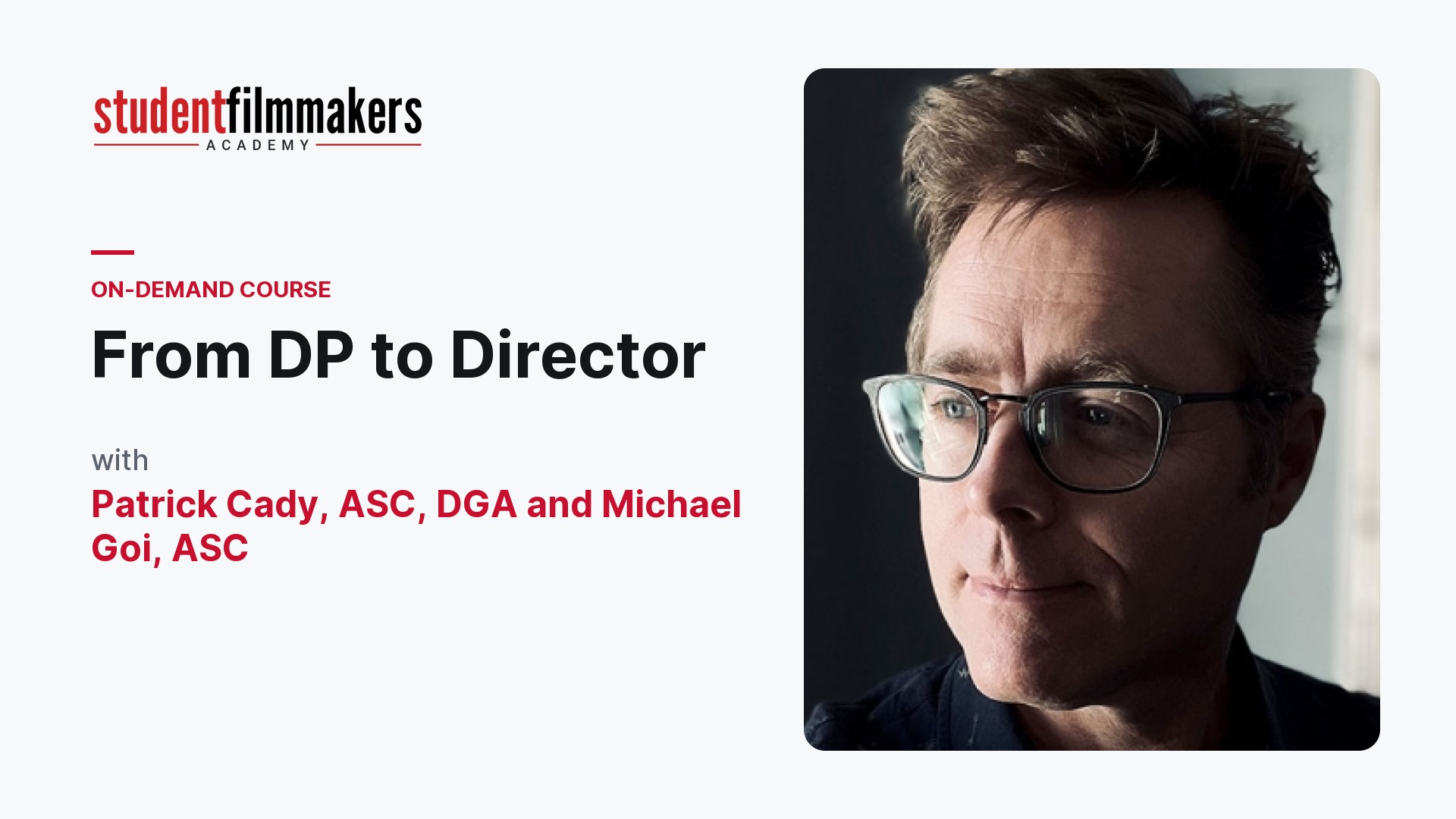
Patrick Cady, ASC, DGA, who shot Girlfight and has directed Bosch and Rectify, and Michael Goi, ASC, the Emmy-nominated cinematographer of American Horror Story and Glee who also directed Avatar: The Last Airbender, compared notes in this class on what the move from DP to director really takes. Their shared answer: know the story cold, plan every shot before prep starts, then stay beside the camera and protect the actors.
Both men have also worked as producing directors, the executive producer who oversees a season’s other directors and works directly with the showrunner. Goi held that job on The Rookie: Feds when Cady came in to direct an episode, which gave the conversation an easy back-and-forth.
What makes a cinematographer ready to direct?
Cady learned it on the second feature he shot, Girlfight, for first-time feature director Karyn Kusama. Both had come up on John Sayles sets, and the lesson was the same: a director who can say what a scene is about can fill any technical gap. He gives DPs this advice:
“When you read a script as a cinematographer, you should read it as if you’re an actor.”
Ask the director the questions the cast will eventually ask. If the team knows those answers, Cady said, you will know where the camera goes.
Goi added what studios are asking about now that jobs are scarcer. Not raw creativity at any cost, but how you run your day. He has never had a day he directed go past 12 hours, and he said that weighs heavily in his favor, alongside his visual storytelling and his comfort with actors. More than half his friends are actors. He works fast partly to buy time for performance.
Both also said that years of watching directors from behind the camera made them cautious. Cady waited as long as he did because he respected great directors so much. And after a career of putting out fires as DPs, they spot production problems early.
How does Michael Goi use a shot list?
Goi has poor short-term memory, so he shot-lists as he reads. After each scene he stops and asks what it needs. If a character comes through a door feeling lost and alone, maybe that’s a big wide shot with her small in the doorway. If he gets the script the night before prep begins, he walks in on day one with a full shot list for the episode. His descriptions stay simple, with small frame sketches and overheads in the margin, so the plan can still bend.
That early list lets the first AD build a real schedule (six pieces of coverage instead of four means another half hour) and lets departments flag problems, like a ceiling that can’t come off for an overhead. Then, on the shoot day:
“When I get on the set to direct, I never look at my shot list. By that point, the shot list has served its purpose.”
It has taught him the story. His motto for staying on track: keep the main thing the main thing. Cady works the same way but finishes each day’s list a couple of days ahead, sends it out with the call sheet, and marks which shots two or three cameras can grab at once. Both have shot for directors with no shot list who walked away missing a critical piece.
What is the right order for rehearsal on set?
Goi dislikes the habit of “shooting the rehearsal.” He tells ADs who suggest it that they might as well announce there will be no rehearsal. His preference, which he jokingly called radical, is to rehearse exactly what he plans to film and then film exactly that. His sequence:
- Read the words. Actors read the scene without performing, which settles everyone into the work.
- Block it. He offers starting positions and props and watches. No performance notes yet, which he says can eat 20 to 25 minutes.
- Walk the crew through every setup. While actors go to touch-ups, he explains all the pieces. Operators may combine two setups with a 10-foot track, and crew park carts where the camera will never look.
- Rehearse for performance, then shoot.
Cady has a hat for it. He had “Block, Light, Shoot” caps made back when he was DP on Cold Case, and Panavision made more for Bosch season seven. Until the actors walk it, he said, prelighting is mostly busy work you’ll have to undo.
Where should the director stand?
Next to the camera. Goi directs from behind the A camera operator, six feet from the actors, not from video village. Actors have told him they can feel him there and that it raises the stakes of their performance. When a DGA trainee asked how he knows a take was in focus, he said that is the focus puller’s job.
“Anytime anybody on the set says, I need another one after I finish a take, I say, OK, let’s roll it again right away.”
Cady’s list of don’ts was short: don’t yell notes over a set wall, and don’t sit in village on your phone, “posting on social media how much you’re directing, because you’re not directing.” Sayles, he remembered, simply never left the set.
How do you talk to actors?
Use as few words as possible. Cady compares an actor to a rock climber: speak only when they have missed a handhold completely. Sometimes the fix is a note to the scene partner, since good acting is reacting. The note he gives most, especially to guest actors told to rush: take all the time you want before you respond, because the editor can tighten it.
Goi has never met an actor who didn’t want direction, from Gary Oldman to Lady Gaga to Jessica Lange. He brings one or two thoughts, and the moment the actor says “got it,” he stops talking and walks away.
“You cannot program a performance. You can’t direct for the result. You can just inspire a result.”
When an actor arrives overloaded, he asks questions instead of giving answers. In one close-up last year, the actor listed five things on their mind. Goi asked them to think only that they were responsible for what happened to another character, and the scene opened up. When a star says “my character wouldn’t do that,” he believes them and asks why. The actors he was warned about, he said, are often his favorites, because their questions come from staying up all night with the scene.
How do you make the jump from DP to director?
Even after hundreds of episodes as a cinematographer, including years shooting Ryan Murphy’s shows, Goi applied to studio training programs to show he was serious. Warner Bros. took him into its directing workshop, then hired him for his first three episodes. Cady’s first directing job, an episode of Rectify, earned a strong write-up in The New York Times, which helped him meet managers. On agents, Goi was blunt: you won’t land a good one until they need you more than you need them, so keep making work.
Leadership, Goi said, means admitting you don’t know everything. A grip’s idea to open a wall can be what unlocks a scene. Cady opens each day’s safety meeting with “let’s be nice to each other.”
For more from these two, read the interview with Michael Goi, ASC, Cady’s Director’s Prep recap, and the basics in How to Make a Shot List.
The full class also covers location scouts walked as story beats, what a producing director really does, and how to work with a DP whose style differs from yours.