By Nash Choudhury
DP William Klayer talks about what he learned on Law & Order, shooting his debut feature and the challenges of moving from cinematography to directing.
StudentFilmmakers Magazine talks with Mr. Klayer about all he’s learned from his years on the show “Law & Order,” the challenges of moving into directing, and shooting in New York.
William Klayer has worked on the Law & Order series since the second season and now with the show finally off the air, Klayer is taking everything he’s learned in almost 20 years of shooting one of the most popular shows on television to other projects. He has worked in various roles since starting on the show working his way up from gaffer to DP to finally directing the show himself in its final seasons. For Mr. Klayer, this is a fulfillment of decades of hard work in the business that has finally lead to him shooting his first feature film as Director of Photography. The film is called, That’s What She Said, starring Anne Heche and Alia Shawkat. After a world premiere at Sundance Film Festival this year US/ Canadian distribution rights were picked up by Phase 4 Films at SXSW. Currently in the festival circuit it will be released in the fall of 2012. We talked with Mr. Klayer about all he’s learned from his years on the show, the challenges of moving into directing, and shooting in New York.
Nash Choudhury: Having worked on Law & Order, you’ve had probably the closest one could get to a steady gig in this business for almost twenty years now. Now that it’s over, what has it been like working on other sets, not that you didn’t work on other sets during your run on Law & Order of course, but rather transitioning over to finding more film work in New York City? What is the demand for film crews like in New York City today versus when you started out? Especially for someone with your high level experience.
William Klayer: I’ve been lucky to have been a part of film production in New York City for over 30 years. Law & Order was an incredible place to be. When I work on other sets in NY I feel great pride in having been part of making New York City the great film production center that it has become in that time. I think there was a time when New York crews didn’t get the respect they deserved but I think with every new production that comes in producers see that we New Yorkers can rise to any challenge, and with great style.
NC: What have you learned from your years of experience on Law & Order as you move on to other projects?
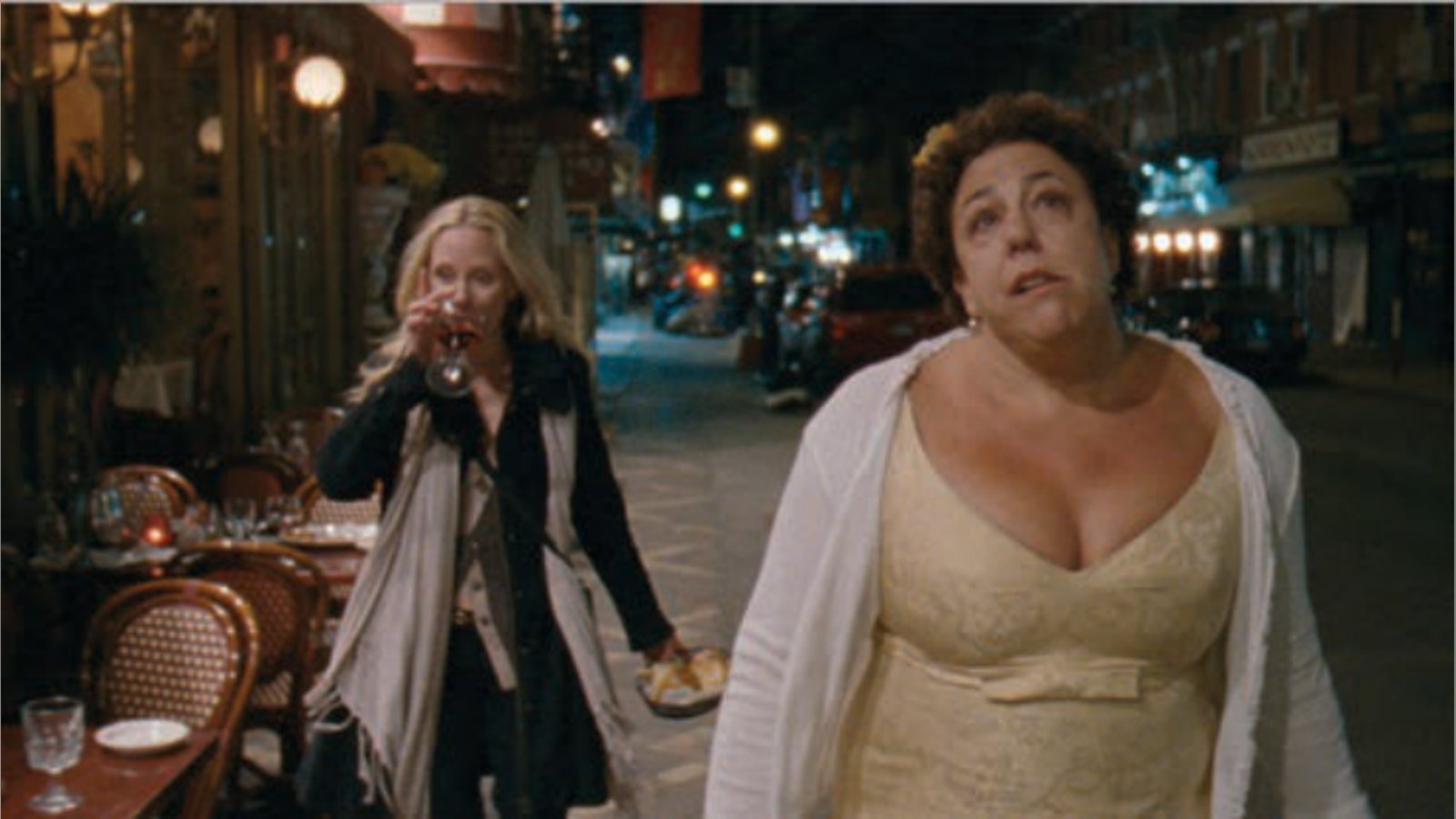
William Klayer: The thing about having done a great deal of episodic television is that it gives you an excellent set of skills in working within the limitations of feature film production on extremely limited budgets. This wasn’t necessarily a lesson I learned doing TV but rather something I paid close attention to while working in that world, knowing that Hitchcock had used that approach doing Psycho. I also learned that while I am always striving to get the best images I can on the screen, it is equally important that I do everything I can to give the director the most time he can get working with the actors during a shooting day. I was lucky to be introduced to Carrie Preston last year, who told me about a low budget comedy feature she wanted to direct. It was a wonderful script (by Kellie Overbey) called, That’s What She Said, and it was about as far removed from the world of Law & Order as you could get. The story follows three women around NYC for a day that just goes from bad to worse and everywhere in-between. There are three key scenes in the film that have an average of 25 pages of dialogue each. We had limited access to the locations we needed and Carrie was concerned about having the time to get through them. But using all the tricks I’ve learned and Carrie applying her years of acting experience, we prepped and planned and got every shot we set out to do.
NC: Are you a big believer in planning ahead through storyboarding? How do you ready a scene before you get to shooting day?
William Klayer: Let’s say I’m a huge believer in having a plan before you start shooting. I think whether or not you need a literal storyboard depends on a lot of variables. Certainly a storyboard is very helpful in that it is a quick visual reference to the shots the director wants and everyone involved in the prep and shoot can be on the same page. I’ve been in the room with a director describing a setup and when he’s done you still aren’t clear what they want. And if your film involves any effects work it is critical to have storyboards as you often have different departments working on the shot at various stages, so again, having everyone working towards the same vision is paramount. Still, I would say that the rule of thumb would be, “Start your day with a plan, but be ready to throw it out.” I’ve worked with many directors and no two work the same. There are directors who show up with a shot list with actor blocking and camera positions written down like football plays and it is all spot on and works like a dream. I’ve worked with directors who have no clear idea what the shots of a scene will be until they’ve rehearsed the scene with the actors. They need that to “see” it themselves. And you can get great work and very rewarding shooting experiences from both. But in either approach you always want to keep your eyes open for that great moment you never thought of or planned for. Conrad Hall had a great line, “I spend all day waiting for the happy accident.” The bottom line is always have as much information about what your shooting day as you can get ahead of time and share that information with your crew. When I worked as a set electrician (and cameraman) you lost count of the times you heard the crew say they had no idea what the setups were. I always pass on as much information to my crew as I can. It helps keep them focused and makes them feel part of the project.
NC: I know you shot on film on Law & Order for years and at the time of the previous interview with StudentFilmmakers Magazine you intimated that it was difficult to transition over to HD due to the production hurdles and the way you guys shot the show. Did you guys ever transition over at any point during the final years of the show? Have you had the chance to work in digital? Please tell me your thoughts about that transition and, if you have worked in digital, did you have to learn anything new to keep up with that technology?
William Klayer: The last two seasons were shot digitally on the Genesis. The conversation to start shooting digitally on Law & Order had begun years ago. We shot periodic tests over the years with various cameras. Initially it was an issue of the image not being good enough. Then with the introduction of cameras like the Red and the Genesis the idea of switching went from a question of “if” to a question of “when”. Interestingly, at the time, Wolf Films was producing another show in NYC called, Conviction, that John Thomas was shooting with the Genesis. What kept us from making the switch at the time was the simple fact that shooting digital wasn’t really saving Conviction any money. They were saving money on film stock but dealing with the new technology was costing more on the post-production end. Still, they wanted to lower the budget on our show so we did our next season (my first as sole DP) on Super 16. After that season production made the call that we were going to go digital. We tested several options. See, for our needs we had to have a very stripped down camera setup. Law & Order was basically a hand held show, and we had to have a system that kept the camera operator unencumbered. That meant working un-tethered by a big cable that went to a recorder or monitor. Luckily for us, this was around the time that SSR drives were being introduced for professional digital motion pictures cameras. We had been shooting with Panavision cameras all during the 35mm years and when we told them what we needed they jumped right in and gave us the SSR-1’s, which were a brand new thing from them. It was very exciting to be part of that. There was definitely a learning curve in the film to digital transition on my part, but no more than going from 16mm in film school to 35mm in my professional career and then back to Super 16. I’ve shot on the Red, Alexa, prosumer HD, HDSLR. Every technology has its limitations and I think the trick is not to fight that, but be aware of it and actually embrace it where you can.
NC: A television show, generally, has to have a consistent vision throughout its run of episodes when it comes to the look of what’s on camera. In that somewhat limited fashion, in what ways do you play within that environment or do you basically keep to the mold of the show?
William Klayer: Most shows have a visual style that is particular to their “world” and helps define it. There’s a great new show on HBO called, Enlightened, that tells a wonderful, very human story, but visually is more cinematic than most television. I think you have to stay within the bounds of what type of story you’re telling, be it comedy or drama, a realistic realm or a stylized one. It’s always great to push the boundaries, but at the same time I feel you have to stay honest to whatever your “world” is. The visual language of Law & Order was actually quite groundbreaking when the show was introduced and I’ve seen it copied many times. But one problem with having a series that ran as long as it did was that the visual style became predictable. However I was in the lucky position that the year I took over the show they decided to throw the stylebook away and give the show to the directors. I worked with showrunner Fred Berner and director Allen Coulter and we came up with a new “look”. It was great for me as I was no longer having to tell directors “we don’t do those shots on this show” to “tell me what you want and we’ll make it happen”. And it was still Law & Order. The scripts the last three years of the show were as strong as any we ever did.
NC: You directed a couple of the later season episodes of Law & Order. Tell me a bit about transitioning over from DP to directing on that show. Was it easier having worked on the set for so long that it was kind of secondhand or was there still a bit of a learning curve now having your hands in every other aspect of production?
William Klayer: Directing was a dream come true. Shooting the show was always wonderfully collaborative with the directors so in a way I had come through the best directing school you could ask for. No two work the same way. One of the hardest parts was just letting go of the aspects of the show you are responsible for as Director of Photography and focusing on the ones that only the director can answer to. And if I thought I had to make a lot of shooting day decisions as DP that was nothing compared to what a director has to deal with.
NC: Were there any specific aspects of directing that were more unexpectedly difficult when transitioning over from just shooting the show?
William Klayer: Yes, my assistant director kept making fun of me because I would forget to either say “action” or “cut”.
NC: Any plans to direct a feature of your own or moving forward in that direction? Is it a real desire that you’ve had for a while or something you just wanted to try out? What stories would draw you towards directing in the future?
William Klayer: While I have no intention of giving up my career as a cameraman, I would absolutely love to direct more. It has been a goal since I got my first movie camera at age 13. I realize it took me a long time to get the chance professionally, but the journey getting there has been priceless. Meanwhile I’ve been trying to exercise my long dormant writing muscles and come up with a short film to do.
NC: What projects are you currently working on or have coming up next? Tell me a bit about them.
William Klayer: I’m still doing television work. 30 Rock and A Gifted Man. That’s What She Said had its world premiere at Sundance 2012 so I went to that. Wouldn’t miss it for the world and having my first feature film as DP screen there was a real honor. I would love to shoot more narrative features whatever the budget. Send me your scripts! Nash Choudhury is a graduate from Binghamton University with a BA in Creative Writing. He also spent time learning the craft of filmmaking, majoring in cinema before switching to the written word. He is currently a freelance writer with a passion for the process of filmmaking.
Related filmmaking guides
- What does a cinematographer do?
- Camera angles in film: a beginner’s guide
- Film directing: getting good performances
Keep learning filmmaking
Want more lessons like this? Join StudentFilmmakers free for live webinars with working pros, and stream on-demand filmmaking classes in cinematography, directing, screenwriting, sound and post.