Two people talking on a couch is the scene distributors cut first, unless the audience is waiting for something. Shane Stanley, director of Night Train and Six Days in Evergreen, builds dialogue scenes around that tension: a reason to listen, staging that feels like life, and an edit that lets the best moments breathe.
What is “dynamite under the couch”?
It is the first writing lesson Stanley ever received. His godfather was the screenwriter Wells Root, author of the book Writing the Script. When a young Stanley said he wanted to write, Root opened the book, circled a passage and told him never to forget it.
The idea goes like this. On a stage, two actors walk in with cups of tea, sit on a couch and talk for five minutes. Some of the audience drifts. Now play the same scene again, but first, in low light, someone sneaks in, lights a stick of dynamite and hides it under the couch. The words haven’t changed, yet nobody looks away:
“We are waiting at the edge of our seat for that thing to blow up. We’re going to listen to every word, to every breath, to every pause.”
You won’t open a scene about a married couple’s finances with explosives, of course. The job is to find your own version of the fuse. One example he kept returning to is Notting Hill. The quiet scenes between Julia Roberts and Hugh Grant play in his flat, and the eccentric Welsh roommate, Spike, could burst in at any moment. The audience is always half-waiting for him, so even the simple talk feels alive. He singled out the gag where Spike’s yogurt turns out to be mayonnaise.
Why do dialogue scenes get cut?
Because the business side asks for it. Stanley said that when a film sells to a cable or TV buyer, the order is often a running time under 93 minutes, end credits included. When something has to go, the car chase stays and the “boring” talk goes. He has been told to drop scenes that set up the whole first act.
So before you shoot, ask the writer’s questions. What is the purpose of this scene, what is its arc, and how does it move the story forward? Clever, Tarantino-style lines that don’t advance anything are in danger. Stanley also watches for a subtler problem he found while editing: the audience getting ahead of the character.
“At this point, the audience is about 20 seconds ahead of the actor, and they ain’t gonna wait much for him to catch up.”
You want viewers working to keep up, never waiting.
How do you stage two people talking?
Give them something to do. Stanley learned this from actor Joel Brooks, who stopped a rehearsal when Stanley was a new director:
“This is not life. People don’t just stand and talk. Can I get a glass of wine? Can I open the fridge and look for something while we’re having this discussion?”
Brooks wanted to wash dishes because his character didn’t want to look his partner in the eye. That is staging as subtext. Is one person standing over the other? Is someone pacing behind the couch? Each choice says something without a word.
Stanley also likes to begin a scene on movement. For a mother and daughter reuniting over tea, he would start with a pre-lap of a whistling kettle over the exterior of the house, cut to the kettle coming off the stove, then to the wide as mom hands over a saucer. In a restaurant, open on a close-up of a sushi platter, follow the waiter carrying it across the room, and land on two people already mid-conversation.
He recommends testing all of this before the crew arrives, with friends and a free viewfinder app on your phone, so you can try lenses and blocking in your living room.
Where should the camera be?
If you are new, start with full coverage: a master, mediums, and coverage on every person in the room, not only the one with the most lines. Stanley has been hired many times to quietly fix films where the director skipped this. A reaction shot of someone listening is what lets an editor lift out a block of dialogue later.
Then add life. Rarely, he noted, does a great film hold a wide shot static on a tripod. Put the camera on a longer lens on a slider or dolly and let it creep, almost unnoticed, to build tension. With three people huddled in a tense scene, a Steadicam can circle them in step with the actors, so the operator lands on the right face at the right time without a cut. Going handheld instead of staying on sticks changes the feel of the same words. Light, haze in the background and a low drone of music all shape how a conversation plays.
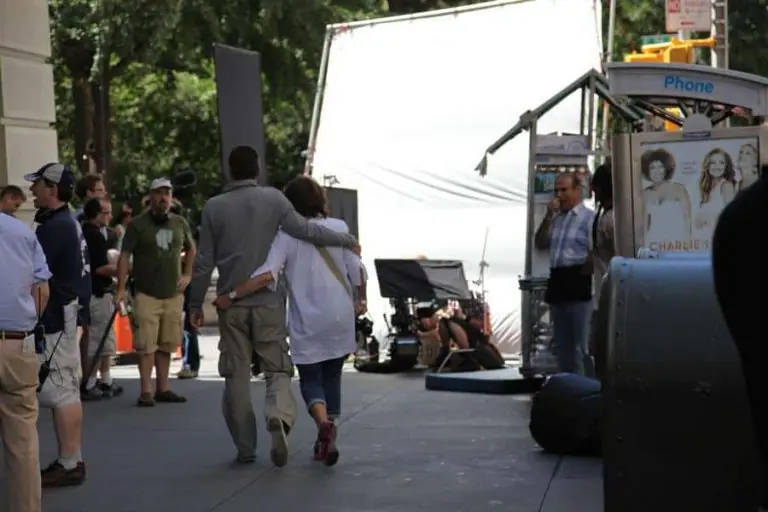
Some scenes need only one shot. He described a scene he was cutting that was covered as a Steadicam oner, plus a reverse for safety. The finished minute and a half has maybe three edits. For more on the basics, see Coverage: Telling the Story with the Camera.
What about a character who barely speaks?
Silence can carry a scene. In Six Days in Evergreen, Dawn Olivieri plays a rock star decompressing in her dressing room after a sold-out show while A Martinez, as her tour manager, rattles off business. Stanley said she has about two lines in the whole scene, and it is the scene that sets up her demons.
He prefers actors who don’t overreact. “It seems the worse the actor is, the bigger the reaction is to the revelation of something.” A still face makes the audience wonder what the character is thinking. He also warns writers about “ping pong dialogue,” pages of he-says, she-says with nothing else happening.
With trusted actors, he lets the words move on the day. His deal with his cast: “Give me what I need and I’ll give you what you want.” When an actor says a line doesn’t fit the character, Stanley calls a five-minute huddle with the writer.
How do you test a dialogue scene in the edit?
Stanley uses three checks, and two of them don’t involve watching the picture.
- Listen from down the hall. When he has an assembly he likes, he plays the scene loud and walks away, eavesdropping.
- Watch with the volume off. Does the cut still flow? Don’t cut every time a speaker finishes; overlap so the scene has rhythm.
- Know when not to cut. If a character opens the blinds and reacts, hold on the face for a few extra frames before showing what they see.
About the first test, he asks one thing above all: “Does this sound like two people organically talking?” Writers can run it too. Ask two actor friends to read a scene into a voice memo and email it back. Hearing it will change how you write.
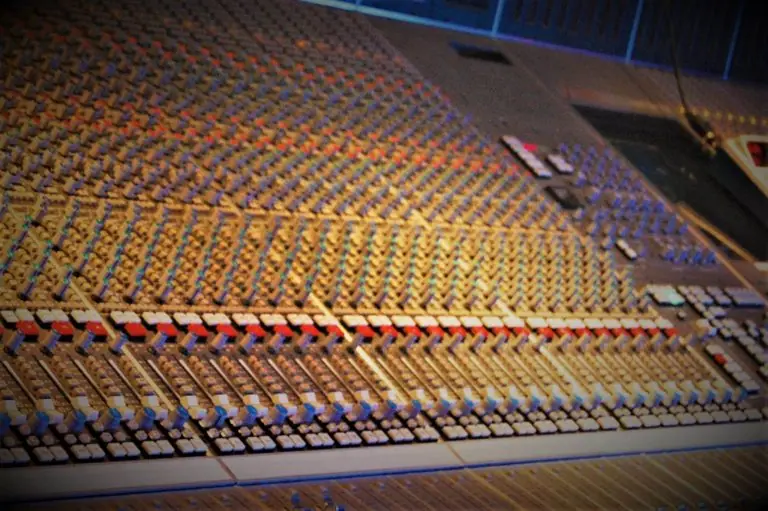
Sound design can rescue a flat scene. Stanley has planned one location beside an airport so the rumble of planes adds pressure to the actors, and he will add a neighbor’s barking dog in post. He also explained why some films bury dialogue low in the mix on purpose, to make viewers lean in. Read more on the recording side in Mixing Panel Techniques for Location Dialogue.
How do you make every character sound different?
Stanley points to One Flew Over the Cuckoo’s Nest, which takes place largely in one room. McMurphy pushes, Billy Bibbit stutters, Chief barely speaks until late in the film, and Nurse Ratched is precise and controlled. Each voice is distinct. Give accents and habits a line in the scene description rather than spelling them out in every word, and picture an actor in the role so the cadence finds its way onto the page.
The full class also covers protecting your script with a U.S. Copyright Office registration, handling scenes where the past drives the present, and how to define a beat.