By Jody Michelle Solis
Filipino filmmaker Paolo Dy talks about Miko, his first-place short film starring Sam and Raymond Concepcion, and how he wrote, cast and shot the story.
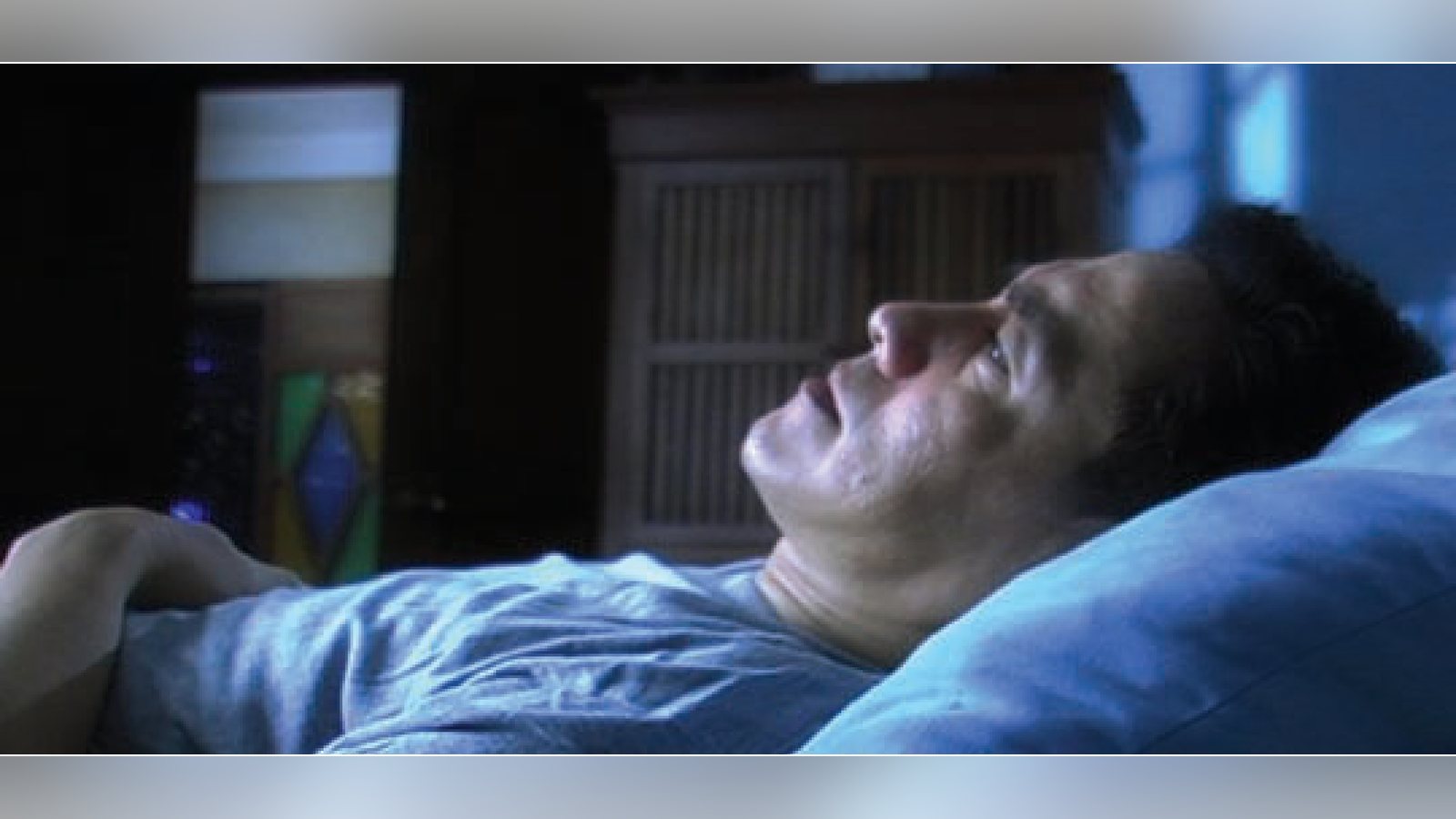
Paolo Dy’s Filipino short film “Miko” is selected the first place winner of the Bogen Imaging Film and Video Shorts 2006 competition. Starring Sam Concepcion and Raymond Concepcion, the story is a snapshot of a moment when a revelation brings down the walls that separate two people, a father and his son. Available for viewing at the StudentFilmmakers.com website, watch “Miko” at http://www.studentfilmmakers.com/bogenimaging/ .
First of all, congratulations on your film!
PD: Thank you!
You wrote, directed, and edited, “Miko,” and also served as director of photography for the short film.
PD: Yes. The film was something that I’d been thinking about for maybe a year, a year and a half. In its original form I wanted it to be twenty minutes. But to fit the requirements for this one particular thing we were taking it to here locally, we had to cut it down to five minutes. And I think it was good because it made us much more focused.
It premiered at the Creative Guild Summit and also screened at the Cinemanila International FilmFest.
PD: Yes. The rule for the short films playing there was to introduce certain topics that the Summit was going to talk about. The Summit had the theme of “awakening” – about the clarity of vision and so on, and so in a certain way, it fit perfectly for what I had been thinking about doing, so I decided to go for it. And everyone supported me there.
What do you think can improve the quality of Filipino film and television, or do you think that part of the solution involves going overseas for schooling?
PD: I guess I’d have to agree with you that part of the solution has to be that we local filmmakers and producers have to be more exposed to production ideas or filmmaking ideas and methods outside the country. We have to demand perhaps a higher standard of quality for ourselves. And that’s pretty hard to do because the market here cannot really support the kind of high budget productions that are being done abroad. It’s really, really nice to be able to participate in the whole resurgence of indie filmmaking that’s going on around the world because we’re able to share different techniques and different ideas about producing quality films at a low budget … There are a lot of things that have to be streamlined about local industry. And I think, yes, it helps a lot to be able to be exposed to ideas abroad. I was in Berlin this February for the Berlinale Talent Campus, and it just blew me a way – the range of different ideas that we were exposed to over there, the range of different people that we were exposed to, and I felt like, my God! I felt so bad, I wanted to bring all my friends there, all my filmmaker friends… Maybe Filipino filmmakers such as yourself who have studied abroad and in the US can go back and start their own film schools in the Philippines?
PD: A lot of the working professionals here have had training abroad, and they do apprenticeships. A few of them have actually put up the film school here, the name escapes me right now. Yes, definitely there is a sharing of knowledge. Whatever they learn from abroad, they do disseminate it here. I think also just as important or more important than the technical knowledge is again going back to the standards of quality that we need to instill.
How did you get started in filmmaking?
PD: I didn’t go to film school when I started out, I was a business major. I actually have two degrees. I’m a Management Engineering and Economics graduate from Ateneo de Manila. But in the middle of college, my dad lent me this video camera and this rinky-dink editing card for my computer… Me and my friends at the dorm would run around and just do different things – music videos, fake commercials, short narratives and lots of little fun stuff. One of my friends showed something that I did to the head of the Jesuit Communications Foundation. He liked it, and that led to my first job as an editor. I started out as an editor, then I started directing, and later on I turned to being a cinematographer as well.
What kind of camera did you use to shoot “Miko”?
PD: “Miko” was shot on a Panasonic DVX100. And very, very basic equipment.
The actors that you cast to play the father and son characters, they’re really father and son?
PD: They’re really father and son. Sam, the kid, was one of the students of my girlfriend, who’s a theatre actress. They’re both theatre actors. My girlfriend recommended Sam to me and said, you better use him because he’s growing up really, really fast, and he’s amazingly talented. In fact, a couple of months ago, he won this national contest here called “Little Big Star” for one of the major networks. It’s one of these talent competition shows, kind of like an “American Idol” thing. And he won first place! Something like one million pesos. And now he’s very well known. We did [Miko] before this whole thing happened, and we were like, wow, this is cool. My star is now a big star. [Laughs]
The story in “Miko” is touching, clever, and very human. What inspired the story?
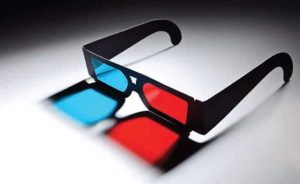
PD: To a large degree that’s based on something that I experienced myself. I myself did not have glasses until I was in grade 5. I had no idea that I was supposed to see any better than I did. So until that age, I didn’t really enjoy movies, I didn’t really enjoy TV because I couldn’t see [laughs] that clearly, and if I tried to go near the TV, my mom would say, hey, what are you doing there? Move back, or you’ll destroy your eyes. [Laughs] So, in grade 5, we had this medical exam for the entire school, and they found out that I bad eyes. And the first time I put on my glasses, it was such a revelation for me to be able to see everything so clearly. So, yeah, a lot of it is based on my own personal experience.
Some first-time storytellers might find the short story form more difficult. When it comes to putting together a short script, what is the key to creating an emotional impact?
PD: I think you really have to at one point step back and ask yourself, what is this film about, and related to that, what is the turning point of this thing? What is the emotional breaking point of your story, where the whole thing hinges on, and how do you effectively lead up to that, and execute it because you don’t really have that much time. To a large degree, it’s in the same thinking that goes into producing a commercial, let’s say. You have thirty seconds to tell your story, what is the one thing you want to say? Same thing with the short form. What’s the one emotion you want to elicit? And that thing has to be the top priority, and everything else must serve that one idea, one breaking point, or one pay off. In the long form, you know, you have your first act, second act, third act. You have that whole structure, and you have a lot of beats to play with, but in the short form you have precious few…
Is it easy to make a movie in the Philippines?
PD: I guess you run into the same challenges you do everywhere else. It is cheaper here to produce a film. I mean in dollar terms, it’s way cheaper to shoot here. But of course raising the funds here is also difficult. Finding the right people to play your parts is also difficult. Basically the same challenges in different forms.
With “Miko,” it helped that I already had a team in place that I’ve worked with on previous projects and with whom I was comfortable, and so the process was sort of streamlined for me, and that helped a lot in achieving everything within one shooting day.
It took one day to shoot. How long did it take to edit?
PD: I edited that in about a day… One day to shoot, another day to edit, another day for sound post production, and maybe another day for all the dubbing out that we had to do, and that was it.
Is there any advice that you could give to say a first-time filmmaker who would want to shoot a film in the Philippines?
PD: Find a local partner. Find a local partner that you can trust because of course coming to a different culture you really have to find someone you can trust to talk to people, to negotiate deals, find the locations that you need. It’s just like if I went to New York to shoot a film, I would have to find someone who knew the city really, really well, where to find the best deals for this and that… Find a local partner and spend some time here, and look around before coming over for the final shoot because there are a lot of things here that you can discover, lots of cultural things that can add character to a film. So really look around and scout around and find a local partner.
What advice would you give to aspiring filmmakers?
PD: I would advise them not to go to film school, at least not right away because a lot of what you give as a filmmaker will be life experience, will be things that you encounter, people that you encounter, experiences you encounter outside of the film world. I may be biased because I didn’t go to film school off the bat, but I really think it’s important that you find that kind of life experience and get to know yourself before you try to become a filmmaker because otherwise you will be an artist without anything to talk about. And you might end up as one of those people who do nothing but make films about films, you know? Tends to get boring after a while.
Paolo Dy is a director, cinematographer, and screenwriter based in Metro Manila, Philippines. Paolo’s directorial work for Ayala Corporation won two Gold Quill Awards of Excellence from the IBC in 2004 and 2005, and finalist citations in the 2004, 2005, and 2006 New York Festivals. Another piece for eTelecare International won the Best of Show award at the STI Knowledge Center Symposium in Las Vegas. In 2004, Paolo won First Place on MTV Asia’s THE PITCH screenwriting competition in Singapore, with his screenplay ‘The Oracle.’ Paolo’s latest projects include the music videos ‘Misterio’ by Slapshock; ‘Just The Way You Are’ by Martin Nievera; ‘Without Your Love’ by Keith Martin; and ’If The Feeling Is Gone’ by Kyla. He also directs television commercials for the commercial production house OutofTheBOX.
Jody Michelle Solis can be reached at [email protected] .
Keep learning filmmaking
Want more lessons like this? Join StudentFilmmakers free for live webinars with working pros, and stream on-demand filmmaking classes in cinematography, directing, screenwriting, sound and post.