By Jon Firestone
Infrared light can taint digital images under the right conditions. Jon Firestone explains IR pollution, why ND filters cause it and how hot mirrors help.
Generally you don’t want infra-red light to show up in your images, and generally it isn’t much of a problem. However, IR pollution can be a problem under the right conditions with most modern cameras. This issue became widely know when the RED ONE camera came out and people began to experience this problem. This was not a RED specific problem but instead became more noticeable as people began using heavier ND filtration. Cameras like the RED have specific filters that filter out most of the infra-red light so that only the visible light is going to be recorded. However, some infra-red light can still reach the sensor and can have an impact on the image and becomes more severe the heavier the ND filteration.
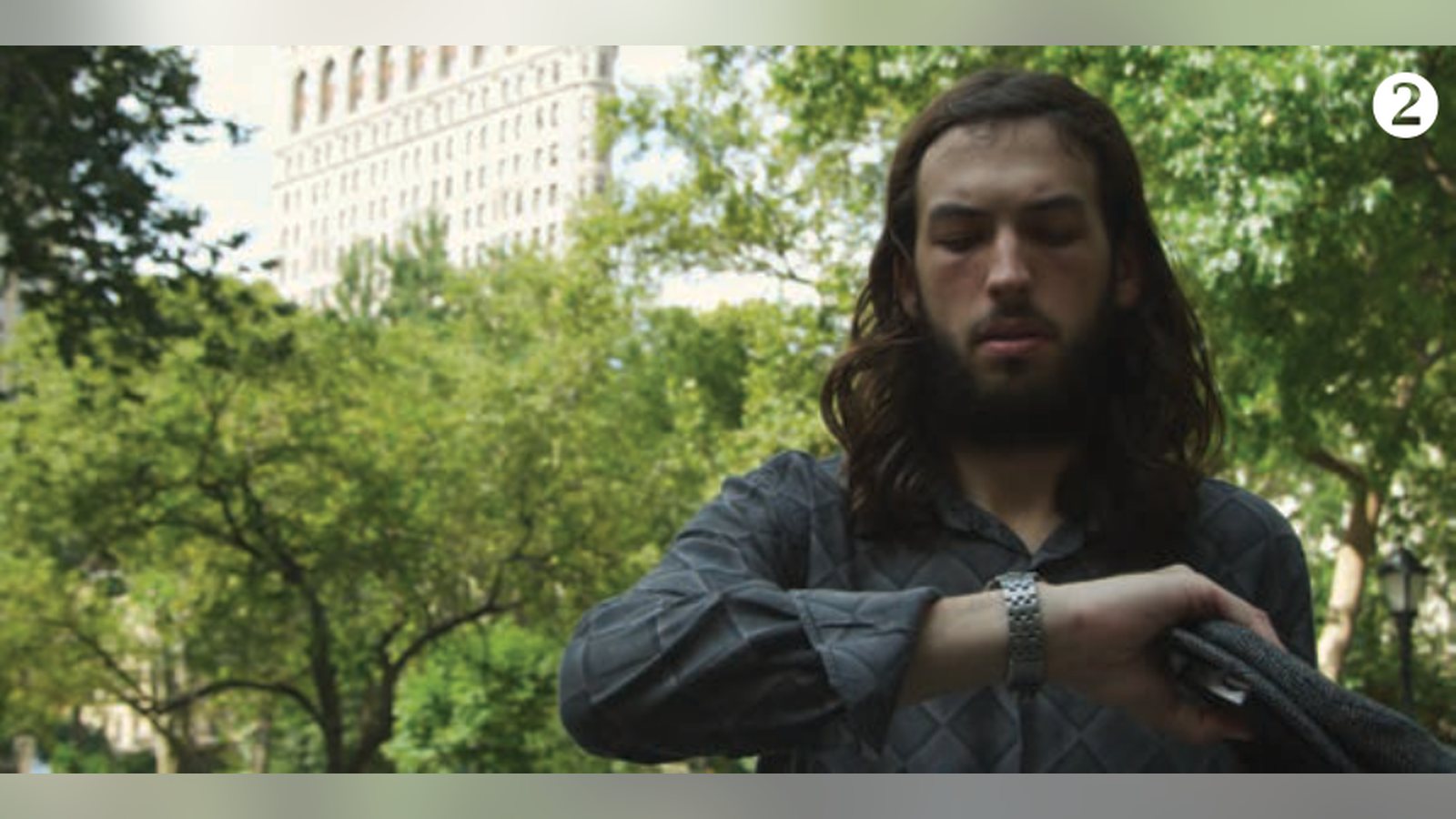
Usually when I am shooting, I am trying to make very cinematic looking images. I will generally lock my shutter at 1/48th of a second and shoot at 24P to emulate the look of film with a 180 degree shutter. Also I often shoot with the aperture of my lens fairly open. Opening the aperture of the lens decreases the depth of field and allows for a more selective depth of field. This works great on my medium and close up shots where I want the background to go out of focus and brings the viewer’s attention to the subject who is in focus. It creates a nice separation of the subject from the background and also allows for dramatic rack focus shots where we pull focus from the subject in the foreground to the subject in the background or Photo 1 is shot with .6 and .9 standard ND filters and shows excessive IR pollution. Photo 2 is shot with a Tiffen 1.2 Hotmirror IRND filter and it has no noticeable IR pollution. Notice that in Photo 1 the patterned shirt looks purple but in Photo 2 it is very grey. Also in Photo 1 the guy’s hat and shirt are supposed to be black, and they are showing up maroon.
vise versa. When shooting outside in sunlight, I usually don’t have much control over the lighting, so I have to rely on the camera to control the exposure. There are four ways of affecting the exposure with the camera. Shutter speed, iris, ISO and ND. My shutter and iris are already set where I want for a desired look. When working with any RED camera, including the RED ONE, SCARLET and EPIC, the sensitivity of the sensor is fixed so changing the ISO does not change the RAW image which is what I am determining my exposure by. So the best option for getting the exposure down where it needs to be is to use Neutral Density Filters. ND filters are great in that they decrease the amount of light passing through them with very little effect otherwise on the image. They usually come in steps of .3, .6, .9, 1.2, 1.5, 1.8, and 2.1. A .3 reduces the light by 1 stop or in half, a .6 does 2 stops or to ¼ and so on.
When in bright sunlight, I often have to ND heavily to reduce the amount of light entering the lens by 4 to 7 stops. Above 3 stops is where IR pollution usually starts to become noticeable. Most ND filters do a great job of decreasing the amount of visible light but don’t have much affect on the amount of infra-red light passing through them. The infra-red pollution can be very obvious especially on black clothing which sometimes reflects a lot of infra-red light and the black comes out looking grey instead of black and often has a magenta hue to it.
There are two ways to solve this problem: ND filters that also absorb IR light known as IRND filters and hotmirrors which reflect IR light. For the best results you can use them in conjunction. My filter kit consists of a full set of Tiffen Hotmirror IRND filters, which combine both types of filters into one and completely block the IR spectrum. These filters have completely solved any IR Pollution problems for me. Jon Firestone served as director of photography and co-directed with Mark Steven Grove, “Gathering of Heroes: Legend of the Seven Swords.” The film stars Martin Kove (The Karate Kid, Cagney & Lacey, Rambo: First Blood Part II) and Christopher Atkins (The Blue Lagoon, TV’s Dallas, the cult favorite The Pirate Movie). Jon Firestone developed and taught the 3D graphics program at the Colorado Film School and works as a freelance director and cinematographer when he is not pursuing his other passion as a Visual FX Supervisor and Animator. Jon is a partner in the Denver-based production company, Asgard Entertainment.
www.asgardentertainment.com
Related filmmaking guides
- Camera angles in film: a beginner’s guide
- Filmmaking resources
- 16 best filmmaking sites for indie filmmakers
Keep learning filmmaking
Want more lessons like this? Join StudentFilmmakers free for live webinars with working pros, and stream on-demand filmmaking classes in cinematography, directing, screenwriting, sound and post.