“Is There Light at the End of the Tunnel?”
Now Let’s Think Outside the Box
By William Donaruma
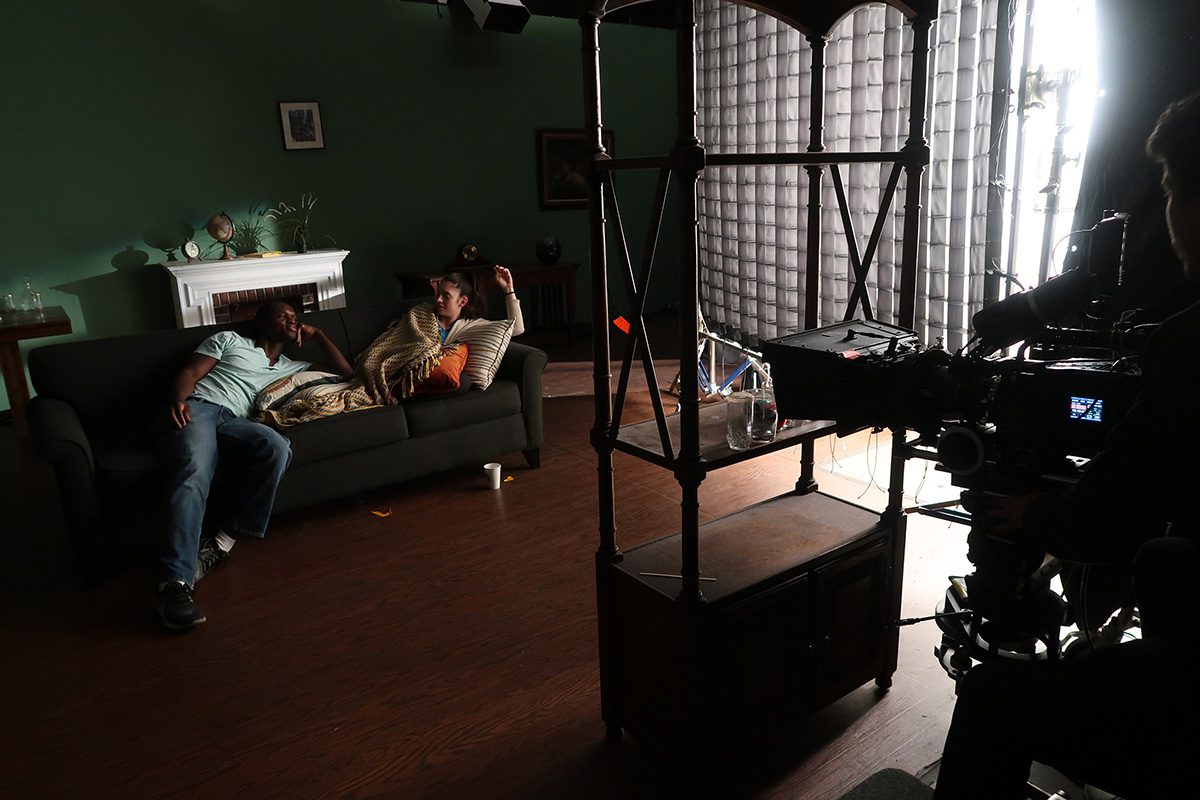
It depends on the tunnel and how it plays in the story. We can get caught up in motivated light sources within a scene. Where is the window or practical light source? What time of day is it? Should it be hard or soft light? I know I can be a slave to naturalism when I have to teach concepts of lighting, so students can look at a space and figure out how and why to place a light for a scene. At an ASC (American Society of Cinematographers) Master Class held at the ASC Clubhouse in Hollywood, CA, we were schooled in how to think outside of that box. Shelly Johnson, ASC (“Captain America”, “Greyhound”) said he isn’t a slave to naturalism and motivated light versus what is right for the scene and its emotion. I asked the question when reviewing a scene in “Captain America” between Steve Rogers and Peggy Carter amidst a bombed building at night. There is a cool blue exterior and a mysterious source of warm light that cascades upon our heroes in an intimate moment. True to the story and the emotion of the moment, the light envelopes the characters to fit the story at that moment when we need to feel their connection.
Storaro’s Approach
On the flip side of this is the avant-garde of Vittorio Storaro, ASC with quickly moving sunlight conveying passion and unrealistic color shifts for mood in “The Conformist”. Oliver Bokelberg, ASC (“The Station Agent”, “Scandal”) strives for an authenticity to images, which find the truth in a scene and in the story. For his work, he approaches the attitude of a scene and the motivation of the camera, light and actor movement. Paintings, such as Vermeer, Hopper and Wyeth, are an inspiration for naturalism and motivated light, but in varying color palettes and contrast. In this case, the darker side of characters towards the camera is more dramatic and emotionally impactful versus the broad lighting strokes required in comedy.
Free for members
Sign up free to keep reading
It’s free and takes less than 30 seconds. You’ll also get our Interstellar issue free, and a community of filmmakers sharing their work.
No credit card. Continue with Google or your email.