What was one of the most important things you learned on set in regard to location sound?
Michael Tierno: Getting great sound happens when location sound recording is given as much regard as cinematography. Perhaps the challenge in getting filmmakers to realize that sound is important stems from the fact that there is less of an individualistic stamp of how location sound recording is done, as compared to the way a DP might give a very distinct look to a film. But, nevertheless, great location sound can make the difference between a good or bad film. Period. In Turn Back Night, (the film that the book, “Location and Postproduction Sound for Low-Budget Filmmakers”, is based on), the location recordings came out so rich and full of information, it will make for a finished film where you can experience the actor’s performance which resides largely in their voices. An actor’s voice is more than 50% of their total instrument in film; if you don’t capture it in its full range, the audience won’t experience the performance as well as it can be experienced. Good sound helps understanding the dialogue, and it also helps to feel the reality of the scene you’re trying to communicate.
Michael Tierno: I also learned that a sound team will need the following:
- “Sides” (script pages) for the day’s shoot before beginning.
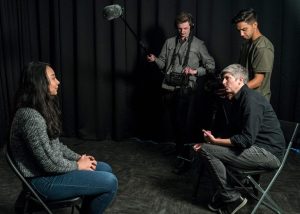
- Let sound make the shooting environment more sound friendly (turn off refrigerators and air conditioners, close windows to shut traffic noise. Let them watch and practice booming during rehearsal, wait for traffic noise and/or airplanes to pass, etc.)
- You can have your sound recordist create the file naming structure, time code, etc. The book goes into this.
- If possible do some location scouting with them so they can listen to the locations and know what awaits them in terms of sound difficulties.
From a technical aspect, good location sound recording will have a strong “signal to noise ratio” of dialogue over any other sounds on the track like ambient noise, etc. This signal to noise ration provides room to work with in postproduction. Good location sound means dialogue is “on-axis” and evenly as far as booming technique. Again, none of this needs to be expensive to achieve, but you have to know the basic principles to get good sound you can do it on any film you make.
What was one of the most challenging problems solved on set in regard to location sound?
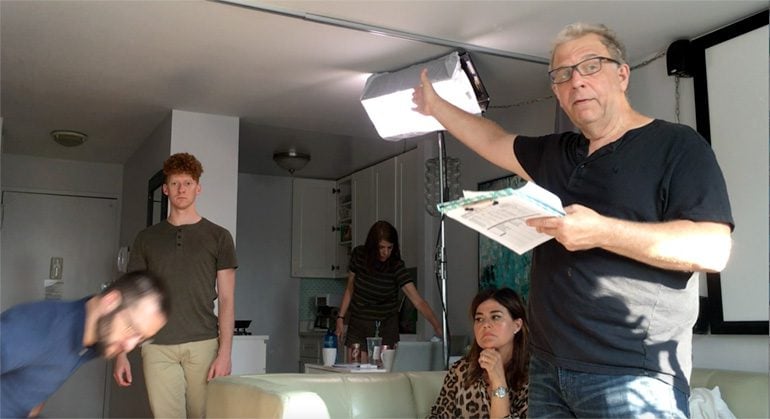
Michael Tierno: The hardest part for me is I work very fast, and sometimes, a location recordist might want to slow down and tell me things about an actor’s voice being low or mumbling, etc. In my case, we moved fast, so the recordist had to work at a faster than normal pace. The other thing is dealing with the sometimes-harsh environment sound recordists create. We were shooting in a heat wave in a small NYC apartment. Every take, the sound mixer turned off the AC and closed the windows. We were all dying in there, but it was worth it. The sound came out great.
Free for members
Sign up free to keep reading
It’s free and takes less than 30 seconds. You’ll also get our Interstellar issue free, free webinars with award-winning filmmakers, and a community of filmmakers sharing their work.
No credit card. Continue with Google or your email.