By David Landau
The biggest challenge for any production is usually time. Can the crew get all the shots needed and wanted in the limited time allocated on the production schedule? Several factors work against this, such as location availability, weather, the movement of the sun and actors’ schedules.
Why Shoot with Two Cameras
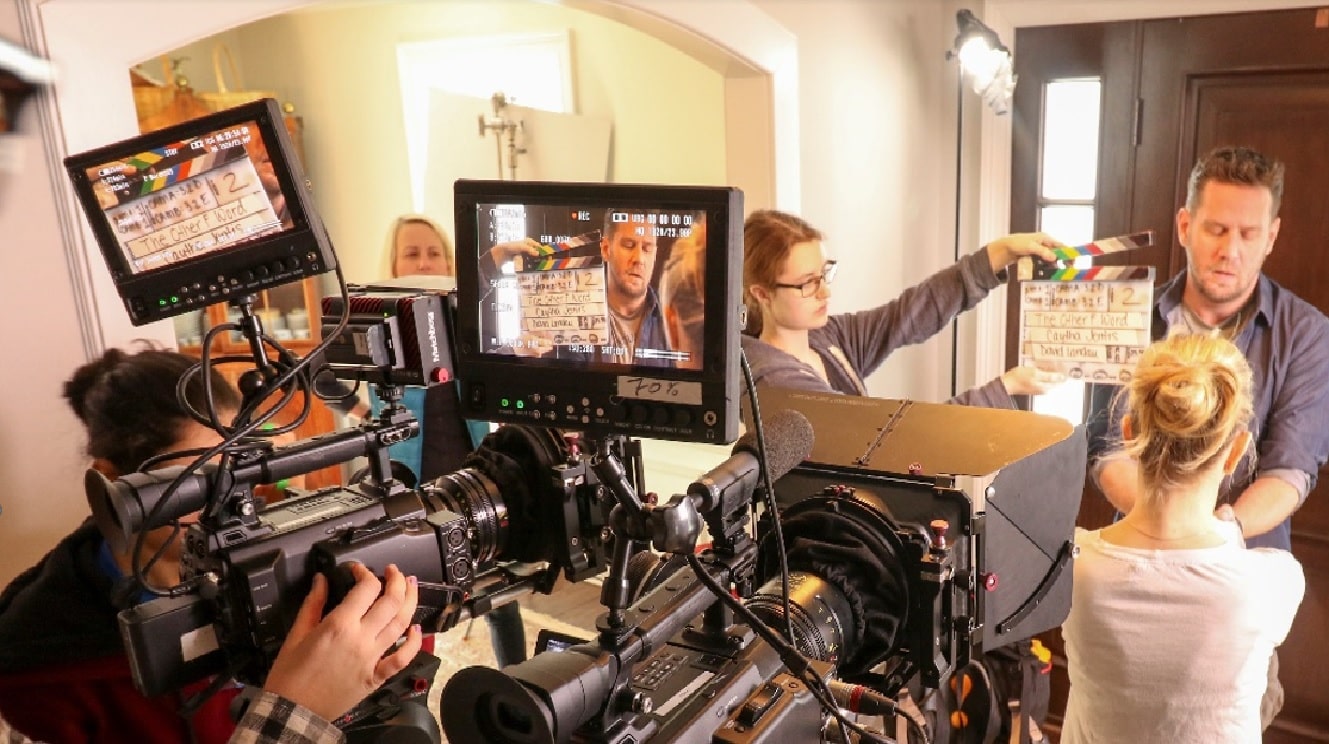
While shooting with multiple cameras has always been the norm in creating content for broadcast, today shooting with more than one camera has become more the norm for all forms of production. Movies, long form TV and streaming content productions have discovered that the costs of having a second camera, operator and AC are offset by the time saved in set-ups, the more coverage completed and the less strain on the actors which directly translates into more consistent and better performances.
But, shooting with cameras at opposing angles, as is the norm in sit-coms and soap operas, can greatly compromise the lighting and hinder camera moves and framing in dramatic production. Most dramatic content is shot “film style”, which means lighting, propping, actor blocking and camera framing are all composed to favor a single camera angle. This allows the shot to be more dynamic and cinematic in framing and lighting and allows the camera to move and adjust its framing more freely during a take.
Free for members
Sign up free to keep reading
It’s free and takes less than 30 seconds. You’ll also get our Interstellar issue free, and a community of filmmakers sharing their work.
No credit card. Continue with Google or your email.