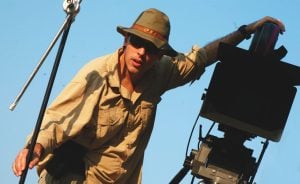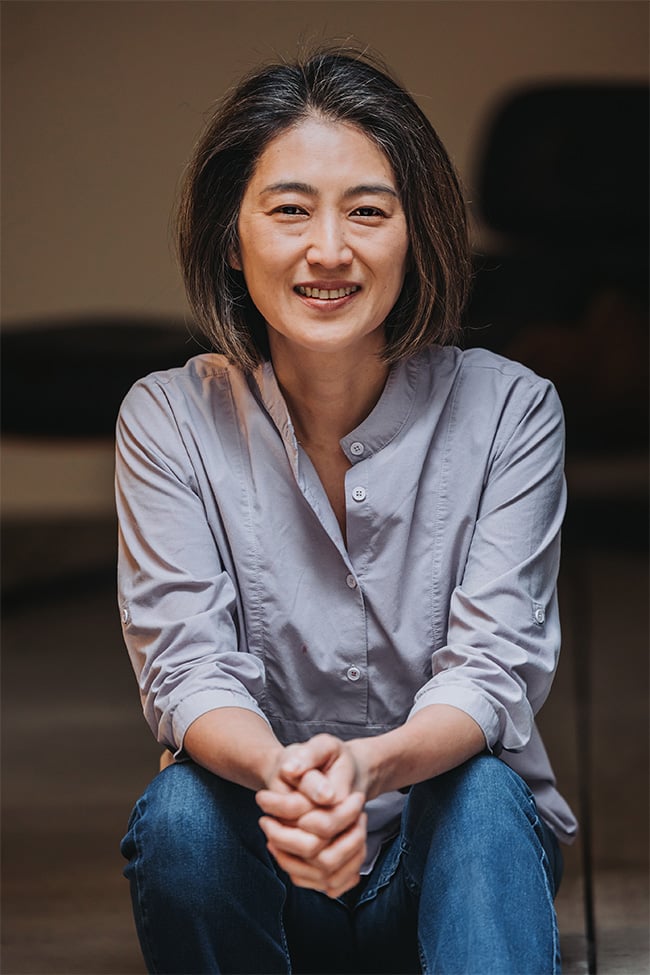
Cinematographer Mari Yamamura on shooting ‘Blue Season’television drama, and her creative use of lighting and filters
I had previously shot a short film with the director, Zen Nguyen, and she got in touch with me for “Blue Season” as our first long form collaboration. It’s a UK & Singapore co-production and has recently been shortlisted for ‘Diversity, Equity & Inclusion Award’ at the Global Production Awards, organised by Screen International to celebrate excellence and sustainability in the global film and TV production, locations and studios, held in Cannes each year during the Cannes International Film Festival. It just happened to be that we had truly diverse crew. We were honoured to be listed along with a much bigger production “Lemonade” from Ireland, which was the winner. “Blue Season” was also represented as part of Marché du Film at Cannes Film Festival. (The full shortlist: https://www.globalproductionawards.com/shortlist-2026 , Screen Daily article: https://www.screendaily.com/news/hamnet-frankenstein-among-shortlist-for-2026-global-production-awards/5215462.article )
Zen is from Vietnam. She wanted to tell the story from her point of view and showcase the people and the culture in an authentic way. Some of the main characters are Vietnamese heritage and some of the dialogue in the programme is in Vietnamese with subtitles. The main language used on set was English but Cantonese, Mandarin, Japanese and French were also heard.
The Blue Look
I closely worked with other departments earlier on in the pre-production to coordinate our colour palette together. The show is called “Blue Season”, and blue colour was used strategically on set design and costume. One of the characters appears to have a complex past life so he was always dressed in a cooler tone such as a blue shirt. All the murderous and violent side of the story had a cooler tone to suggest a hint of sadness and doom.
I have chosen a LUT that has a strong cyan in the shadow and a set of filters that added further cyan in the highlight and shadow. The anamorphic lens set I chose also had a characteristic of a blue flare. I wanted multilayers of blueness visually to go along with the theme and the story.
There was one element of normality and happiness in the story, which is the new recruit in the police force. She appears in warmer, brighter coloured costume to indicate a breath of a fresh air amidst the corruptions that she is about to step in. I wanted the scenes in her home environment to feel like a different place and the only safe place in the series, so I lit these scenes warmly and homely compared to the rest of the show of ‘blue’ theme.
However, as the story progresses and as she slowly gets exposed to the corruption, her costume also shifts to more of a stale blood colour, similar to that of the costume of her boss.
Our Kit Zen and I had worked well together before and she gave me a total freedom regarding the choice of the kit. I got an ALEXA 35 package with a Caldwell Chameleon anamorphic set from One Stop Films and We Love Hue, thanks to their generous help and support. It was a dream combination for me in order to create this modern noir with certain enigma and grittiness.
Lighting: We had a series of interesting locations. One of them was a large house, in which each room
was decorated beautifully in a different style and colour. We made use of every inch of this house to make them look like different interior locations; murder location, one of main characters’ bedroom and living room, a senior officer’s house, the other main character’s halfway house, his lover’s house etc. I generally used the windows as motivation and tried to create naturalistic day and night lighting scenarios with slight high contrast. Sometimes I used the available light and just shaped it. I used a different level of contrast to depict different characters; for example, more contrast and harsh light was used for the corrupt manipulative senior officer.
I often like to mix conventional lighting with a reflective lighting system. In the past, I’ve used two slightly different systems, CRLS (Lightbridge) and KFLECT. On this shoot, I got to use the Godox LiteFlow Reflector System. The gaffer had an arrangement with the company and they kindly supplied some kit for us to try. I used LiteFlow to emulate daylight. We were often shooting in a confined space and the reflector can extend the throw, so it worked a treat in our locations. The system can also create multiple light sources from one light, therefore it’s quite an efficient way of lighting for space and cost. It can also give you precise control by choosing a different size reflector. I used a couple of 7cm x 7cm reflectors to augment the night interior practical lamp, for example, to create a cosy bedroom scene, where two sisters have a chat after a long day.
What I found with the Godox LiteFlow Reflector System is that it’s similar to CRLS from #1 to #3 but #4 has a strip shape light beam, therefore I thought it had a hint of KFLECT elements to it. KEFLECT has an extensive range of different surfaces to create a different quality of light and shadow. I used this LiteFlow #4 more or less vertically to light a person standing in a doorway away from the windows. The shape of the light perfectly fitted the person’s shape and I didn’t need to use any modifiers to control and shape the light. I can also see that Lightflow #4 can be used horizontally in a larger size to light a group of people or to add a shape on a blank wall in the background. I think Lightflow offers an interesting and versatile reflective lighting package.
I knew this shoot was going to be tough, covering a lot of material in such a short time, so I chose a strong camera and lighting crew. They were troupers and we got through it somehow.
Optical FiltersAs suggested in the title, “Blue Season”, I wanted to incorporate a specific hue of blue as part of the look of the show and also took inspiration from the mood board that the director, Zen, shared with me. I chose a LUT, which I thought was most suited for the show from ARRI’s propriety selections designed for the camera I was using.
Furthermore, I used one of Tiffen’s new filter range called Black Soft Glow. When you shine light on it, you can see beautiful blue speckles, which also added an interesting cool tone to the image and worked synergistically with the LUT that I chose. As suggested in the name, the filter kept the black area black, therefore retaining the contrast, while providing a subtle diffusion and halation. This was ideal, as I was aiming for a colour noir feel to the look and wanted to retain the contrast while diffusing the image subtly.
The Glow series seems to be a new diffusion concept in addition to their previous range such as Glimmer Glass and Satin. It seems to work in a slightly different way and it gives a silky glossy feel to the image. I think Black Soft Glow added a sophisticated filmic look to the programme. When I tested it, I knew this was the perfect filter for the show.
I wanted to create a different look for the ending, where all the conflicts are resolved. For this, I used a different set of Tiffen filters called Dark Contrast, which gave a serene and calm look in contrast with all the violence that took place before. Dark Contrast is another new concept from Tiffen. Unlike the previous generation of contrast reduction filters such as Ultra
Contrast or Low Contrast, Dark Contrast only seems to affect the highlight area, while retaining the shadow details, therefore keeping the black area black. At the same time, it mutes the colours slightly in high strength. Dark Contrast kept the same noir theme going, and yet helped create an eerily peaceful atmosphere for the scenes at the end.
Time
The biggest constraint on this shoot was the time. We had to shoot 6 x 30min episodes in 14 days with a single camera. The budget was tight and couldn’t afford a grip equipment, so I decided to pay homage to 90’s landmark TV show called “NYPD Blue”, where everything was shot handheld and more movements were added in post-production to create that style. I shot everything handheld so I could shoot faster than with a tripod or a dolly, but also it allowed me to move and adjust the framing during the take, if I needed to. It was a necessity to get everything shot in the timeframe but, hopefully, it set it apart from other detective dramas and added a layer of grittiness to the story.
New Challenge
I have shot many TV serial dramas but it was my first TV series and I wanted to make sure the lighting and the scenes were consistent throughout the whole 6 episodes, and that the programme had an interesting visual arc to aid the narrative. When I designed the shots and lighting for each scene, I always tried to think about the scene before and after to ensure the transition from one scene to another was a good one as well as an interesting one.
Mari Yamamura
A note from Zen Nguyen, Director and Producer of Blue Series:
Working with Mari is like having a creative co-pilot. We share a clear vision for the story, which made our collaboration seamless. Her instincts behind the camera elevate every scene. She doesn’t just capture the pictures, she tells the story with me, frame by frame.
Mari crafts light and atmosphere with precision. Her choices aren’t about what looks great, but what serves the scene best, giving Blue Season an intimate, cinematic texture and a distinctive visual identity.
Mari and I are working on my feature film, Your Son, set to film next year, I’m excited to explore new creative possibilities with her.
Zen Nguyen
Mari was recently selected for the Future Cinematographers programme organised by @hatchfilms in partnership with @nbcuniversal and @nbculaunch team.
Credits Blue Series:
Golden Finger Entertainment & Featherstone Pictures
Executive Producers: Ly Ngo, Sylvia Wang, Zen Nguyen
Producers: Sylvia Wang, Zen Nguyen
Director: Zen Nguyen
Writer: Dennis Gallagher
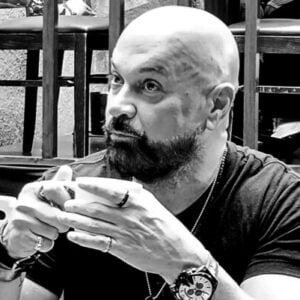
Mari Yamamura DoP
-Kate Darkins Photography
Director/Producer Zen Nguyen
Alt photo: Zen Nguyen
( a download link will be sent by request for the pool of hi res images to accompany the article – request to [email protected])