By Saro Varjabedian
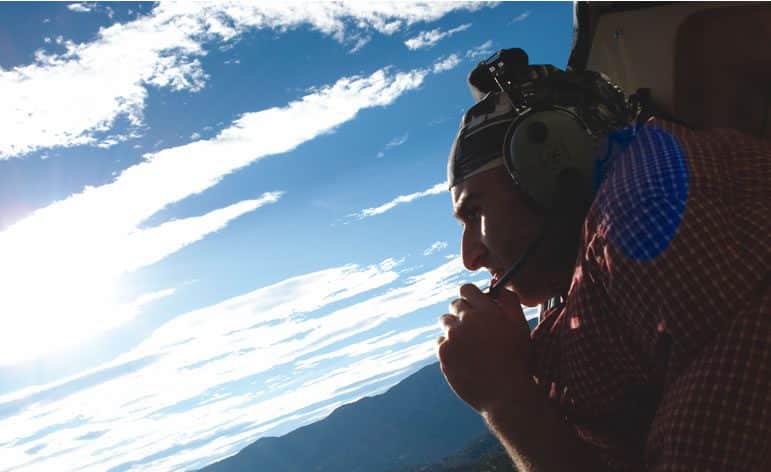
Recently I worked on a project which required aerial photography. The opening shot of the scene calls for a private aircraft, a Twin Star in mid-flight going in for landing at a small airport. During the shoot I have the opportunity to work along side a special breed of professionals. Pilots. The experience reinforces the importance of thorough communication on set.
Planning an Aerial Shoot
As I sit in the back of a small private aircraft heading for the airfield where the aerial shots are to take place, I’m surprised at the great lengths the pilots take to communicate to each other. They do a checklist and verbally communicate every item they check. Things like left engine, right engine, ECU. They even go so far as screaming, Clear! to warn people to stay away from the engines as they turn them on, even though no one is standing by the plane. At first, all these steps seem like they are unnecessary precautions simply done for protocol. Then it dawns on me that maybe the aviation industry established these protocols for a reason. After all, the film industry has its own set of communication protocols. For instance, at the beginning of every take, you often here the phrases, “Quite on set”, “speed”, “roll camera” and “action”.
At the Airfield
When we arrive at the airfield, the first thing we do is reconvene on the ground. I express what I need from the shot and tell them I would like the helicopter to fly along side of the plane as it comes in for the landing. I also inform the pilots what direction I will shoot and in which relation to the sun I need to be. The helicopter pilot asks me how close I want the helicopter to be to the plane. I explain that I need to be as close as possible because we did not have a Tyler mount on the helicopter. All I have available to me is a gyrostabilizer. In order to get a relatively steady shot I will need to be zoomed out as much as possible.
Free for members
Sign up free to keep reading
It’s free and takes less than 30 seconds. You’ll also get our Interstellar issue free, and a community of filmmakers sharing their work.
No credit card. Continue with Google or your email.