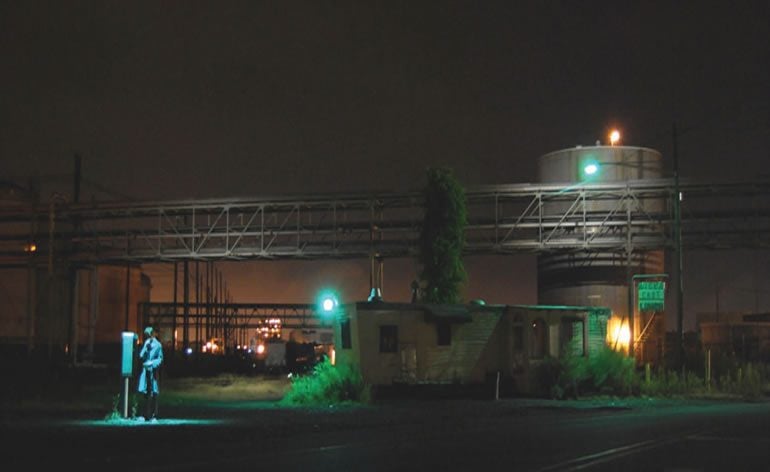
As most people know, the stylistic trend in cinematography over the century has been towards greater realism, which has been easier to achieve in low-light situations thanks to more sensitive film stocks and electronic sensors, plus faster lenses.
Making Images Look Real
There has always been an impulse to make the lighting in a movie logically motivated, even in the heyday of the Hollywood Studio Era – for example, if someone lit a candle on the left side of the frame, the movie lamp simulating that source would not come from the right side of frame. A window on a soundstage set, in a scene set in the daytime, would have bright light shining through it, moonlight would appear darker than sunlight, etc. This natural drive to motivate light logically and dramatically, according to the needs of the story, was tempered by the studio’s request that actors look their best at all times.
Trends came and went over time, from the very diffused look of the 1930’s to the very crisp look of the 1940’s, from shallow-focus to deep-focus cinematography, or from the somewhat Expressionist or Baroque use of shadow patterns to the simpler lighting of the 1950’s. The experience of World War II caused a lot of directors and cinematographers to strip away some of the more elaborate visual flourishes of pre-war cinema in search of greater naturalism. However, to modern eyes, some of this simpler lighting strikes us now as looking more “brutal” rather than more natural, as if many scenes were lit by just parking a 10K next to the camera. What seems like realism to one generation often looks like artifice to the next.
Free for members
Sign up free to keep reading
It’s free and takes less than 30 seconds. You’ll also get our Interstellar issue free, and a community of filmmakers sharing their work.
No credit card. Continue with Google or your email.