By Leonard Guercio
Digital cinema is here, yet film remains the first choice for many. Leonard Guercio explains what shooting on film still offers filmmakers and students.
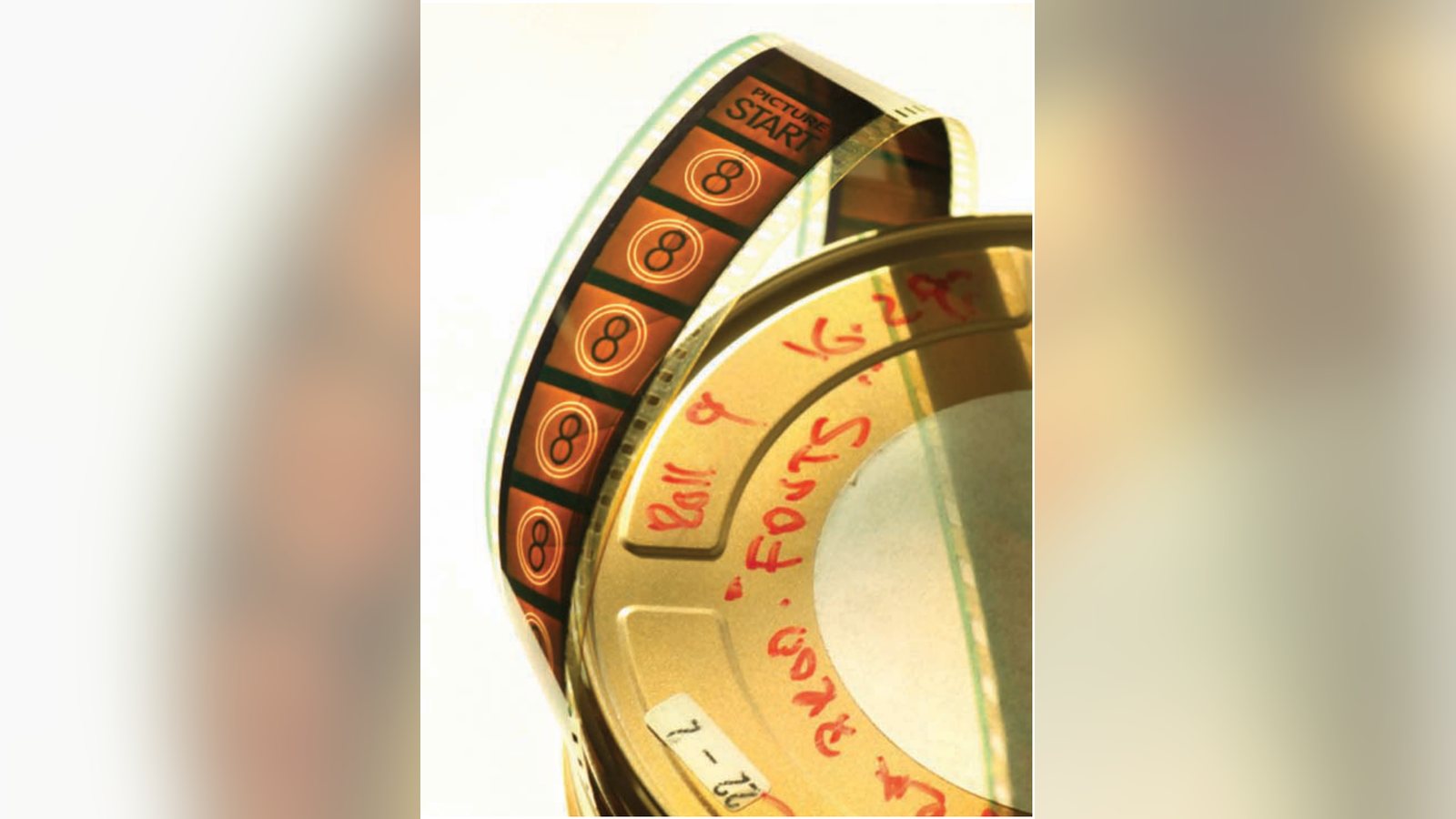
If nothing else, NAB2007 clearly confirmed the inevitability of a completely digital cinema. As time passes, more and more moviemakers are choosing to acquire their images digitally. Technological progress, cost-effectiveness, ease of use – these are some of the many factors responsible for this choice. And this year, with the NAB debut of Peter Jackson’s impressive short movie shot on the Red One camera, the message is clear for all to see: Digital Cinema is now President-elect, ready to take over the work of the outgoing leader. The forces that be have made their decision and there will be no significant return to photochemical image acquisition on celluloid. Yet despite this fact, the medium of film still remains the first choice for many filmmakers and, for numerous reasons, it cannot be easily dismissed or disregarded.
For many working in our field (myself included), this realization brings a pang of sadness, a pang of resistance. A golden era is passing and no amount of railing against God, nature or man can stop it. In advising film students who desperately want the film shooting experience, I’m compelled to accept my own counsel: Don’t become too emotionally attached to a medium for its own sake – there’s no future in it. However, for those of us who are passionate about the look and feel of film, this is easier said than done. We are enamored with celluloid’s unique characteristics. We have grown a certain attachment for how it affects us. After all, falling in love with film is not unlike falling in love with a person. It just happens and we can’t really explain why.
Many of us realize that, in the final analysis, effective filmmaking is fundamentally concerned with emotionally connecting your film’s content with your audience. The medium is merely the means of establishing that connection. No one can deny that the specific qualities of the medium are integral to the subtle manipulation of your viewer’s emotions and thoughts. The simple truth is that, to paraphrase editor Walter Murch, when a movie is over the audience primarily remembers how they felt.
So why should we bother to shoot in film at all? Raw stock is expensive. Processing, telecine transfer and color correction costs are high. Making a digital intermediate puts a major strain on the post-production budget. On top of all this, proper storage of processed camera original film requires a temperature and humidity-controlled environment to preserve image fidelity. All these factors add up to great financial expense. New HD digital cinema cameras – like the Red One, Viper, and the Sony CineAlta line – continue to approximate the appealing characteristics of film. And, since we are editing non-linearly using computers, originating with digitally-captured images makes sense in maintaining a uniform workflow. Yet, despite all these considerations, there are several major reasons why shooting in film still matters.
First: We have been looking at moving images on celluloid for over 110 years. As a culture, we’ve grown accustomed to film’s look and feel. (We even seek to emulate its 24p frame rate in video.) To many of us, celluloid looks “real” even though video looks more present. Why is that? One theory is that, because film’s emulsion is made up of organic compounds, it is alive in some sense. When it’s cold, the emulsion shrinks. When it’s hot, it expands. As carbon-based life forms, we humans react the same way.
Second: Each frame of film is composed of a different, random array of light-sensitive silver halide crystals. In contrast, the CCD or CMOS chips in digital video cameras have a fixed array of light-sensitive pixels. In shooting a static image — like an empty room or a bucolic landscape – each film frame is formed by a unique configuration of silver crystals to represent that image, whereas each frame of video is represented by exactly the same pixel structure. On a subliminal level, our brains register the moving grain pattern of the film frames and we perceive each frame as being unique, almost alive. Because there is no significant movement of the pixels, motion video of the same scene appears to be artificial by contrast. This effect is perhaps further reinforced by celluloid’s long-standing primacy in our culture.
Third: From the very beginning, film has been and continues to be high in image resolution and wide in brightness range. At a local movie theater, I recently saw a newly-struck 35mm film print of Frank Capra’s IT’S A WONDERFUL LIFE. Previously, I had only seen this movie either broadcast on network TV or played back from a standard definition DVD. Projected on the big screen, the film print revealed intricate details that I had never seen before. The rich blacks, finely separated gray tones and subtle highlight details helped further increase my enjoyment of this classic American film.
Fourth: Since a frame of 16mm/Super16mm film resolves approximately 2000-to-3000 vertical lines and 35mm/Super35mm 4000-to-6000 lines, film is inherently high in definition and therefore is upwardly extensible in the future. By contrast, some HD video cameras — like the Sony CineAlta — resolve only 1080 lines of vertical resolution. (A 1920×1080 video frame contains slightly more than 2 Megapixels – significantly lower than the 5-to-10 Megapixel digital still cameras currently on the consumer market!) There have already been a good number of feature films shot at this resolution. However, contemporary HD video technology is still in transition. Because of this, we can expect the present industry image acquisition standard to be supplanted soon by newer, higher resolution solutions like the Red One or Dalsa Origin 4K cameras.
One may argue that, at present, home theater monitors and televisions can only reproduce a maximum resolution of 1080 lines. However, we can also expect that this will change in the near future. So what happens to the movies shot in 1080p when home theater resolution does go to 2K or 4K? Can they be adequately up-converted to the new resolution standard or will they look low-res like SD video on an HD monitor? At this point in time, acquiring images at 1080 lines of resolution can be detrimental to a movie’s future life in higher resolution formats. This is not true if that movie is shot on 35mm film.
Last year I attended an HD seminar in New York City. After much discussion about film versus HD video, I asked a question about the threshold of human perception. I wanted to know at what point does the human brain cease to perceive changes in image resolution. Among those in the know, there seemed to be general agreement that most people are unable to discern fine details above 2K-3K resolutions. I breathed a loud sigh of relief, confident that the physical limits of perception will finally put an end to our chase for greater resolution in digital imaging technology. So, as long as it is viable, shooting in film will ensure that your movie will be adaptable to whatever HD video standard arises in the foreseeable future. After that, our next step will be the move from 2D to 3D image acquisition and projection. And this frontier marks the limit of the known visible imaging universe.
Leonard Guercio is an independent filmmaker and an adjunct film professor at Temple University in Philadelphia.
Related filmmaking guides
- What does a cinematographer do?
- How to become a cinematographer
- Camera angles in film: a beginner’s guide
Keep learning filmmaking
Want more lessons like this? Join StudentFilmmakers free for live webinars with working pros, and stream on-demand filmmaking classes in cinematography, directing, screenwriting, sound and post.