By Patrick Moreau
Using a jib because it looks cool? Patrick Moreau explains how a crane can add to, or take away from, the story in company profile and narrative videos.
Been thinking about using a jib in company profile videos. What do you see the role of a jib in a storytelling aspect? Feel like I’m doing it just because it’s ‘cool’ and don’t necessarily want go down that path if it doesn’t enhance the story.
Whenever we are looking at camera movement, we start with one fundamental idea; how you move your camera is how you move your audience. You can make your audience feel steady and still with a tripod or you make them feel energetic by adding a steadicam and running alongside your characters. So with that, what does a crane or jib add to your story?
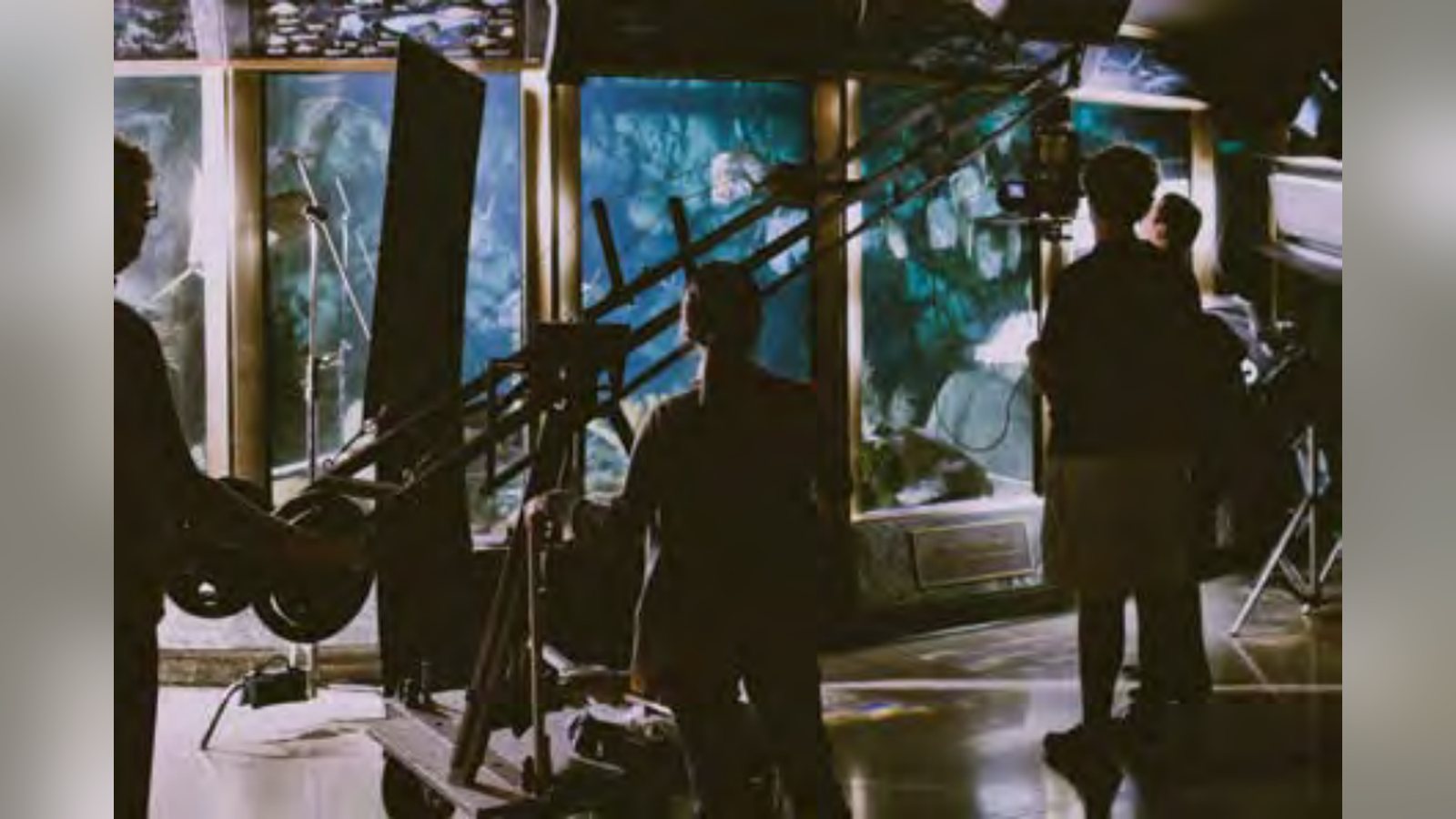
When we think of a crane move, most people first think of the vertical rise or fall, which is definitely a strong move and a big part of what a crane can offer, but it can also do so much more. You can keep the camera low to the ground and use it to sweep in. Or you can get even more complicated and use all three axes to bring the camera up/ down, in/out, and left/right. All of these options you can do with a crane add up to let you as the storyteller say some pretty powerful things. Here are a couple of the biggest storytelling implications when you use a crane:
Production Value
The giant sweeping moves of a crane or jib add a certain level of production value. What does production value mean? The moves are generally less common on smaller shoots than something like a tripod or dolly, and so adding in super smooth sweeping shots makes the production feel more expensive, produced or higher end.
Now when it comes to story, that can be a good or bad thing depending on what you are trying to say. If you are shooting a commercial for a well known large brand, using a crane can help the look and feel of the piece match the image or brand of the company. If you are shooting a smaller shop and trying to put together an intimate story of what they are about, a crane might be too grand or too strong for their story and it could pull the viewer out. As much as we constantly try to make our stories stronger, we need to be careful not to overproduce stories that call and need simplicity. For our wedding films, as an example, we have very rarely used a crane because the shots have so much weight to them and feel so grand and produced that it can take away from the intimacy of a story. That isn’t to say that you can’t use a crane at weddings effectively, it is just that the way we tell our stories, they would take away more than they add. So the take home here is, a crane can make your story feel more produced. The key is thinking about how produced you want your story to feel. We’ve used a crane to add production value in shooting spots for Callaway Golf. In A Game of Honor, we rarely used a crane, but on the couple shoots we did, it was used for establishing shots or scenics of West Point and the Naval Academy. Using a jib made the locations feel very grand as they are introduced, something very fitting to the history of the locations and the storyline of the film.
A Unique Perspective
A crane allows you to get much higher perspective than we are used to. It allows the viewer to look in on a scene as if they were looking down from the sky. That perspective can be a great way to show context, or it might be to remove your audience from the scene and have them feel like they are looking down and in on everything. Whether this adds to your story definitely comes down to what your story is about. An application of the perspective offered is the ability to get direct overheads. Shooting directly down on situations offers a very different point of view and often offers an opportunity for some very interesting compositions through the lines and shapes found when looking down. In the Morgan Pressel piece, part of our series for Callaway Golf, we used a jib to give us a direct overhead of Morgan teeing off. There was a lot to be said about the precision of her swing and we wanted to dissect that through a series of strong compositions from different perspectives. There are other ways to get direct over head shots, but a crane is often the safest and one of the most precise. We’ve used ladders and monopods before, which offer an incredible speed, but it definitely isn’t the sturdiest option and you are making educated guesses on your exact composition.
Changing Perspectives
A very powerful use of a crane is to use it in a way that changes perspectives within the same shot, something that very few tools can do. Say you are shooting an Olympic commercial with a diver. You want to convey the grandness of the Olympics and the power and tension in the moment right before they stand on the diving board. An easy option would be to shoot them approaching the diving board and then cut to a really wide shot of the entire area, with thousands of fans screaming. The challenge is that something is lost in that cut, we drop the viewer into the intensity, we don’t slowly ease them in. If we were looking at this with a crane we could start in close, perhaps over the shoulder. As the diver approaches the diving board, we pull the crane backwards and up in the air to start revealing just how big the space is and how many people are there. In one fluid shot we can completely change perspectives and let the viewer feel that change, slowly revealing it to them.
These are some of the ways you can use a crane to add to your story. As with any tool, remember that there is a big distinction and point to be made about how you use it. A crane can be used to offer static or subtle shots just as much as they offer the epic sweeping moves. How you move the crane and the speed at which you move it all contribute to what it says and what it adds to your story. Patrick Moreau is one of cinema team leaders at StillMotion (www.stillmotion. ca). Over the years they have shot weddings from Japan to London, as well as work for commercial clients such as Canon and IBM. “A Game of Honor” is StillMotion’s three-time Emmy winning documentary for Showtime, including best sports documentary for 2012. Patrick will be on the road as an instructor for KNOW. Visit www.knowbystillmotion.com.
Related filmmaking guides
- What does a cinematographer do?
- How to become a cinematographer
- Camera angles in film: a beginner’s guide
Keep learning filmmaking
Want more lessons like this? Join StudentFilmmakers free for live webinars with working pros, and stream on-demand filmmaking classes in cinematography, directing, screenwriting, sound and post.