By Mary Ann Skweres
Award-winning editor Steven Sprung directed Dispatch, about one night in the life of a Hollywood limo driver. How write-what-you-know became a film.
The common wisdom generally imparted to new screenwriters is to write what you know. In Dispatch, a story about one night in the life of a Hollywood limousine dispatcher, co-writers Michael Bershad and Steven Sprung take that advice to heart. Both came to Hollywood to work in the film industry and met on their survival job.
Michael shares, “We drove limos together in Los Angeles from this drafty old airplane hanger, oil on the ground, cold and miserable in the winter and hot in the summer. It was very glamorous.” Sprung adds, “We sat on these pull out seats waiting around dispatch all day long without getting paid, trying to get these little airport runs that would pay us about thirty bucks for two hours of work. That would be our whole day’s work. While we were sitting around, Michael and I would just be talking.” Over that time, they discovered their “mutual interest.” That interest has since segued into a multi-faceted collaboration that draws from the complimentary talents that each brings to the partnership.
Bershad had been an actor in New York and was an actor in Los Angeles. Wanting to be a serious actor, he often rejected commercial and soap opera assignments, holding out for classic stage acting jobs, a decision that somewhat hindered his success in the acting profession. “That is just the death knell for an actor’s career,” admits Bershad.
Bershad also did a number of other jobs in the movie business, including working as a casting director.
Sprung dreamed of making films since he was a teen. He first discovered the magic of entertaining people when he started performing magic tricks at kids’ parties. “I was fascinated by illusion and manipulating peoples’ perceptions of reality. Entertaining people with sleight of hand was an enormous rush,” reveals Sprung. “Making films is the ultimate sleight of hand.” Early on Sprung discovered an aptitude for editing, which was confirmed when he received a prestigious American Cinema Editors’ A.C.E. student editing nomination while still in college. Opportunity steered him into editing, but the directing bug never left. He made a number of short films, pretty much doing everything from “writing to directing to doing the camerawork to standing on my head.”
Eventually Sprung got to the point where he needed someone to work with. Sprung explains, “I’d always looked at Michael as a really strong producer. I called him up.” Bershad continues, “I actually remember that day. I was taking reservations at this limo company. In the past we had sort of talked about it, but I kind of backed off. For some reason it now made sense to me. I called him back the next day.” Sprung picks up, “Now mind you, he was calling me from the limousine dispatch office at 11 o’clock on one of his night shifts. He said, ‘I want to make movies with you.’ I said, ‘Great,’ and he said, ‘I have this idea.’ Then he said…” Bershad laughs as he elaborates, “Well, basically, it’s called Dispatch – big shock. Because I was an actor, I originally thought of it as a one-man show. As I started thinking about it, I thought, let’s make this a movie. Let’s bring in some characters and tell a story here.”
A day later the pair started writing. Sprung took notes on a legal pad as Bershad told stories about things he had experienced as a dispatcher. Although quips that they started writing in “1947,” the film actually took about two years to write working part time. In the course of writing the team simplified the screenplay, cutting out several characters and story lines. Although some of the events were things that happened to him, Bershad comments, “It’s really not my story, but I can honestly say that everything that happens in the movie was experienced by somebody.”
The film is an amalgam of different characters that the writers encountered during their tenures in the limo business. It is also a character study about choices, and where each person’s particular choices lead them in life. A story with universal appeal, it often elicits similar responses from viewers. “This is an adult movie,” says Bershad. “So many people look back on their lives and say, ‘What a bad choice I made.’ I heard an interesting thing recently that resonated with me about how when people come to the end of their life, they never regret the things that they did. They almost always regret the things that they didn’t do. That’s the reason we made a movie.”
brought his strengths dealing with actors and casting to his producing role. He admits that Sprung also did a lot of the producing, but they also had a lot of help from the production manager and line producer that they hired. They went to meetings together to choose production keys such as the cinematographer.
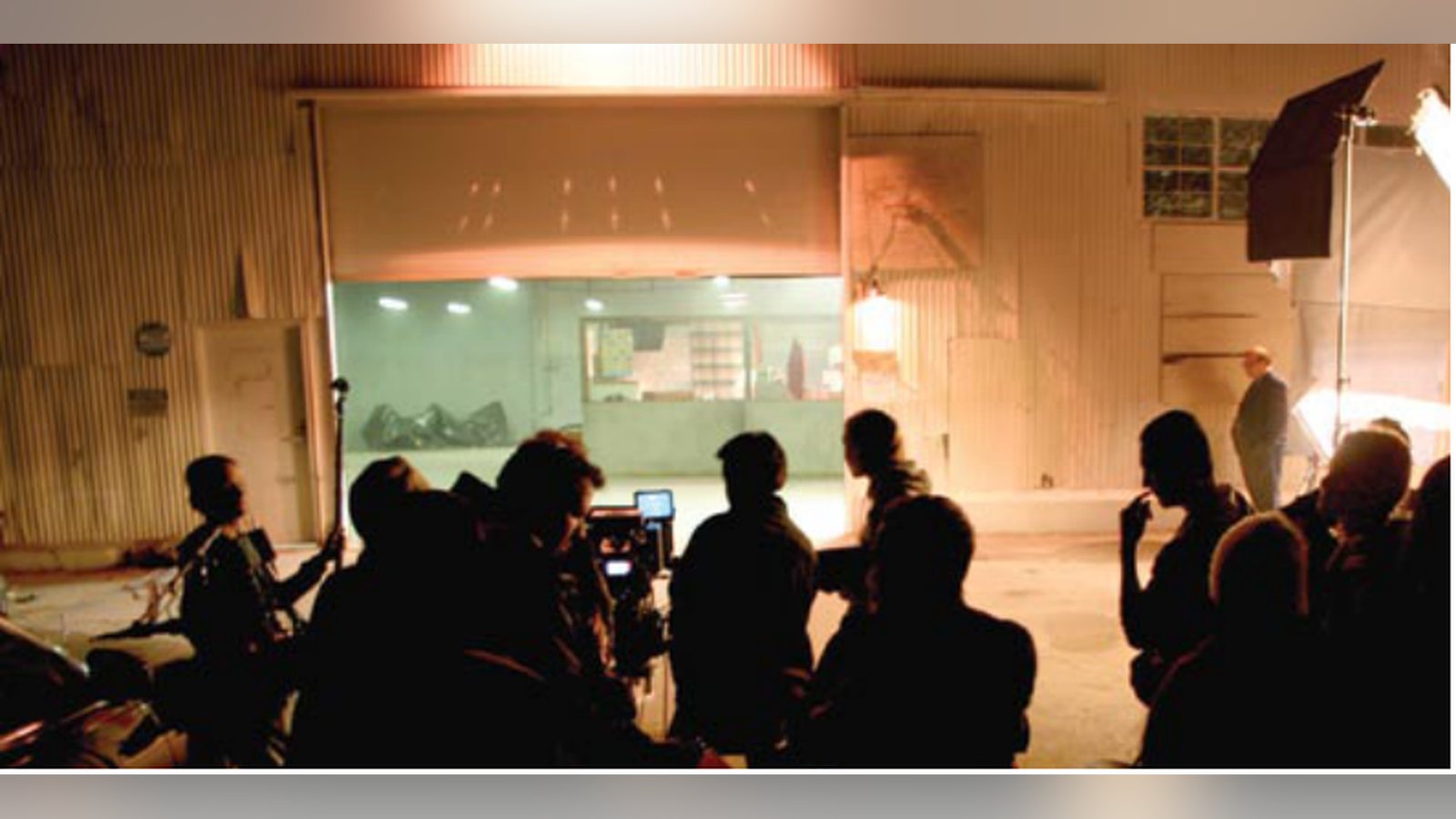
Although it seemed initially that the script would be easy to shoot, the large cast added a logistical complexity to the production that they had not anticipated. “We had designed it to be very simple: one night, one location,”
explains Sprung. “What we didn’t account for was that in order to keep it interesting and make it a full story, we had to write so many characters that it ended up being very unwieldy trying to juggle all the actors’ schedules and making it all work in a concentrated period of time. In some ways it might have been easier if we had written a script that had only four to six characters and multiple locations. Then we could have spread it out over weekends.” As it turned out, the film was shot straight through over an eighteen-day schedule and the production was locked into having actors at very particular times.
During production, the pair wore different hats once again. Bershad took the lead role of Nick, the “lifer” limo dispatcher, and Sprung took up the director’s megaphone. In regards to directing his co-writer, Sprung jokes, “It was great! I finally got to push him around.” Bershad questions whether he might have played prima donna asking, “Did I get snotty?” Sprung immediately denies that.
Nevertheless Sprung comments, “As you might expect, with any creative partnership there are definitely points where tension can get high, such as when we tried to figure out the best way to execute a scene, but really it was quite fun to work with Michael in that capacity, to put aside all our other experiences because as far as I was concerned, the writing was in the past. It is a whole different mindset to work with actors and interpret the script in a cinematic way. I didn’t feel like I had written the script at that point.” Bershad also acknowledged that the script seemed like foreign material once they got into production.
One of the traps in independent filmmaking is being too close to the material. After living with the written story for years through the development and production stages, once the film is in post production, it becomes impossible to detach emotionally from the work that had gone on previously, making it difficult to cut and shape the material during the editing.
This was a peril that Sprung and Bershad faced when Sprung sat down in front of his Avid. Bershad comments, “I’ve got to say, more than anyone I’ve ever known or worked with, Steven has a really clear vision of when something can be cut. If anything, I’m the one who says, ‘I don’t know. That scene is kind of important.’ He’s really brutal when it comes to that. That’s one thing that actually surprised me a bit, because there was a lot of stuff that we shot, that I thought we couldn’t do without.” In the end they realized there was material that they could do without. Even scenes that were difficult to shoot and brilliantly executed, hit the cutting room floor for the good of the overall story. Filmmaking is inherently a collaborative effort, but finding the perfect partner is not always the easiest thing. Wearing many hats can be a pure necessity under the constraints of indie filmmaking, but finding the unique combination of complimentary talents is as complex as the different people who make up the ideal film crew.
“Michael and I have a true collaboration,” says Sprung. “We are two halves of the same brain…a creative team. We are always checking in with each other. Is this working? What can make it better? We build on each other.” Bershad adds, “It sounds like a pat, Hollywood feel-good answer to say that we both agree on the creative choices, but I can’t think of a time in the writing, or any of it, when we fundamentally disagreed. That is one of the reasons it works. If we had different tastes, I think we would have a problem.” Sprung agrees, “We have the same tastes and complementary strengths.”
Bershad concedes he has a high-strung nature and the fact that Sprung has the patience to put up with him is a big factor in their successful collaboration, but he is also sensitive to Sprung’s quieter character. If Bershad is on a roll talking about something in the story and notices that Sprung is not “chiming in,” he has come to realize that something about the story is not quite working. “This whole business about partnership, especially in something as creative as writing, is really, really tenuous,” concludes Bershad. As for a continuing relationship Sprung admits that the two are “joined at the hip” and Bershad confirms that they are already working on their next script, a much more commercial paranormal thriller with mostly exterior locations and a smaller cast.
Much like the choices the main character in Dispatch made that shaped the course of his life, Bershad’s and Sprung’s individual decisions to work as limo drivers, were fateful actions that ultimately led them into the perfect creative venture. Life imitating art in the true sense. Mary Ann Skweres is an award-winning independent writer/ director with over a dozen produced short films under her belt. A member of the Editor’s Guild, she has edited feature films, documentaries and shorts. She writes about the art and craft of filmmaking for magazines including Below the Line, Film and Video, VFX World and Animation World Network. She can be reached at [email protected].
Related filmmaking guides
- Film directing: getting good performances
- Coverage and the master shot
- Camera angles in film: a beginner’s guide
Keep learning filmmaking
Want more lessons like this? Join StudentFilmmakers free for live webinars with working pros, and stream on-demand filmmaking classes in cinematography, directing, screenwriting, sound and post.