By Ira Tiffen
Balance matters in images too. Ira Tiffen explains how to balance the brightness of different scene elements with graduated filters and lighting control.
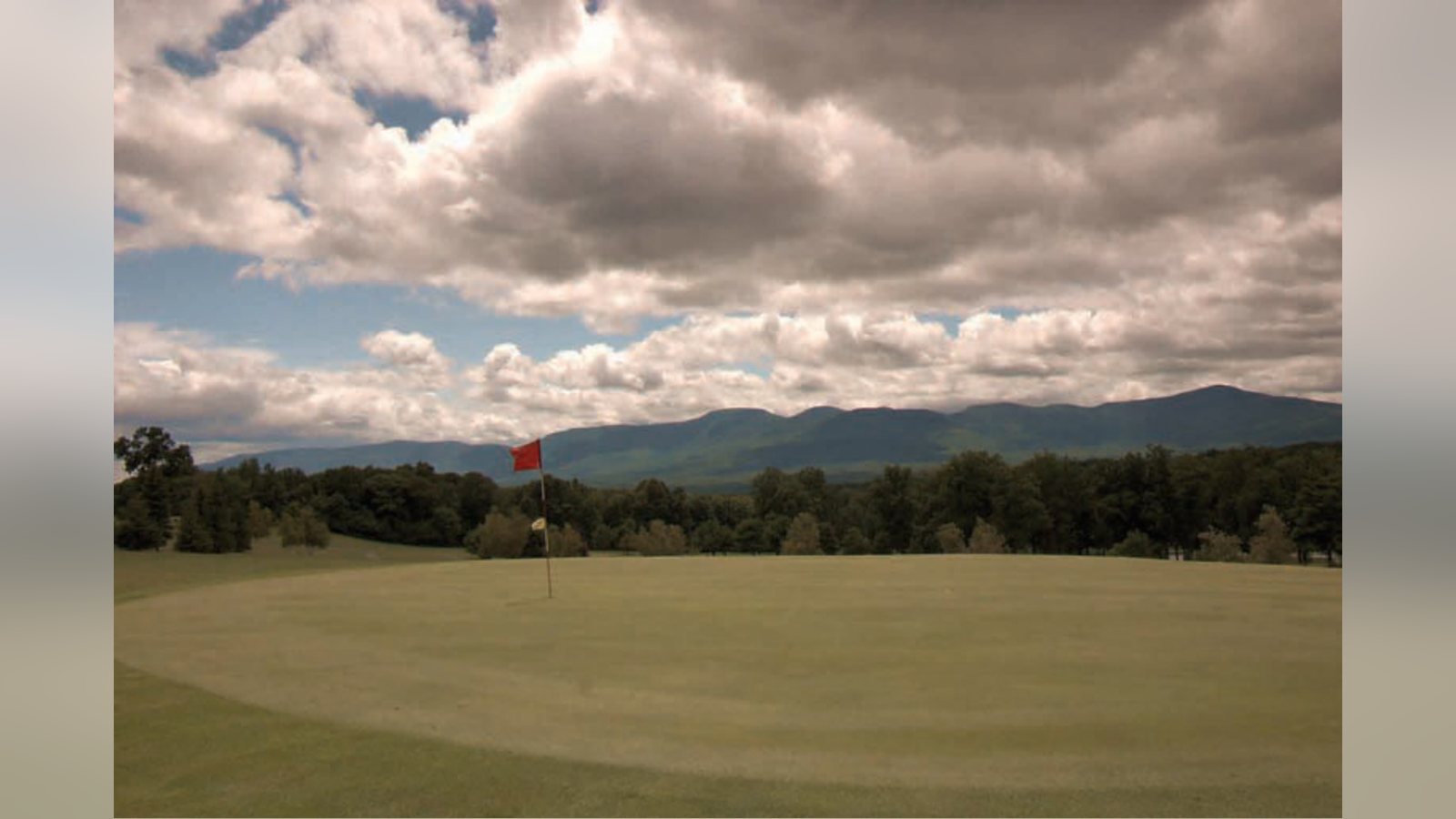
Balance. An important concept. The balance of gravitational forces keeps the Earth revolving around its polar axis. The resulting balance between day and night keeps our environment at a livable temperature. And the balance between the luminance of the sky to that of the earth in the foreground keeps our images at their most interesting.
Our eyes are able to accommodate significant changes in brightness levels. The adjusting iris opens in dimmer light, and shrinks in brighter light. This allows us to look up at the sky, for instance, see the clouds in full detail, and then, after a short adjustment time, see the full detail in the foreground below it. In contrast, a camera captures both areas simultaneously, at the same setting, so no adjustment is made for the difference in luminance. Yes, there are techniques currently evolving that make more than one concurrent exposure of a scene, each at a different setting to accommodate a particular scene segment, and then these are combined digitally to produce an image of potentially impressive balance and detail. Short of that, though, there is a time-honored technique that is regularly employed for introducing balance between the foreground and the sky. It is referred to as the ‘graduated neutral density (ND)’ filter. A mix of ND and of clear, with a gradual transition between, the grad is an ideal way to effectively balance the brightness of different scene elements in an easy-to-use, low-tech way.
Typically, the luminance level of a mid-day sky is about two stops over that of the foreground beneath it. If you were to expose properly for the foreground, the sky would be two stops overexposed. Conversely, if the sky were properly exposed, then the foreground would be two stops underexposed. Either way, a key part of each scene would look out-of-place, either too light or too dark, with much detail missing. Definitely out of balance.
Positioning a ND 0.6 (two-stop) grad filter so that the ND half is aligned with the sky, and thus the clear half leaving the foreground unaffected, will make the necessary adjustment between exposure values for each area. Expose for the foreground and the sky will join in at the right level. Of course, different situations may require different filter densities, but you can calculate that easily enough with a meter.
That transition area, referred to as the ‘edge,’ also has some degree of available variation. ‘Soft’ edge filters are the most often used; the transition allows for its use with many focal lengths and situations. It is wider than the ‘hard’ edge, used especially because its more narrow transition works well with longer focal lengths and straight horizon lines, like at sea. The third type is the ‘attenuator,’ which changes density gradually over most of the filter’s length. This allows balance between one side of an image and the other, where the transition must appear gradual so as to not draw notice to itself over the range of detail in between.
You can use ND grads for other situations, as well; anything where you can differentiate sufficiently with the half-clear, half-ND arrangement of the filter. This can include bright windows and a darker interior; a view down a hallway with a door open to the light at the far end; and many others. While you may be able to gel windows or induce balance in some other way, if you can use an ND grad, it may be the most effective means for the least effort.
And isn’t balancing effort with effect a key part of imaging success?
In over 30 years of making optical filters, Ira Tiffen created the Pro-Mist, Soft/FX, Ultra Contrast, GlimmerGlass, and others, netting him both a Technical Achievement Award from the Academy of Motion Picture Arts and Sciences and a Prime-Time Emmy Award. Elected a Fellow of the SMPTE in 2002, he is also an Associate member of the ASC, and the author of the filter section of the American Cinematographer Manual.
Keep learning filmmaking
Want more lessons like this? Join StudentFilmmakers free for live webinars with working pros, and stream on-demand filmmaking classes in cinematography, directing, screenwriting, sound and post.