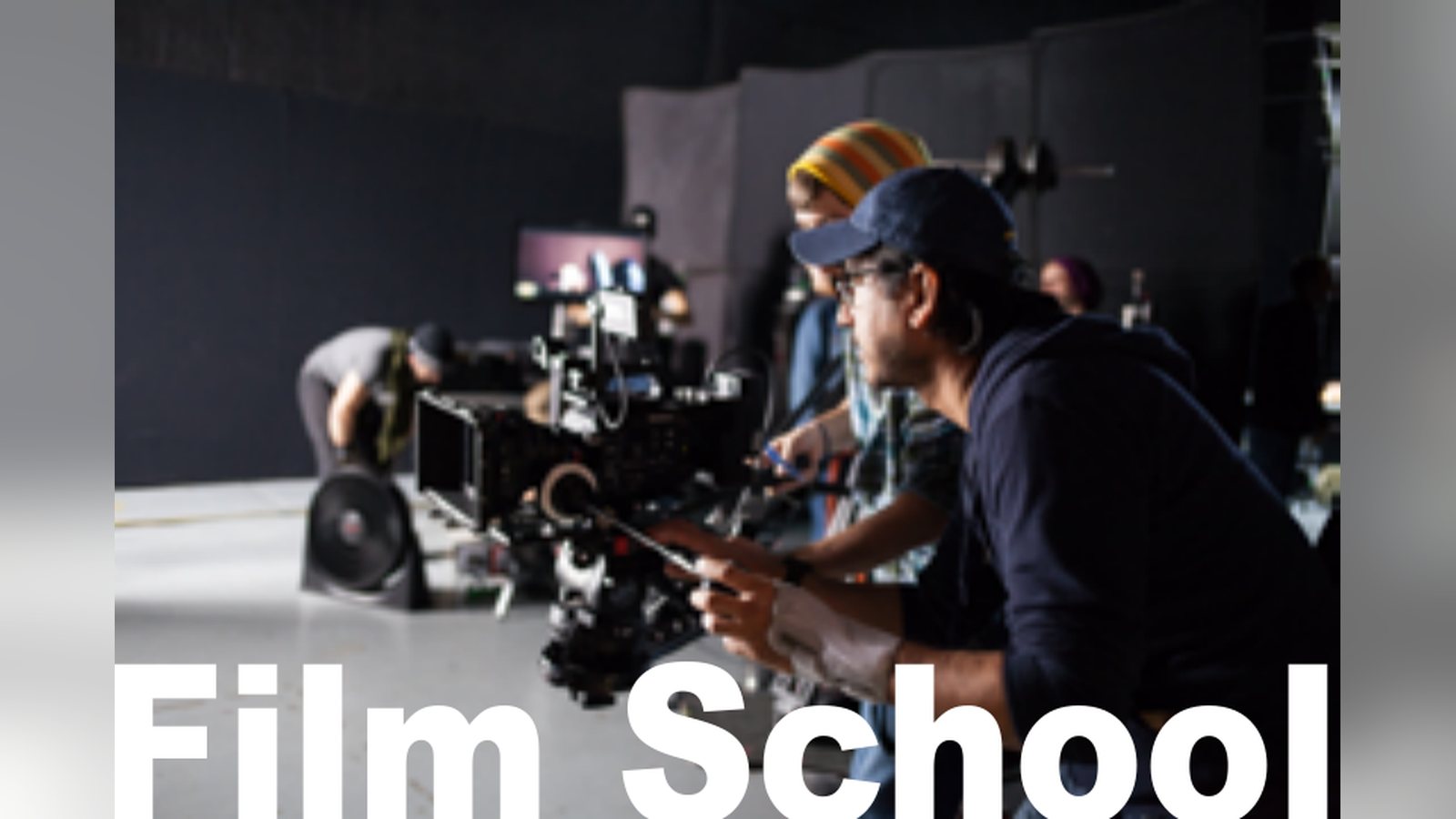
Ted Jones of Vancouver Film School talks about teaching to story, the school’s labs and render farm, its new 4K camera platform and advice for filmmakers.
StudentFilmmakers Magazine: What is your teaching philosophy? What is important?
Ted Jones: I will speak to kind of a global VFS / Film Program teaching philosophy because all instructors I think hold the same philosophy. That is we teach to ‘story’. So whether we’re teaching in post production, and whether we’re teaching in directing or producing, the philosophy is we always relay our curricular material back to ‘What is the story?’ Telling a great story.
SFM: In relation to your teaching area, what are your thoughts on technology and how technology impacts education and students?
Ted Jones: Technology has its place, that’s to say it is important. But I think it’s a partner in how we tell our stories as filmmakers. It certainly is not the determining factor, I don’t believe, in storytelling. It is one of those partners along the way that help enhance, enrich, and promote the story that we’re trying to tell. So I think that in education we always make sure that technology is riding along hand in hand, and in some areas more so than others. For example, in Post Production when we train, or in our Cinematography Department here in Film, but we also try to make sure that the student understands that a $3 million dollar camera doesn’t necessarily make for a good story. It certainly can help. But it isn’t what the whole pie is about, it’s just a piece of that. So it does have importance. But we all try to keep that very much in context and clear about how that helps us along the way.
SFM: What workstations do your students use and what applications are they using?
Ted Jones: We are an HP facility. We just upgraded not too long ago to the HP Z420 workstation, and housed within that as far as throughput goes with the graphics card, the AMD W7000 card is nestled quite nicely in there as well. Those machines we use at our Post Production Department. They are our workhorses. The software that drives that along is we are also an Adobe Creative Cloud school so we are using Premiere and After Effects. But the mainstay to our post production non-linear digital editing is the Avid platform, which is also used within those workstations as well. So that’s that whole sort of world of software and hardware that we use here in the Film Program.
SFM: In your part of the school are you also using Maya from Autodesk to do animated films?
Ted Jones: The 3D Visual Effects Program is Maya, Nuke. The Foundation Visual Art and Design Program also teaches an introductory course in Maya as well.
SFM: Do you have a render farm separate somewhere?
Ted Jones: Absolutely. The 3D Visual Effects Program has a render farm. We run on fiber with 10gb/sec to the desktop.
SFM: How many HP Z Workstations with AMD FirePro™ did you install for the students?
Ted Jones: Across the school there was something like 720+ machines that we were upgraded to. In the Film Program, we have a lab, plus an instructor station of 36 seats, so it would be 37 workstations. Then we have another lab with an instructor workstation of 24 plus 1 would be 25, so 60+ there. We also run the HP Z420 in our screening room, and we also have 7 advanced workstations for our final films, which are also HP Z420s, and we also have HP clear bright monitors there for color correction. So it’s about 70 or so machines just in the Film Program alone.
SFM: How does HP and AMD technology improve workflow for student projects and learning?
Ted Jones: Well, I think the simple fact that the HP Z Workstation is stable. We’re on the Windows 7 Professional platform. The stability factor is what helps our pipeline. We certainly have the horse power in those workstations. The RAM, the CPU horsepower, the fact that they are stable machines is what really at the end of the day makes a lot of sense clearly for us especially when the students are in their final films. For the last two months of our program, they live and breathe, and literally live in an edit suite to cut their finals and it’s rare on a day that we may have an issue, let’s put it that way. So I think that overall, it’s just machine stability and that keeps students moving forward.
SFM: What are some examples of student projects? Can you tell us more about the tools and workflow as it relates to computer technology?
Ted Jones: We are currently undergoing a camera platform upgrade. We are currently rolling out the Sony FS7 camera that is a 4K platform. We are just in the midst of doing an assessment on what our post pipeline will look like for that. And, also we’re investigating what our advanced platform for camera would look like. We are looking at ARRI, we are looking at RED. So in moving forward with that as we roll out these cameras, the computer technology that has to support that is critical. We don’t shoot feature films here in the Film Program. For example, in Term 1, all the students shoot a 3-minute, two-actor, one location, no-budget film, and all 36 students in a given class get to shoot that. And so, they are very busy when it comes to their next term, in Term 2 of editing those films for presentation for grading. That makes for a very busy post production facility for sure. They are shooting on high-def. We’re shooting 4K, but we’re down-resing into a 1920×1080 platform, so we’re not yet with those first few projects shooting 4K. That’ll be for more advanced production later on in the program. Term 2 is the same thing, it’s in studio with set builds, and another 36 films get shot. Then, in Term 3, they’re editing those films, and they’re shooting a pilot, an episode too. All of those projects, Term 1, 2, and 3, in the first six months of this one-year program see an awful lot of busyness when it comes to the post production side of it. They’re not long form projects, they’re very much short films, but regardless, long form or shorter form, we need that stability in there, and everything works very well for us. Final films tend to be longer form. It could be 45 minutes, half an hour, 20 minutes. They are a much longer form, and when we are in the position, once we’ve done all our assessments and determinations, on our new post pipeline we’ll be supporting that process as well. So that’ll eventually be a 4K post production pipeline. In Industry right now, there’s not a lot of 4K being deployed in the world, so we try to mimic industry in our processes as much as possible, so we’re currently cutting to high-def at this stage.
SFM: If you could share your insights or a piece of advice with filmmakers around the world, what would it be?
Ted Jones: That’s an interesting question. I think the piece of advice that I give filmmakers, I give students all the time here is just no matter what, stay current. Stay current in the technologies that are out there. If by no means you necessarily are able to be in front of current technologies, but be aware of those technologies and also be aware of how those technologies can assist you in your endeavors to get your stories out to the world. And I think that’s the connection that we always want to make sure that students understand. How is this technology going to help you? How is it going to enhance? And how is it going to help you stay true to the story that you’re trying to tell? And be aware of what content is needed out there in the world for sure.
We really want to make sure that our student filmmakers come out being able to tell good stories, make good films, understand the basics of technology that’s out there, so that when they go forward, they want to be an independent filmmaker, and they want to move into their own digital platform and cut their films themselves, they have an understanding of what that actually looks like in relation to a film that may be a forty or fifty or sixty million dollar film. Technology’s been wonderful. It puts the tools into the hands of the new filmmaker more and more. But we have to be clear that there is still a separation between high-end and the kinds of things that an independent filmmaker can look forward to as well. So, it’s all about story, and that’s what we want to push no matter what the tech is.
Keep learning filmmaking
Want more lessons like this? Join StudentFilmmakers free for live webinars with working pros, and stream on-demand filmmaking classes in cinematography, directing, screenwriting, sound and post.