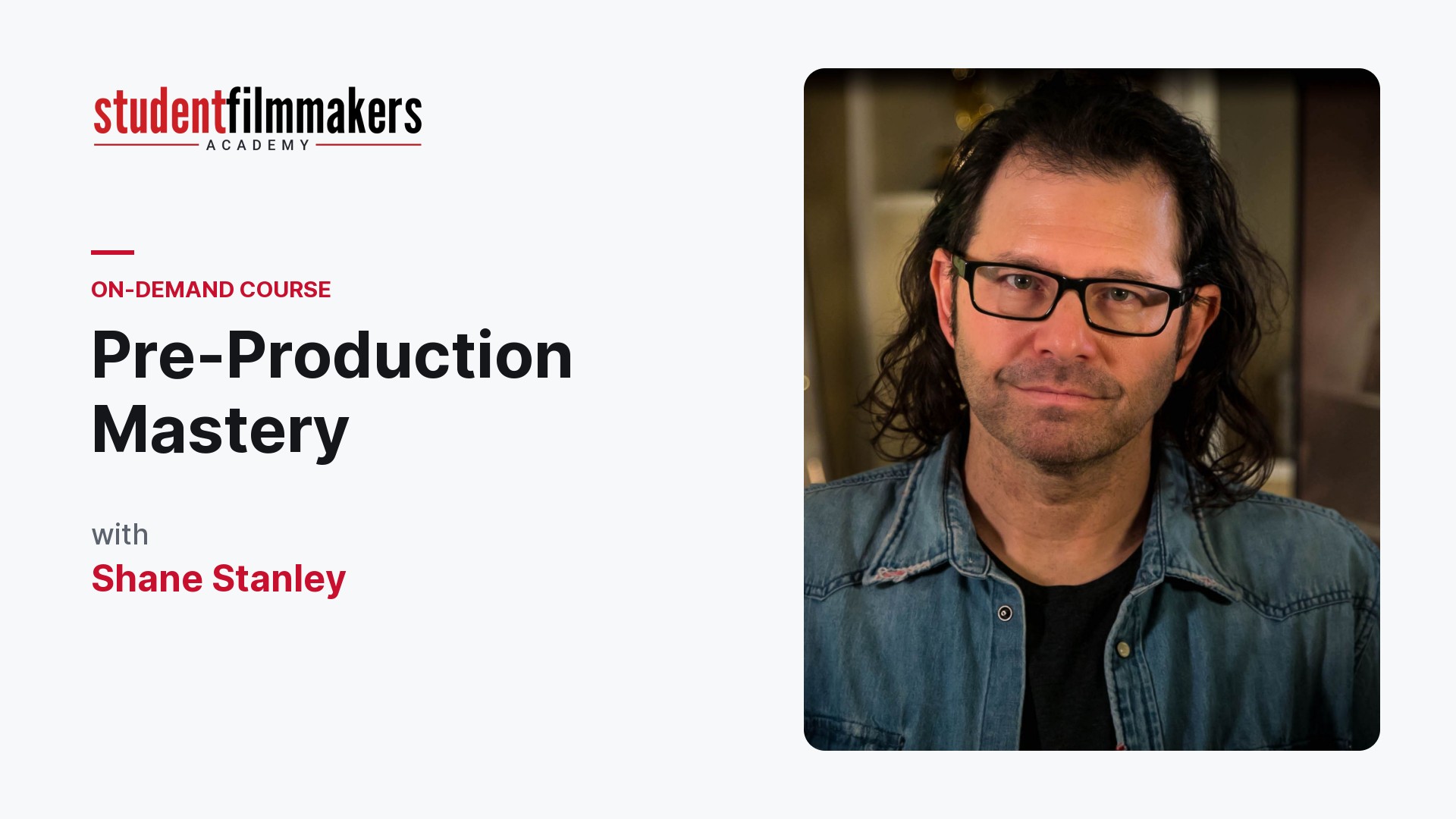
For Shane Stanley, a multi-Emmy winner whose films include Gridiron Gang (as executive producer), Double Threat and Night Train, pre-production is the stage that decides whether a film can be sold. In this class for StudentFilmmakers, he walks through the business work he finishes before any shooting day: the rights paperwork, the clearances, a company for each film, a schedule that actually fits, and an honest package for investors.
Why does pre-production matter so much to a producer?
Because the problems that wreck a shoot, or kill a sale later, usually start on paper. A missing signature or an unclear credit can stall a distribution deal long after the crew has gone home. Stanley’s view, after more than three decades of making films, is that nearly all of those disasters can be prevented in prep if someone takes the producer’s job seriously.
That someone is often the director. Stanley has argued in many of his classes that indie filmmakers can’t wait for a producer to appear. This class is the checklist for doing that job yourself.
Which documents will a distributor ask for?
He starts with chain of title, the record showing who owns the script and the underlying story. A distributor checks it before buying anything, so it has to be clean before you shoot, not patched together during post.
Next comes a deal memo for everyone who gets a credit. Each one sets out the job, the pay, the dates and how the name appears on screen. With those in a folder, nobody can later claim a deal was something else.
Then there are the slower items: clearing the production with SAG if you use union actors, buying insurance and setting up payroll. Stanley’s advice is to give each of these enough lead time that none of them can hold up your first day of photography.
Why form a separate company for each film?
Stanley sets up a new LLC, a single-purpose company, for every project. That keeps one film’s contracts, debts and risks apart from everything else you make. He also keeps investors off that company.
He mentioned one more habit that pays off at budget time: a running file of what things really cost on his past films. When a new budget looks too thin or too fat, he has his own history to check it against.
How do you build a schedule that holds?
Stanley describes scheduling as a puzzle with three kinds of pieces: when the actors are free, when the locations are available and when the vendors can deliver. The script order rarely survives contact with those three.
He also covered the problems that show up around the schedule:
- Talking to agents. He explained what he confirms before he picks up the phone, and why he asks whether an actor is “tech avail,” roughly, whether they are free for your dates right now.
- Attaching a name actor when there is no money in the bank and no track record yet.
- Location releases. Grabbing shots at a place without a signed release can cause real trouble later, so he doesn’t do it.
- Permits when you shoot outside Los Angeles.
What goes in an investor package?
Something honest and short. Stanley’s package has three parts: a synopsis of the story, the top sheet of the budget (the one-page summary of each category and the total), and a lookbook that shows how the film will feel.
He also explained the money terms investors will ask about: the fees people take off the top, recoupment (investors earning back what they put in), and backend points, the share of profits paid after that. Here he passed along the advice one of Hollywood’s biggest producers once gave him about backend deals.
He also explained why he once screened a nearly finished Civil War film for a full theater before calling it done.
What should you have ready before asking for help?
Many new filmmakers hope a seasoned producer will step in and sort things out. Stanley spelled out what to have in hand before you ask a more experienced producer for that kind of help, so the conversation can start with the film instead of the basics.
The second half of the class was questions from filmmakers in the live session, answered with stories from his own productions. For more on getting ready to shoot, read what indie filmmakers must do first in development and pre-production, why organization makes you more creative, and why preparation is crucial.