
By David K. Irving
If the screenplay is the blueprint, previs is the model. David K. Irving explains pre-visualization tools, from storyboards to software, to plan shots.
“Everybody’s got plans…until they ~ Mike Tyson
If the screenplay is a blueprint for a film, pre-visualization is the model built to show the client what the building will look like. The pre-visualization tools employed by the director include breakdowns, floor plans, storyboards, and a viewfinder.
BREAKDOWNS
Directors keep a large notebook to record their thoughts on how to shoot the film. Camera moves, acting points, sound cues and equipment requirements are jotted down adjacent to the appropriate place in the screenplay. The numbers of extras, wardrobe specifications, touches for the art department, and special camera equipment, etc., are included in these notes. Supplemental paperwork to the script at this juncture expands the notebook. Breakdowns are added based on what is required in the script, including the director’s notes. Each item crucial to every shot is written down in the breakdown sheets. If it isn’t on the sheet, it won’t be on the set.
FLOORPLANS
Each scene requires a preliminary floor plan. On a sheet of paper, the four sides of the set or location are defined; a wall here, a window there, trees lining a walk, a pond, a house. These stationary set pieces are sketched onto the floor plan. Taking into account time of day, sunlight and parking, the director indicates the main camera positions.
The camera is marked as a “V” with the wider part of the letter pointed towards the action. A letter is placed next to the “V” thus identifying the camera position. A wide or establishing shot is indicated as shot “A”, the two-shot “B” and so on. If camera position “B” is a tracking shot, the number “1” is placed next to the letter to indicate the beginning of the shot, or first position. The number “2” is placed at the end of the shot or the final position. The notation B1 to B2 is drawn on the floor plan as a camera move. If the camera is to pause and then shift position more than once, additional numbers are added: B3 to B4 to B5 etc.
A legend is created on the floor plan to elaborate on any of the short hand notation. A shot without notation usually means the camera will be placed at eye level. Shot A1 may be an overhead, or high-hat shot, so the notes make it clear to all parties what the director’s intentions are for that particular camera position. Eventually the numbers will be prioritized and shape the initial schedule.
STORYBOARDS
Once a floor plan is devised, some directors opt to storyboard the film. Storyboards are drawings, much like a comic book, of each shot planned for the movie. More crude than a comic book, and rarely colorized, storyboards delineate the pre-visualization of the film. An unprepared director walks onto a set and points towards the front door of the house and says to the crew, “The main character will exit the house and walk to his car there in the driveway.” A frame is set up, the director rehearses the scene and decides to add a camera move, “Let’s set up some track and walk with the character to his car.” Tracks are now laid out, a new frame is rehearsed, and the director changes his or her mind, “Let’s do the whole tracking shot in close-up.” A new lens is popped onto the camera and the crew affects another run through. “I like the close up, but to include the background, let’s move the track back ten feet.” Ten feet later, the shot is ready for camera to roll.
The scenario above is not uncommon, even if the director had both floor plans and a storyboard indicating the tracking close-up shot. The script, floor plans and storyboards may be thrown out the window once the company arrives on set. A whole new approach may strike the director as the scene is rehearsed. Magic may happen. A sensitive director is open to the alchemical process in making films.
But the time it takes to change camera positions three times is significant—perhaps an hour. An hour in a director’s day is gold and should not be squandered. A storyboard explicitly laying out the shot would tell the director of photography exactly how to have laid out the track and what lens to use. Set-up time would be efficient.
VIEWFINDER
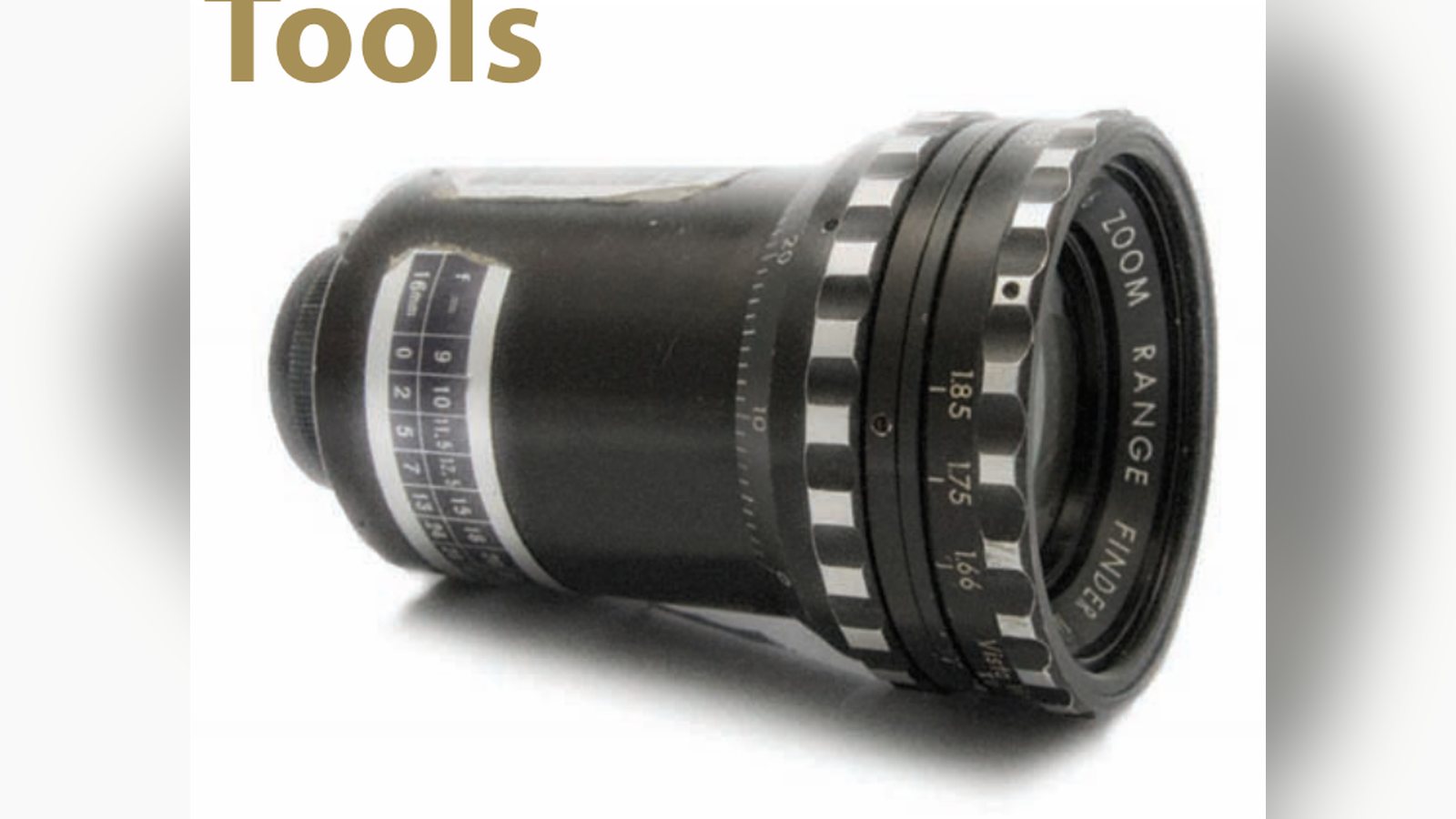
A viewfinder helps the director determine the exact size and focal length of a shot. On any set or location, the viewfinder is employed to see how a shot will look once the camera is placed. Utilizing a viewfinder is an efficient way to determine an ideal position for the camera on set during the walk-through.
During pre-production, the director begins to interpret the script by scouting locations, walk-throughs, and casting.
SCOUTING LOCATIONS
A location manager visits several locations as possible choices for principal photography after which he or she selects the sites to show based on their own interpretation of the script as well as discussions with the director. The location manager factors in practical issues such as location fees, travel time, distance from the production office, dressing requirements, traffic, parking and about a dozen more considerations.
At these locations, the location manager takes 360 degree panoramic photographs, mounts them on a board and shows them to the production staff. From these boards, the director chooses one or two to visit. In this manner a location and one back-up are selected. When the location is locked, fees negotiated and as many practical considerations as possible are met, the director will take the key crew members for a walk-through.
WALK-THROUGHS
The walk-through consists of matching the floor plans and storyboards to the actual place in which they will shoot. Adjustments are then made to the drawings to reflect the real location. The director photography notes the available light, practical lamps and power supplies, and suggests to the gaffer what lighting package to prepare for this particular location. The art director observes what needs to be replaced, protected or used for the scene, which in turn tells the set dresser what to prepare for the scene. The sound person scopes out the locale for any sound problems, such as air conditioners or noisy traffic patterns.
Most cinematographers and sound recordists visit the set or location many times at different times of day to observe how shadows come and go with the arc of the sun and how traffic noise ebbs and flows. Although the sequence may be scheduled to be shot in the morning, changes may require shifting to an afternoon shoot, and by thoroughly examining the location, the key production personnel will not be surprised. Experience helps to limit surprises, but alas, they are inevitable. It reminds me of Wittgenstein’s quote: “When I came home I expected a surprise and there was no surprise for me, so, of course, I was surprised.”
After the walk-through, the department heads sit down and indicate the lead-time they will require to prepare the set. The director of photography may want to pre-rig, or the art director may need the location or set for several days to dress it. All of this information is reflected in the constantly morphing production schedule. As time is money, a director who has efficiently utilized his or her pre-production planning period has a chance to enjoy a smooth shoot.
David K. Irving is a film director, writer and producer, and an Associate Professor in film production at New York University. David’s feature directing credits include Night of the Cyclone, C.H.U.D. II, The Emperor’s New Clothes, Sleeping Beauty and Rumpelstiltskin. David has also written and directed dozens of documentaries. David coauthored an award-winning film production textbook titled, Producing and Directing the Short Film and Video.
Keep learning filmmaking
Want more lessons like this? Join StudentFilmmakers free for live webinars with working pros, and stream on-demand filmmaking classes in cinematography, directing, screenwriting, sound and post.






