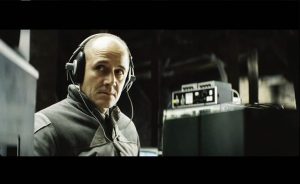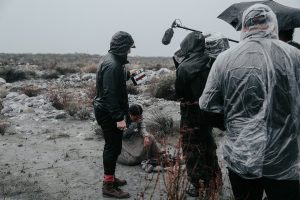
Meet Ryan Pickett, a director based in United States and a member of the StudentFilmmakers Filmmakers Network. See Ryan’s Network profile to connect.
Shot on the RED.
Ryan Pickett’s short film Look was shot on location in Nashville, TN, while Ryan attended Watkins College in a post-graduate filmmaking program. After graduation he moved to Los Angeles where he studied at Stella Adler Studios. He worked for major entertainment corporations, including Playboy, Ascent Media, Film House, Washington Redskins and Henninger Media. Ryan decided to start an independent production company called Ryan Pickett Productions while attending Watkins College of Art, Design and Film. After submitting a copy of his first film, You Only Loved Me Twice, as well as his business proposal, Ryan earned his way into a top 5 finalist spot in the Race to Be Film Entrepreneurship Competition hosted by media mogul Russell Simmons at Sony Picture Studios in Los Angeles. Ryan recently was voted one of Nashville’s Best Visual Artists as well as The Best Filmmaker by Nashville Scene in 2011.
The second short film that Ryan made, Look, has won awards in the Accolade Competition and Best Shorts Competition and received the Gold Award in the student film division at the 2011 California Film Awards.
StudentFilmmakers Magazine: What inspired the story for “Look?”
Ryan Pickett: Look was inspired by the short films Chanel was releasing. Something I wanted to accomplish was to evoke a strong emotional response with the use of very little dialogue and in a short period of time. Many shorts tackle huge issues without enough time for development, and these films are drowned in unnecessary dialogue. Viewers subconsciously hold back emotion because the issues are being forced upon them so quickly. I wanted a topic harder to grasp but when the film is over, the audience would still be analyzing its meaning. I didn’t want to tell the viewer what to think or feel.
SFM: Tell us about the story.
Ryan Pickett: Basically Look is a story about perception and how strongly it affects our lives. Everything in Look is up for interpretation. I really enjoy when people just start talking to me about what they got from the story and how they could relate to it. Basically Look is asking, how do you see yourself? How do others see us? How do we want others to see us? What are we really showing others about us? I would look at it not only from John’s POV, or the waitress’ POV, but also the model. There is a lot of depth in all of their stories just like in real everyday life.
SFM: Did you use storyboards?
Ryan Pickett: I did use storyboards and I went over all of them with my cinematographer as well as made copies for the crew. I worked closely with my AD as well to figure out complexity and time allotment.
SFM: How many people did you have in your crew?
Ryan Pickett: Around 10 crew members. The DP was Shane Bartlett and the Camera Operator was Andy Kugler. I was the Director and Editor.
SFM: What cameras did you shoot with?
Ryan Pickett: I used the Red One 4k and that was the only camera used.
SFM: Could you describe one of the lighting setups for one of your most favorite, unique or memorable scenes?
Ryan Pickett: The shot of Theresa Meeker in the wedding dress was my favorite. It was beautifully shot and the lighting setup was the easiest because we left the stage light in the shot. The one side had huge windows letting in so much natural light and the way it fused with the white really worked well. The way the camera pulled back and the scene developed in front of it was something that has moved me in film and something I was proud to pull off. I had the shot actually going way more back but the dolly track was beginning to show so we had to cut it short.
SFM: Tell about some of the camera movement techniques used in the “Look.”
Ryan Pickett: I use a lot of static camera because I like the scene to develop in front of the camera naturally. I did work in some dolly shots that can be seen in the scene where Theresa walks in front of the windows in a black dress and the wedding dress scene. I bring scenes into and out of focus as a metaphor for awakenings in perception. I also had a lot of close ups of eyes because they are central to the theme. A lot of the camera techniques and shot selection was done the way it was because I knew how I wanted it edited. I think you should be able to see the entire film in your head before you shoot anything.
SFM: Did you experience Murphy’s Law on set?
Ryan Pickett: About as bad as it could have been. When I showed up the morning of the first day of shooting, I opened my computer to find that the hard drive was dead. I had everything I needed on the computer, which I had planned to use though out the entire shoot. All I could do for a lot of things was go off memory. The show must go on as they say.
SFM: If you could share a tip or piece of advice to aspiring filmmakers and storytellers around the world, what would it be?
Ryan Pickett: Do it how you want to do it. I learned this from a previous movie I shot, You Only Loved Me Twice. I edited a scene, which someone told me to change because it looked off. I guess they meant not by the book. Well, I did the change and while it may have cleaned the film up it took all that was unique from the shot. I had changed the shot to an edit from a textbook and not a unique piece of my art. I share this because I really hope others stand strong to their convictions as a filmmaker. Take the entire film into your hands and make sure when it’s done, it’s how you want it to be. Trust people, but always have the final say and do what you feel is right in the end.
SFM: What is your tip or piece of advice for submitting to festivals and creating award-winning short films?
Ryan Pickett: Submit wisely. Everyone is trying to make money so there are thousands of festivals and this can get very expensive. Really try to find ones that your style of film will have a chance in. Also research the festival a bit. See if it’s legit or just some people trying to make money.
Related filmmaking guides
Keep learning filmmaking
Want more lessons like this? Join StudentFilmmakers free for live webinars with working pros, and stream on-demand filmmaking classes in cinematography, directing, screenwriting, sound and post.