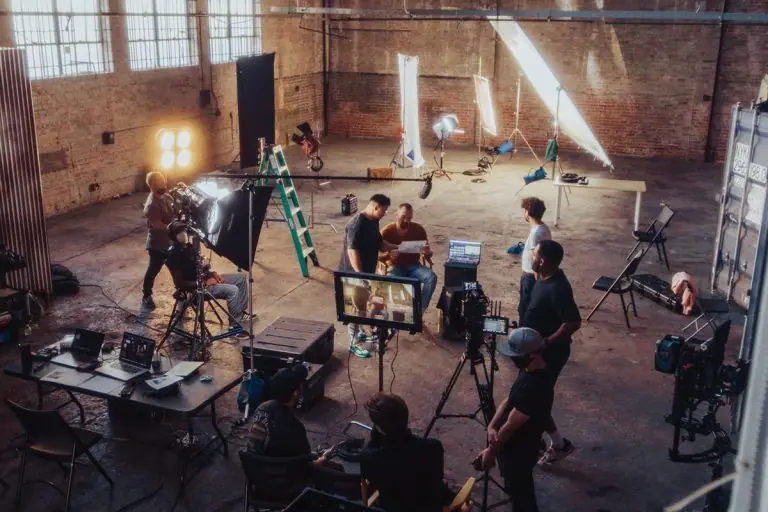
Trey Batchelor was the first assistant director on Amazon’s Bosch and is a producer on Bosch: Legacy, after years as a second AD on big features, including Ocean’s Eleven. Sitting down for a StudentFilmmakers webinar, he and cinematographer and director Patrick Cady, ASC opened the real schedules from Bosch: Legacy episode 308 to show what a first AD actually does: break down the script, build a day that can be made, and keep the set calm, safe and moving.
What does a first AD do on a TV series?
More than on a feature, Batchelor says. On a film, the director rules the set and has long prep, and the first AD is the right-hand general. In television, most directors are guests. They arrive with a style, but someone has to know the show’s rules and the story across episodes, and that falls to the AD.
His core job is to take a script, break it down and schedule it. On 308 that meant fitting scenes from episodes seven and nine in with episode eight’s, all in eight scheduled days, while working around actors’ conflicts. A guest star booked on another show forced them to visit one location twice. Bosch often moved between three or four locations in a day, and some were picked by producers before the director even arrived.
His reminder for students: “Filmmaking is all about compromise.” That was true on Ocean’s Eleven, with all its money and toys, and on a $300,000 feature he worked on.
How should a guest director fit into an established show?
Batchelor shared an image he heard from a well-known DGA director:
“As a guest director, I will come to Thanksgiving dinner, and I might bring my turkey, but the side dishes are all what’s around the table.”
In other words, bring your flavor, but don’t try to change everything. He studies each new director to see what they focus on, whether framing, action, staging or actors, and fills in the gaps. A director who loves complicated setups gets extra time built into the schedule.
He also asks directors to let actors walk through a scene before reshaping it. He has watched a performance fall apart when a director stopped a rehearsal to reposition an actor who had prepared something on their own. Cady, who had just finished his 20th episode as a director, admitted he still fights the urge to take control when a day falls behind. On a recent NCIS: Origins episode, he loosened his grip, let the actors find the scene, and made up two hours in the middle of the day.
When a director says there isn’t time for a shot they need, Batchelor’s answer is the same every time: “That’s my problem, not your problem, let’s figure it out.” It might go at the end of the day or get a third camera, but he always brings a solution.
How do you read a one-line schedule?
A viewer asked Batchelor to decode the one-liner for 308, and he went strip by strip. The first issue is the white schedule; later revisions come out in new colors, starting with blue. TV schedules also list sunrise and sunset, because daylight is a hard limit.
| On the strip | What it means |
|---|---|
| Stage 3, or an address | Where the scene shoots |
| 733 | Scene 33 from episode 7. The episode number goes in front because days mix episodes. |
| INT/EXT and set name | For example, interior of a room in an assisted living facility |
| Short description | A reminder of what happens, such as Vasquez talking to her nephew |
| Story day | Where the scene sits in the story’s timeline |
| 1 2/8 | Page count, always in eighths of a page |
| 2 | Hours he has given the scene |
| 5I | Cast number 5 (Vasquez) in episode 9, since I is the ninth letter |
| 45 minutes | A company move to the next location |
One detail surprises students: a 12-and-a-half-hour day on paper includes lunch, which isn’t paid time. Lunch is listed as half an hour, but feeding a whole crew on location really takes closer to an hour. Turnarounds shape every call time, too: 12 hours for actors, usually 10 for crew.
Cady reads the same page from the director’s side. Ten strips with a low page count may mean one or two shots each. Two strips with nine pages and a long cast list means a full day, no matter how simple it looks.
How did they plan the biggest day in episode 308?
The Zona Rosa sequence was a stakeout and arrest, with surveillance from a third-floor room across the street, a shooting in a parking lot and an emotional takedown below. It had a day and a half, but really less, because the morning was spent at a forensics building on a university campus downtown.
So they stacked the day. While the main unit shot simple one- or two-camera scenes at the lab from a 6:30 call, the second AD ran a stunt rehearsal with cars across town at 8 a.m. Stunts videotaped it, so when the unit arrived, Cady and Batchelor could watch the plan. A camera went ahead to the next location as soon as it was free, and trucks loaded while the last scene wrapped.
The street scene had to happen before lunch, because after that they couldn’t lock up the road. Each lockup lasted only minutes, next to a busy highway, with precision drivers and police cars coming from several directions. On a movie, Batchelor said, that scene would get a full day. Then they shot almost in reverse, adding a drone shot while they had the drone, and saving an interior for the end of the second day in case daylight ran out.
Cady’s shot list for the location ran three pages, which told him they’d be hustling. He trusts a simple test: if he and Batchelor look at a day and neither says “no way,” it can be made. On days like that, they barely talk. Batchelor knows what Cady watches, sets up everything else, and they meet in the middle. Cady explained why speed alone doesn’t work:
“There is a rhythm that gets established, especially in a day like this, that is critical. If you break that rhythm, you won’t make the day.”
Everyone has to be shown the plan, and the actors have to own the scene. Skip any of those steps and the day falls apart.
What tools does a first AD use?
- Movie Magic scheduling, with newer programs coming in.
- Scriptation on an iPad, with color-coded notes from the tone meeting (red for what’s important) that carry over when the script changes. He used to hand a paper script to a PA to copy his notes into new pages.
- A second AD working a day or two ahead, roughing out the next call sheet, tracking hair and makeup time, turnarounds and transport.
- A small meeting with the director and DP, where the DP can ask for time for light and the director can learn which “simple” scene needs an actor’s warm-up.
On the day, his habit is to shoot a wide master first, even with stand-ins, to get momentum. Cady remembered a show where he promised a new crew they’d roll within 30 minutes of call. They laughed, then did it, and it set the pace for the whole episode.
What makes a good AD with people?
Empathy. Batchelor only raises his voice over safety. The rest of the time he’s a cheerleader and a consoler, like when makeup wants 90 minutes for a scar and he can give them 20 on set.
“We all work 14, 15, 16 hours. People just want to be heard.”
He thanks the crew and listens, even when the answer is still no. Actors often ask him where they were before a scene and where they’re headed, and he quietly reminds them, such as that the character was shot a week ago. And he warned against getting stuck on logic. He once watched a director halt a big film for three hours over how characters got past an alarm, a question no audience ever asked. His advice: “Don’t be precious.”
For more on the AD’s world, read Liz Gill’s tips for first ADs and our guide to film scheduling for stress-free shoot days.