By Jody Michelle Solis
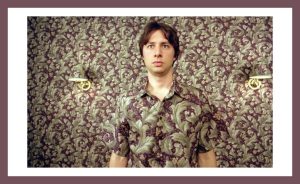
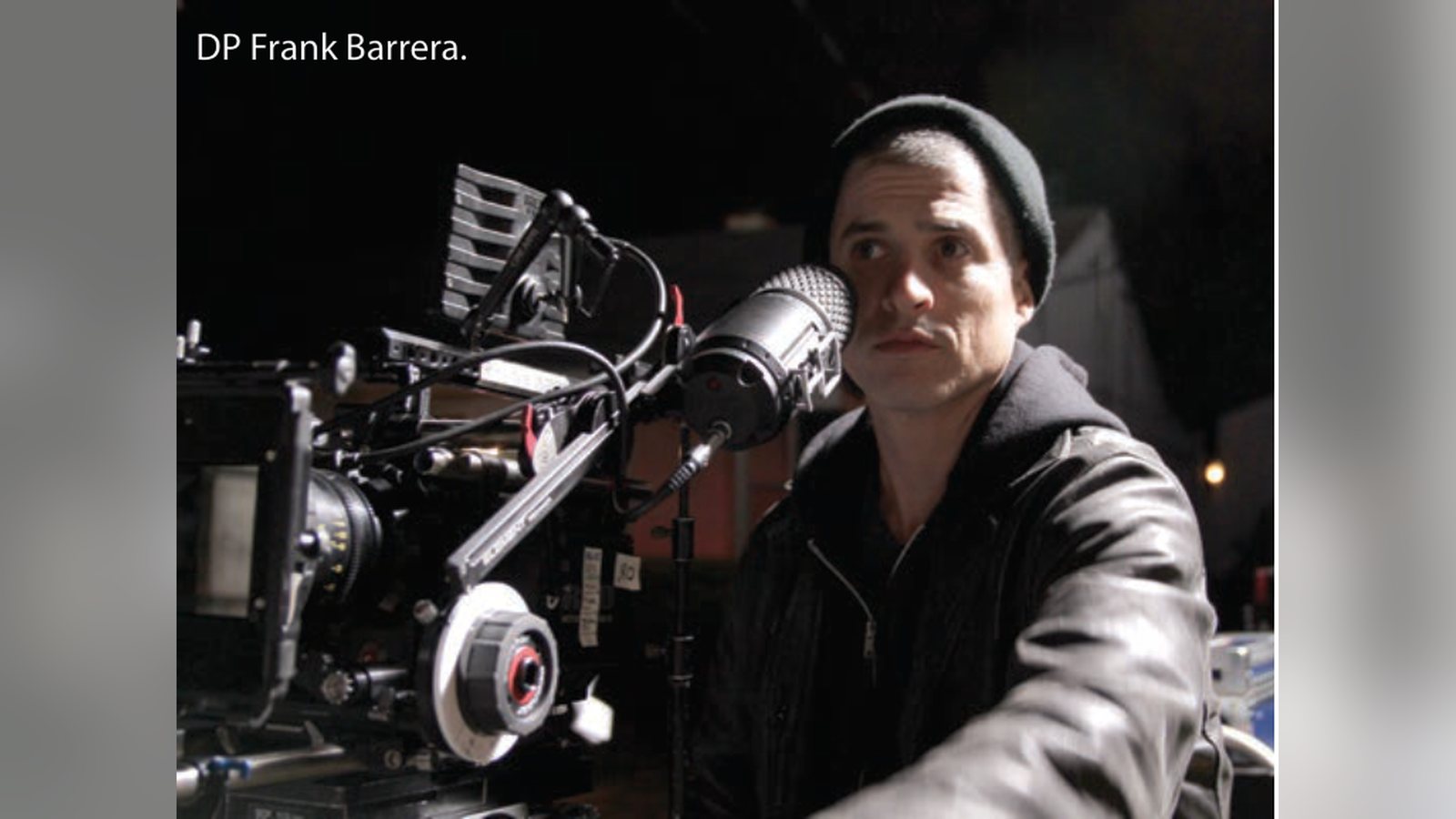
Director of photography Frank Barrera describes his approach to lighting the award-winning independent feature In the Family, scene by scene.
Creating Dramatic Scenes Covered in Long, Single Takes
StudentFilmmakers Magazine: In reference to the multi-award winning film, “In the Family,” for which you served as Director of Photography, how would you describe the film’s ‘look,’ and how did you achieve this look?
Frank Barrera: We took a naturalistic approach to the visuals of In the Family. We spent a great deal of effort to ensure that all aspects of the sets, props and wardrobe were accurate to the world we were attempting to create. This included tight control over our use of both color palette and color temperature. We developed rules regarding the use of warm versus cold tones, i.e., when either should be utilized and when they should be avoided. We wanted to make a film that didn’t need garish color or dynamic camera moves to tell its story. This is a quiet film whose subtle shifts in color and light work on an almost subliminal level.
We had many outside references that we drew upon to act as guidelines for every shot. We looked at paintings, photographs and films. Both Bergman’s Scenes from a Marriage and Cassavetes’ A Woman Under the Influence were of great inspiration to us. These films are brilliant examples of production design that at first glance seem practically happenstance. But on closer inspection the viewer realizes that little is left to chance in these films. Naturalism is not synonymous with documentary. Naturalism is created from the ground up.
SFM: Tell us about the lighting for scenes.
Frank Barrera: As we were looking for a natural look I decided to look at the locations and learn about how the sun affected the interiors. I looked for natural light throughout the day that might add to or propel our story forward. Usually the sun would offer some inspiration as a base from which we would light a particular scene. Sometimes this meant warm direct hard sunlight. But usually it meant soft indirect cool light. Our gaffer Chris Clarke was integral in making this happen. Our daily lighting package maxed out at a single 4K HMI PAR. We also had some smaller HMI units as well as an array of tungsten units. But that 4K was our workhorse for all our day interiors.
The principle aspect of creating natural light is using a single large soft source. Achieving that with a single 4K was not easy. Chris was able to work wonders.
SFM: What was one of your most favorite scenes to light?
Frank Barrera: The library scene where Paul [played by Brian Murray] proposes that he offer his free legal representation to Joey [played by Patrick Wang] is my favorite scene in the film from a lighting perspective. For starters it is a critical scene in the film that gives Joey sudden hope that he might be able to see his young son again. It is very dramatic. The library location we had was lovely. We shot this and all the mansion scenes in a late 19th century mansion in Yonkers New York. The value of using the correct location cannot be overstated.
We were on an extremely tight schedule [120 pages in 18 days]. When we were to shoot the library scene the sun was just about to poke through these high and narrow southern facing windows and give us a perfect back light from high up. If this was a bigger budgeted production I would have simply blocked the real sun from coming into the room and rigged up an 18 K HMI re-creating the practical sunlight and shoot for two hours. Instead we knew that the sun was going to only shine through this window for about 30 minutes and we didn’t have an 18K or the man power to rig one. If we wanted this beautiful and dramatic light we would have to shoot the entire 5 1/2 page scene in 30 minutes.
By this point in the production we had all learned to move as quickly as possible and still get Patrick what he needed and wanted. Needless to say we all jumped at the challenge to shoot this pivotal scene in such beautiful light in such a short time. Patrick often talks about how discovery is part of the filmmaking process. And that’s what we had to do and do it quickly we did. We had to jettison Patrick’s initial concept of coverage for the scene which was traditional and we came up with a roving single to cover the dialogue. This was decidedly untraditional and risky. It was a gamble that paid off. I love this scene.
SFM: Covering scenes in long, single takes. Why did you decide to shoot this way, and could you share any ‘Do’s and Don’ts’ in relation to using this technique?
Frank Barrera: The long takes were essentially written into the script. The shooting style was built into the DNA of the film. We had no choice about it one way or the other.
You must schedule more time in your day when attempting this approach because every shot must be 100% perfect as there will be no cutaways or coverage to help with poor performance, incorrect dialogue or poor camera work. An experienced Assistant Director is invaluable in this instance. Rehearsal is also extremely important. Patrick worked with all of his actors in extensive rehearsals many of which I was able to observe.
SFM: What other camera and lighting techniques did you use to create visually dramatic scenes and characters?
Frank Barrera: The first shot of the film was written as a slow FADE IN from BLACK. But as we discussed it in prep we decided to do the FADE IN ‘in camera’ as opposed to doing it in post production. We thought there would be a more compelling and realistic effect this way. We not only did a rack open exposure on the lens iris at the beginning of the shot but also faded up on a couple of lights inside of the bedroom and panned our 4K in through a window from the outside. It was a complicated shot that took several takes but I think we captured something subtle and unique.
SFM: By the way, what cameras and lenses did you shoot with, how many, and why?
Frank Barrera: We shot with a RED MX out of TCS in New York. We had a full set of the Cooke Panchro lenses. This lens set was new from Cooke when we shot. They were designed for the low budget PL mount camera systems such as Red and the Sony F3 and the Canon C-300. They are much more affordable than the Cooke S4’s and S5’s. They only open to a 2.8 and this is reflected in their price. However, the Panchros are just as sharp at a 2.8 as the S5 at a 2.8. Same glass, same sharpness. The loss of stop is not a significant burden when rating your camera at an 800ASA. And the shallowness of the depth of field at a 2.8 is usually sufficient.
SFM: Tell us about your workflow with the RED.
Frank Barrera: We had our assistant editor on set and he would verify, then back the footage up onto a couple of hard drives. Even with the long takes we were usually able to stay with using the CF cards. The cards are more stable than the drives and more importantly the cards make for a more disciplined camera department. In many ways using shorter loads mimics the protocol for film which has taken a beating over the years with the seemingly endless recording times of digital capture.
During the deposition scene we had to go direct to hard drives because we were doing 30 minute takes.
SFM: Your experience spans over 15 years working in everything from television series to commercials to feature films. What came first, television or film, and how did you make the transition from TV to film, or vice versa?
Frank Barrera: I learned most of what I know about lighting by working in the Grip and Electric departments on several low budget 35MM features in the mid to late 1990’s. It was the peak of the indie feature scene in New York City. Even though these were low budget productions we always shot film and had access to all the same gear that much larger shows used: boom cranes, jib arms, dollies, large HMI’s, etc. After several years in that world, I moved up to the gaffer position and began to light commercials.
Finally I was ready to move over to the camera department. This transition was hard because all of my feature and commercial contacts only knew me as a gaffer. This is a common problem when one transitions for one department to another. No one wanted to hire me as a DP. So I had to take my knowledge and start gathering new clients and collaborators. I began by being the DP on any student film that would take me. I used this material to put together a show reel. But that wouldn’t pay my bills so I also began operating camera on the latest craze on television: reality TV. I could talk about the mixed feelings I have about some of the content on some of the reality shows I worked on but the truth is that my hand-held operating skills reached a much higher level from all of that experience. Eventually, I was able to translate my reality operating ability to narrative feature work.
Currently, I have one foot in the narrative world and one in the reality world. More and more narrative shows seem to be referencing some type of reality TV aesthetic. And that’s just fine with me.
SFM: What are some of the unique differences working in television world versus feature film world in your experience?
Frank Barrera: In feature film production there is often a more personal and financial investment by the directors and producers. Theirs is often a labor of love. This affects the entire tone of the set on a daily basis. It is common for the crew to also feel a personal connection to the project and its success or failure.
Conversely, in TV production there are often many more people involved [multiple directors and producers] with a wider range of personal commitment applied. It can begin to feel like a ‘regular’ job. Interestingly, because there is that lack of the Labor of Love Effect TV productions can be more fun to work on just because there is less stress revolved around the success of the show. There can often be more levity on a TV set compared to a feature set.
SFM: By the way, what is your favorite camera to shoot with and why?
Frank Barrera: I am excited about the recent crop of moderately priced PL mounted S35 sized sensor cameras: Sony F3 and Canon C300. Many of the early technical issues with solid state recording codecs have been resolved and the cost of manufacturing a large sensor chips have dropped. We now have access to several stable wide latitude capture systems and the ability to use high end glass with them. The future looks bright for all low budget filmmakers.
SFM: If you could share a piece of advice with new and aspiring filmmakers, shooters, and storytellers around the world, what would it be?
Frank Barrera: To be brutally honest I usually tell aspiring filmmakers to find a husband, wife or partner who believes in the idea that you are destined to tell stories and there is no other path for you. Oh yeah and this supportive person needs to have a ‘real’ job with benefits. It’s a long haul to become successful in this business and it is critical that on your way you also have a full life experience that involves family and friends. So go out and find someone. Someone with a job.
SFM: What are you working on next?
Frank Barrera: I will shoot Patrick Wang’s next movie whenever that happens. Otherwise I am seeking the next great production.
Related filmmaking guides
Keep learning filmmaking
Want more lessons like this? Join StudentFilmmakers free for live webinars with working pros, and stream on-demand filmmaking classes in cinematography, directing, screenwriting, sound and post.