By Leonard Guercio
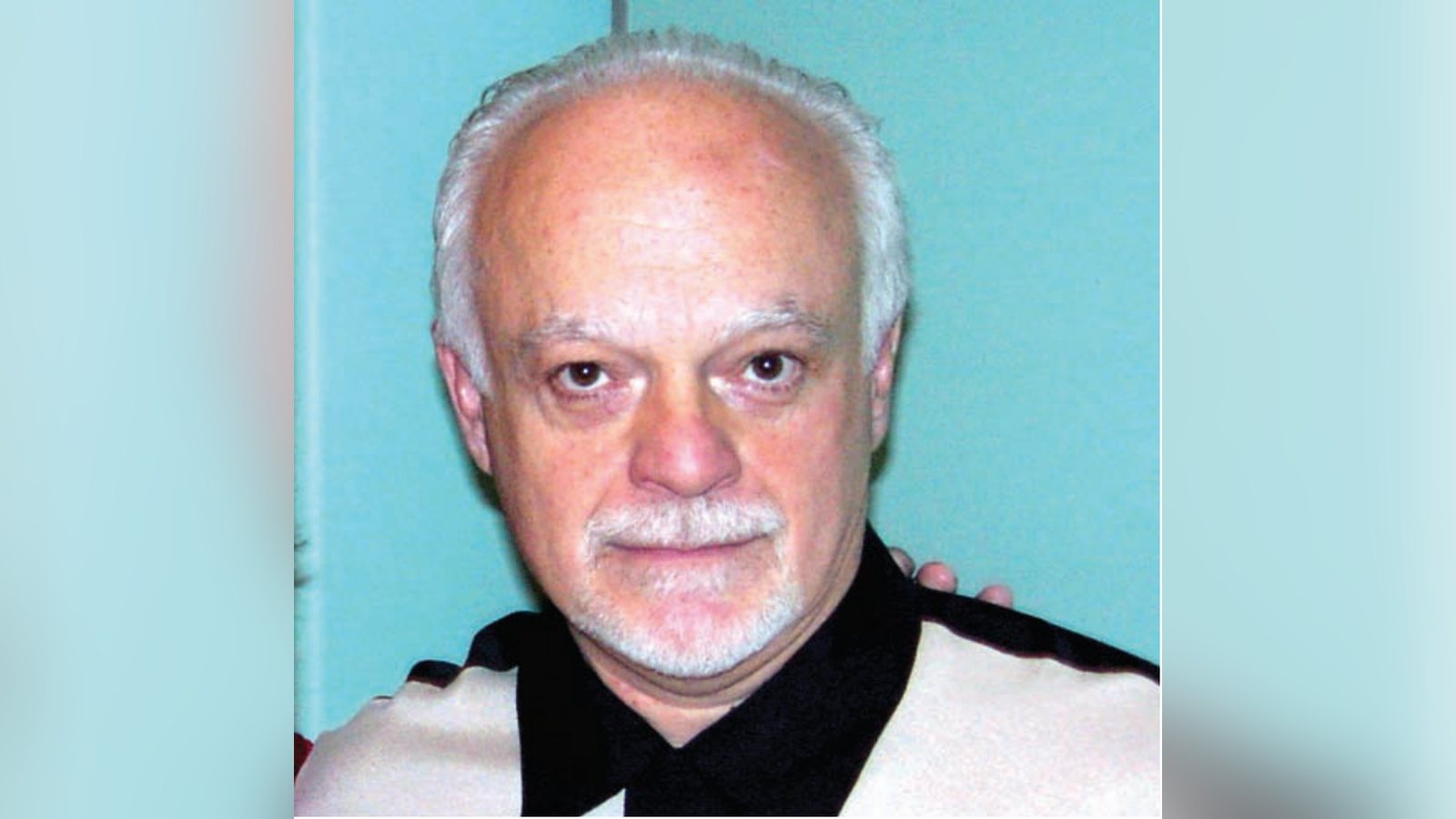
Joe Stinson, who wrote the line “Go ahead, make my day,” talks about screenwriting, writing for Clint Eastwood and his advice for new screenwriters.
Two years ago, while attending the New Jersey State Film Festival in Cape May, NJ, I had the good fortune to take an all-day screenwriting seminar with Joe Stinson. It was an intensive workshop, one of the highlights in the festival’s four-day film program. Joe’s non-formulaic, pragmatic approach to the craft of screenwriting quickly won me over. In many ways, his solid teaching method reminded me of the style of my film school mentor and friend, the late Jim Ambandos. I took copious notes that day, hanging on every sentence, not sure that I absorbed it all, anticipating an opportunity one day to further explore these ideas.
After working in Hollywood for twenty years, Joe and his wife Angela had recently moved back east to be close to family. Working also in local theater, Joe continues to write screenplays and is often tapped to do rewrites on scripts for studios and independent producers. Among his produced screenplays, Joe had written Stick for Burt Reynolds, Heartbreak Ridge for Clint Eastwood, and City Heat for both Reynolds and Eastwood. However, Joe’s most salient success came with his script for Sudden Impact, the fourth installment in the Dirty Harry series. Last year in the American Film Institute’s list of the 100 Greatest Movie Quotes Of All Time, the line, “Go ahead, make my day,” from Joe’s screenplay was chosen number six among the many honorees.
Once a month for the last two years, I’ve entreated Joe to write his own book on screenwriting. However, out of genuine humility, he has always politely resisted. Despite my argument that new writers need to hear what he has to say, Joe confines his teachings to his students at film festivals and at Drexel University in Philadelphia, where he is an adjunct professor in playwriting and screenwriting. Consequently, my only recourse is to share his practical screenwriting perspectives here in the pages of StudentFilmmakers magazine. It is my hope that this will encourage Joe to make my day by finally putting his ideas in book form. What follows are excerpts from our recent discussions about the craft of screenwriting.
Why do you advise screenwriters to avoid giving camera directions?
“Screenwriters should never try to do anyone else’s job except their own. Camera angles and all that – they have incredibly talented people like cinematographers, camera operators and directors who do that.”
What about screenwriting conventions like cut, fade, etc.?
“I think what a screenwriter should do is write the scene in such a way that only a particular shot – that is to say the shot the screenwriter has in mind – can be pictured. A screenwriter should work as hard as possible to make the experience for the reader of that screenplay as full and vibrant and vicarious as it is for the viewer of the finished film. You don’t have all the music, sets, locations and the actors, so you have to do it with words. But that’s what writers do – they do it with words. So you should try to focus on writing as clean, as direct and as concise a script as possible. You write the scene in a way that the reader has only one possible way to see it.”
That’s easier said than done.
“Screenwriting, like all writing, is labor-intensive. I tell my students that if they need to write ten pages to get one good one, then that’s what you do. That’s the deal. That’s the game. That one page stands on the shoulders of the other ten.”
I guess that’s what the old adage means: ‘Writing is really rewriting.’
“Exactly. Sometimes, you need to write a lot of stuff that nobody needs to read.”
What other qualities does a screenwriter need?
“Preparation and focus. And this is where experience comes into play so that, when you sit down to see that movie in your head, you just focus right in. You’re already exercising tremendous selectivity by eliminating a bunch of stuff that’s not relevant.”
What about using the writing tool – programs like Final Draft, Movie Magic Screenwriter, and other similar software?
“They’re all very useful. When I started, I wrote my scripts longhand on paper, then paid a service to type up the script. Rewriting was very cumbersome and time-consuming. So as soon as [computerized screenwriting] programs became available, I welcomed the change. One thing that changed was the ability to do more rewrites quicker. I found the screenwriting programs made it possible to work harder.”
Do you think the tools help the creative process?
“No, it’s not the tools. You could give a power drill to one guy and a hammer and chisel to Michelangelo – who’s going to do DAVID? So, it’s not the tools; the tools are just the tools.”
What do you consider beneficial about screenwriting programs?
“One of the great things about programs, like Final Draft for example, is they help get people over the hump of formatting and other technical screenwriting conventions so writers can get to work quicker.”
In your seminar you said, “Write from your heart, write from your gut.” Can you expound on that?
“Movies are not intellectual exercises. Movies are visual and emotional. They’re not about the head; they’re about the gut. Even the ones that are the most challenging, the ones that are conceptually edgy, that tackle difficult subject matters, they tackle them from an emotional point-of-view. People go to the movies to feel something. It doesn’t mean you won’t leave thinking about the film. But the best way to the head is through the gut.”
What did you mean when you said that “the execution of the script is key, not the idea?”
“Ideas are a dime a dozen and everybody’s got dozens. You can’t copyright an idea; you can’t register an idea with the Writer’s Guild. When does an idea for a story become unique? It becomes unique in the way you do it. You need a script. So it comes down to execution. Screenplays are not about ideas; they’re about the execution [of those ideas]. What differentiates one thriller from another thriller, one comedy film from another – it’s in the execution.”
You said, “Economize always with description.” What did you mean?
“All art is about choice. All art is the exercise of choice, selectivity. Why did van Gogh choose sunflowers when there are so many other flowers to choose from?… First, [in a screenplay] you don’t want to say too much because you don’t have room for it. Secondly, you don’t want to say too much because you want to leave a certain openness. Again, you don’t want to do the job for the casting director, the director, or whoever. But, it is a movie and, remember, you [as the screenwriter] only have the words to make the read as close to the finished experience as you can.”
One of the other key points I remember you making was that even dialog should reveal character. Can you elaborate?
“Yeah. Every satisfying – or good – movie is really about people. Even if they’re animated films about animals or cars or whatever, the animals or cars are acting in recognizably human ways. So, they’ve been anthropomorphized…. You might think, ‘Action movies are not about character.’ Well, how about The Terminator? How about Alien?”
What about dialog?
“In [writing] a movie, we say show, don’t tell. This is one of the primary [screenwriting] rules. However, don’t confuse the telling with having no dialog. Because what does dialog do? Dialog should reveal character…. Does the audience need to hear about stuff they’re seeing? No, that’s the point of ‘show me, don’t tell me’. Don’t have people talking about what their characters are. Show that character; reveal that character! How do you do that? By action, by creating scenes where characters do things and say things that reveal who they are.”
I hear people sometimes say that a movie didn’t have a story. Why do you think that is?
“Well, [I believe] that’s because the story never really got up and running. The idea for a story is the springboard to the story. That’s the problem with what used to be called the high concept movie. For example, someone will say: How about Romeo and Juliet in Outer Space? Okay, well that’s an idea for a story – but what’s the story? A story is about people’s characters, about people changing, about conflict and resolution, about how resolutions create other conflicts. Don’t confuse the idea for the story with the story itself.”
Any advice for a beginning screenwriter?
“I’ll often hear from new writers that they’re writing a screenplay to use as a calling card. They may have chosen to write a horror film, for example, even though they may not be interested in the genre. Then I’ll ask them, ‘Do you like horror films?’ and they’ll say, ‘No.’ Then I’ll ask, ‘Do you watch horror films?’ ‘No, but I’m going to watch one.’ they’ll answer. Then I’ll ask, ‘Well, why are picking a genre to create something that is going to speak for you? Why do you want something that you’re not interested in speaking for you? First of all, there’s the presumption that you can do it well and second, what the hell happens if lightning does strike and you have a success? What do you think is going to happen? You know, writers get typecast just as much as actors. So, write scripts that move you emotionally. Chances are your audience will also be moved.”
Leonard Guercio is an independent filmmaker and an adjunct film professor at Temple University in Philadelphia.
Related filmmaking guides
- 7 advanced screenwriting tips
- 40 basic plot points for a feature film
- How to write a short film script
Keep learning filmmaking
Want more lessons like this? Join StudentFilmmakers free for live webinars with working pros, and stream on-demand filmmaking classes in cinematography, directing, screenwriting, sound and post.