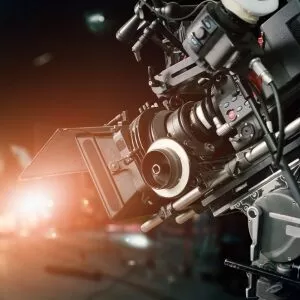
Extremely high-speed cinematography presents its own set of unique challenges. It is an art of its own, that takes much time to understand and master. The applications for extreme high-speed photography are vast. Things that the naked eye perceives as instant and mundane become exciting and visually amazing.
An Example: A Water Drop
Take a water drop falling into a pool of water for instance. At 1000 fps (around 42 times faster than 24fps, and thus an action that takes one second of real time now takes 42 seconds when played back), we can see the drop of water slowly falling towards the water. When it hits, we can see the water slowly move away from the point of impact, sending a small wall of water upwards. The water rushes back downward and then shoots a drop of water back into the air, straight up.
Questions to Ask First
One of the first questions that should be asked when preparing for a high-speed shoot is if the action you are shooting really needs extreme high-speed camera work. (I consider extreme high-speed to be anything over 150fps.) For example, if the action you are photographing is not that fast to begin with, you most likely do not need camera speeds over 150 fps.
Free for members
Sign up free to keep reading
It’s free and takes less than 30 seconds. You’ll also get our Interstellar issue free, and a community of filmmakers sharing their work.
No credit card. Continue with Google or your email.