By Larry Jaffee
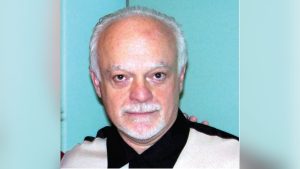
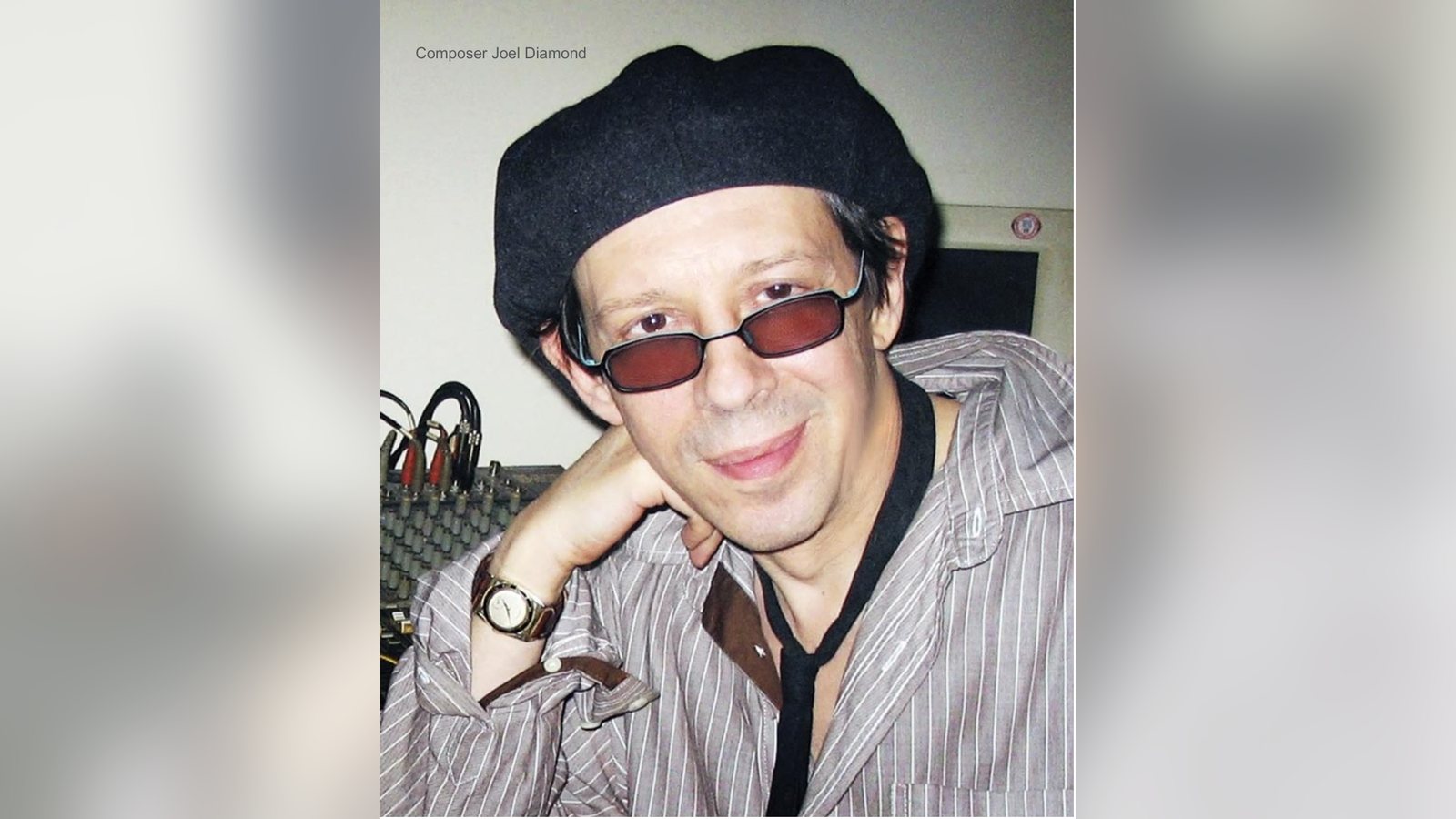
Independent film composer Joel Diamond explains why he turns down studio jobs, and why a score should never be a slap-on added at the end of post.
Independent film composer Joel Diamond has been offered scoring jobs to major Hollywood studio films, but he usually turns them down, much to the consternation of his Los Angeles agent.
The reason? He would end up feeling compromised by the studio machine.
Preferring to avoid such angst, Diamond aims to stay true to the music in his head no matter the project.
Instead, New York-based Diamond feels much more at home working on the soundtracks of numerous indie films, which have been his main source of income for the past decade. In the past 12 months, he’s worked on seven films, most of which came through word of mouth and referrals among filmmakers.
Perhaps best known for his score of The Believer (2001), which was released on CD, and won the Grand Jury prize at the Sundance Film Festival, Diamond recently worked again with that film’s director/writer, Henry Bean, on the forthcoming Noise, a Manhattan-shot independent film that wrapped in late June and stars Tim Robbins, William Hurt and Billy Baldwin. Robbins plays a New Yorker bothered by the city’s noise pollution so he complains to the mayor, played by Hurt. Besides his “noisy”
score, an homage to avant-garde composers John Cage, Raymond Scott and Schoenberg, Diamond also acts in the film. Among Diamond’s better known credits include producing the soundtrack to indie favorite Welcome to the Dollhouse (1995) and working as an organist on the soundtrack to Dead Man Walking (1995).
Diamond’s main advice to aspiring and student filmmakers is to not view music as an almost afterthought, post-production function. He says he comes across that mentality far too often.
“On The Believer, I started working on the music the minute Henry [Bean] finished the script,” Diamond explains, in an interview at his immaculate home studio/Upper West Side studio apartment, describing his ideal situation. “Henry and I have been working on this for a year-and-a-half already.”
Unfortunately, Diamond usually doesn’t get that kind of lead-time to nurture a score. “A lot of times I get calls to do a film, they’re late and need a composer right away. Or you’re called in basically to fix the edits and slap on music. It feels like I’m just going to be doing a bunch of patchwork, rather than when I’m working with someone like Henry even before he shoots. What happens in the end, the music becomes very integrated within the film. That’s kind of how Kurosawa works.”
Diamond estimates that he’s worked on 25 to 30 films, of which 80 percent the editor uses temporary music, in film production vernacular known as “temp tracks,” until they’ve hired the composer. Often, the music slotted in is beyond the budget’s means.
“Temp tracks are always a danger. They use them to either smooth out a scene or get something underneath to make it look better. A lot of times they’ll use anything they can get their hands on, and usually something that they can’t use. A classical piece, a famous rock ‘n’ roll piece, whatever they want use. That’s usually death for composers. Most composers I know really go ballistic when they start with the temp scores because you have an idea and they have this other idea. Let’s face it, editors are obsessive, and they’re working day and night on these edits, and they’re listening to this music while they editing. They get married to that music in their minds; they love it so much. A lot of times it’s the director too. What happens is that the composer is subjected to this, and whatever he or she writes, they’re never happy with it. Unless, you tell them, ‘You have TEMP LOVE’—that’s what we call it—‘and you’re never going to like anything else.’ So they must stop that loop in their minds and let the composer do his or her job. It’s always an emotional thing for me.”
Occasionally, Diamond works with directors who fancy themselves as musicians and think they are capable of scoring the films themselves but hire a pro usually due to being too busy with other tasks related to getting the movies finished.
“If they’re really good, then it is a great collaboration. For example, this guy I recently worked with, Raymond Steiner, is not necessarily a musician but used to be a guitar player and is one of the producers on [the forthcoming] Milarepa (2006),” Diamond explains. That film, about the first Buddhist poet priest, will have a limited run in New York in September or October, and has already been released in other parts of the world.
“Raymond’s temp tracks were great,” says Diamond. “They were placed in great places. Everything felt right. I changed everything, but his taste was really good as far as the moods he was setting up. So it was a really good collaboration. We talked, and got along really well. It was fun working with him. He let me go crazy. He said, ‘Whatever you want, avant-garde over here?’ This is a very Tibetan film, spoken in Tibetan. There were a lot of things I needed to keep very Tibetan, but the other things. There was a storm scene. He let me do anything. He loved it. He thought it was great.”
Diamond’s varied music career has included producing and arranging albums for other artists, as writing four ballets that were presented by the Cuban National Ballet. Diamond’s string quartet, “Danza Caprichosa,” recorded by Orchestra Nova, was nominated for a Grammy award. He has also toured as a keyboardist in rock bands fronted by such musicians as John Lydon (Public Image Ltd.), who was previously known as the Sex Pistols’ Johnny Rotten; ex-Rolling Stone Mick Taylor, and Graham Parker.
He scored his first film in the mid-1970s at the urging of a former girlfriend, who was a film editor. “At the time I was doing a lot of touring, arranging a lot of records and playing on a lot of records. And I was also writing for a lot of classical groups—quartets and quintets at Carnegie Recital Hall, things like that. And she said, ‘You should do a film.’ In those days I thought it would be corny for me. But I did a film, and I liked it. It was a very small film called In the Heart of the Garden. I had a great experience writing it, and thought: ‘This isn’t bad at all.’”
Diamond has a somewhat unusual process when he takes on a film. “I like to write the end credits first. To me that sums up the whole film, and I can take elements from that and break that apart, and use it for characters or external scenes.”
Communication with the director is the key to a great score. “I try to talk a lot, I try to give them an idea of which direction I’d like to go in as far as orchestration and a theme. They either say, yes, or ‘No, I’m thinking along this line,’ or ‘Let’s do it this way.’”
While he thinks about the score after he reads a script those ideas take shape when he sees the first footage. “It gets a little more complex than that. You’re approaching a scene in many ways. I try to get an overall feel for the film, whether it’s used or not. Then I’ll work on characters, counter themes, and then specific scenes, whether something is internal or external. I have to figure out how to set up a scene.”
Diamond often is odds with his agent over what types of jobs he should take and where he should live. “My agent is out in LA but I’m not crazy about moving out there. To be perfectly honest, I like working on [NY]independent films. The money is not as good, but as long as I can make a living I am happy. In Hollywood you have to write what they want to write. On an independent film, I can write what I want to a certain extent. It comes down to a collaboration.”
“He starts screaming at me. I tell him to get me something that will make me feel creative. If you want a hack, or get someone to write those syrupy strings, there are a lot of guys who will do that. I’m not the kind of a guy who can do a good job on something I don’t want to do. I have to like a project. It’s hard enough to do something you want to do. My agent in LA always is trying to get me these commercial jobs out there. They will fly me out. I go on these interviews. They’re very nice people. Then they’d start talking about the film, and you’re like ‘Wait a minute.’ And then you weigh it, and say: ‘The pay is really good but how long am I going to work on this film.’ You know you’re going to wind up in therapy, so I always wind up saying no. I can’t go through this.” Larry Jaffee is a New York-based freelance writer specializing in the entertainment and media business. His writing has been published by The New York Times, Rolling Stone, Hollywood Reporter, and Billboard, among numerous other publications. He may be reached at [email protected].
Keep learning filmmaking
Want more lessons like this? Join StudentFilmmakers free for live webinars with working pros, and stream on-demand filmmaking classes in cinematography, directing, screenwriting, sound and post.