By David Kaminski
First-time director Jessica Oreck talks about her debut documentary Beetle Queen Conquers Tokyo, a film about Japan’s love of insects that defies labels.
Documentaries tell a story about the real world in which we live. And sometimes they tell us about the people making them, too.
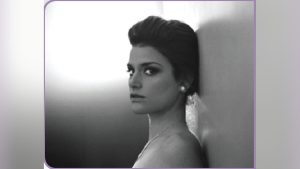
Although not all interviews about filmmakers require an extended personal biographical sketch, there is no way to truly understand Beetle Queen Conquers Tokyo without first delving into the personal life and ideas of director and editor, Jessica Oreck.
Filmmaker’s Biography
Inspiration for the Film
The beginnings of the film stretch back to 1998 when Oreck first viewed Sir David Attenborough’s The Private Life of Plants. Afterwards, she knew that she wanted to make her own movie about something she loved, bugs. Although she was only 14 years old at the time, it was a formative experience for her. Later, the desire to better understand insects and to create her own film brought her to New York where she went to film school and also took a job working at the American Museum of Natural History, first as an assistant video editor and now as an animal keeper and docent.
While many people with her level of dedication and love for creatures often pursue research and a PhD, she wanted to remain more generalized and broader in her view and work. Her mission is to elevate the status of bugs in Western culture from the bottom of the Judeo-Christian hierarchy of life-forms. She wants insects to be understood as one of many animals, neither greater nor lesser than man, simply part of all of nature and its complexities and interconnectedness.
Reincarnation
Though she was raised in a Judeo-Christian household in New Orleans and Colorado, she finds the eastern views of the Japanese more in keeping with her own. The only religious thought that she can trace to her childhood is her mother’s explanation of reincarnation, which seemed to Jessica at the time to be a statement of fact, a simple and universal rule that she still believes in today. No surprise, then, that she is kind to bugs, souls on a never-ending journey, though the journey onto the next lifetime is arguably faster for the “interesting” ones she eats.
Eating Insects
“If it’s interesting, why not eat it?
To me, there seems no reason not to eat bugs. They’re incredibly high in protein. They’re incredibly clean because they are so low on the food chain… They’re obviously more than abundant, and they’re renewable because there’s so many of them.”
”I once saw a documentary about termites. I was watching these Africans roasting these termites in their fire and just plucking them right out of the basket and popping them into their mouths like popcorn. And they just looked delicious to me. I guess I was just hungry at the time when I was watching the documentary.
A few weeks later, I actually got to eat crickets.”
“There was also a feast, a bug feast here in New York that I got to attend with some of the etymologists at the AMNH [American Museum of Natural History].
They served up a bunch of stuff… We had locusts… The Madagascar hissing cockroach which was barbequed… There was mealworms with honey for dessert which was delicious, and crickets.
Crickets can be made into a flour, dried crickets, and they taste sort of nutty, and they’re quite delicious… Crickets are some of my favorites.”
“They also had us try Thai waterbug… A giant beetle, aquatic. We just ate the ‘shoulder muscles’ so to speak. It was the most bizarre tasting thing you’ve ever tasted. It tasted exactly like an apple Jolly Rancher. No joke. Everyone at the dinner just sort of looked around at each other. What?! Does that make any sense at all?? But that’s exactly what it tasted like. An apple Jolly Rancher. Fake apple flavoring. Super sweet, tart. Very strange.”
“Some day, I’ll be able to eat… to have sampled all of my pets.”
Bugs? Directors?
All of her pets are bugs and animals named after famous directors. There is Alfred Hitchcock, the Madagascar Hissing Cockroach (Gromphadorhina portentosa); Abel Ferrara, the Chilean Rose-hair Tarantula (Grammastola rosea); Werner (Wernernina) Herzog, the female Crested Gecko (Rhacodactylus ciliatus)…apologies to Werner, she thought it was a male when she first bought it; and also her half-dozen Vietnamese Walking Sticks (Phasmid spp.), which are all females. They are named “by generation” according to Oreck, since it is easier to keep track of them. Those generations have been Claire Denis and Agnes Varda. Indeed, even the most avid insect-lover can barely tell a stick from a walking-stick, much less the walking sticks from each other. And lastly, there is the new pet, Jean Painleve, a very small Praying Mantis (Tenodera spp.) given to her as a gift. Barely an inch, it is still entrancing her.
Friendship and Love
In hushed tones, she can tell you about one of her best friends, no longer living. Sitting curled and dried near her desk is her Giant African Millipede (Archispirostreptus giga), dear Nicholas Ray. She strokes him, remembering, and talks about how he knew her. How he crawled gently onto the hands of her friends and her boyfriend, but how he would always return to her, knowing her. Among her favorite pastimes was to watch old Westerns like Seven Brides for Seven Brothers and other old movies together with Nicholas Ray. They used to sit quietly on the couch while he curled in her lap. Alas, those days are gone, but she lacks no shortage of other friends, living and dead, in her apartment. That is not counting the heads of a wild boar and a bison that stare from the walls.
Fortunately, Oreck also loves boyfriend and cameraman Sean Williams, and while she may collect everything from bugs, to sets of teeth and jaws, and animal masks, his massive collection of films on DVD dwarfs the shelves of their living room. It’s a testament to his deep knowledge and experience, as well as their shared interest in documentaries. A good pair of nature filmmakers, these two, it is true. THE FILM’S CONCEPT Creating a New Genre
First-time director Jessica Oreck’s debut documentary Beetle Queen Conquers Tokyo is a film that defies labels. One might describe it as an ethnobiology film, a piece in which the interaction between the culture of man and insects is explored, reflected upon, and ultimately delivered to the viewer as an extended haiku. Half magic, half question, it ponders the relationship between the people of Japan and the insects that fill their lives.
The Director’s Goal
Oreck says, “In making Beetle Queen Conquers Tokyo, I am striking a new and unconventional approach to science education. My goal is to reach children and adults alike, and to help reframe their relationship with the natural world. It isn’t about cramming their heads with facts and yet it is far from pure entertainment. My work addresses not individual thoughts, but frames of thought. My passion isn’t about genetics, it isn’t about global warming, it doesn’t follow the latest craze in the science world, but it is critically relevant to the problems of today. It is about attention to detail, patience, and ultimately harmony, all of which are so rarely present in our modern lives.”
A New Way of Thinking
She travelled to Japan to make the film because she had met entomologist Akito Kawahara, who also produced her film, and her research led her to understand more fully the relationship that existed between Shintoism, Buddhism, and the animism that are part of the beliefs and lifestyle of the Japanese people, ideas that are parallel to her own philosophy about reincarnation, people and animals, and the shared history that connects all of us back in time to the beginning, as well as into the future. Her film challenges the Western belief of man as separate from animals. To Oreck, they are one and the same, man being no more evolved or superior to insects in many ways.
Awe and Fascination
The film starts with a quote from Lafcadio Hearn’s A Japanese Miscellany in 1901: “The people that could find delight, century after century, in watching the ways of insects, and in making verses about them, must have comprehended, better than we, the simple pleasure of existence.”
Nurtured by the flooded rice paddies and rich eco-system that has existed in Japan since the 4th century, two aquatic larvae become the inspiring firefly and dragonfly, central insects in the film.
Owarété wa Tsuki ni kakururu “Ah, the cunning firefly!
Being chased, they hide themselves in the moonlight.”
Yukioté, Dochiramo soréru Tombo kana!
“Meeting in flight, how wonderfully do the dragonflies glance away from each other.”
Also, the butterfly, cicada, and cricket also play leading roles. They, too, are insects that elicit wonder and fascination. Owarete mo, Isoganu furi no Cho cho kana!
“Ah, the butterfly, even when chased, it never has the air of being in a hurry.”
But most impressive to our eyes, and most sought after by young children and the rich dealers who sell them are the rhinoceros beetles. These are the hulking stars of the film. No flashing bodies or darting movements. Just brawn and determination.
Oreck’s View of the Film “Beetle Queen Conquers Tokyo acts like a 360° virtual tour. It revolves slowly around Japan’s love of insects, and in the process of capturing different angles of this micro-culture, it picks up a glimmer of something much larger. Because the film travels not just two-dimensionally around an object, but also three-dimensionally through time, this glimmer of ‘something larger’ ultimately reveals itself, not just as a cultural backdrop, not just as a philosophy, but as an entire way of life, as a possibility to change the most basic nature of our perspectives.”
“My aim is to challenge the way Westerners view nature, beauty and the hectic monotony of our day-to-day routine. It is my intention to inspire a new sense of wonder, a small sense of wonder, one that does not overwhelm, but acts, like some gentle war of attrition, to slowly but substantially force us to rethink how we live our lives. As with the Japanese culture, the film is subtle, but it functions as a passageway to a wholly different world of senses.”
Film Production and Post
Location: Japan
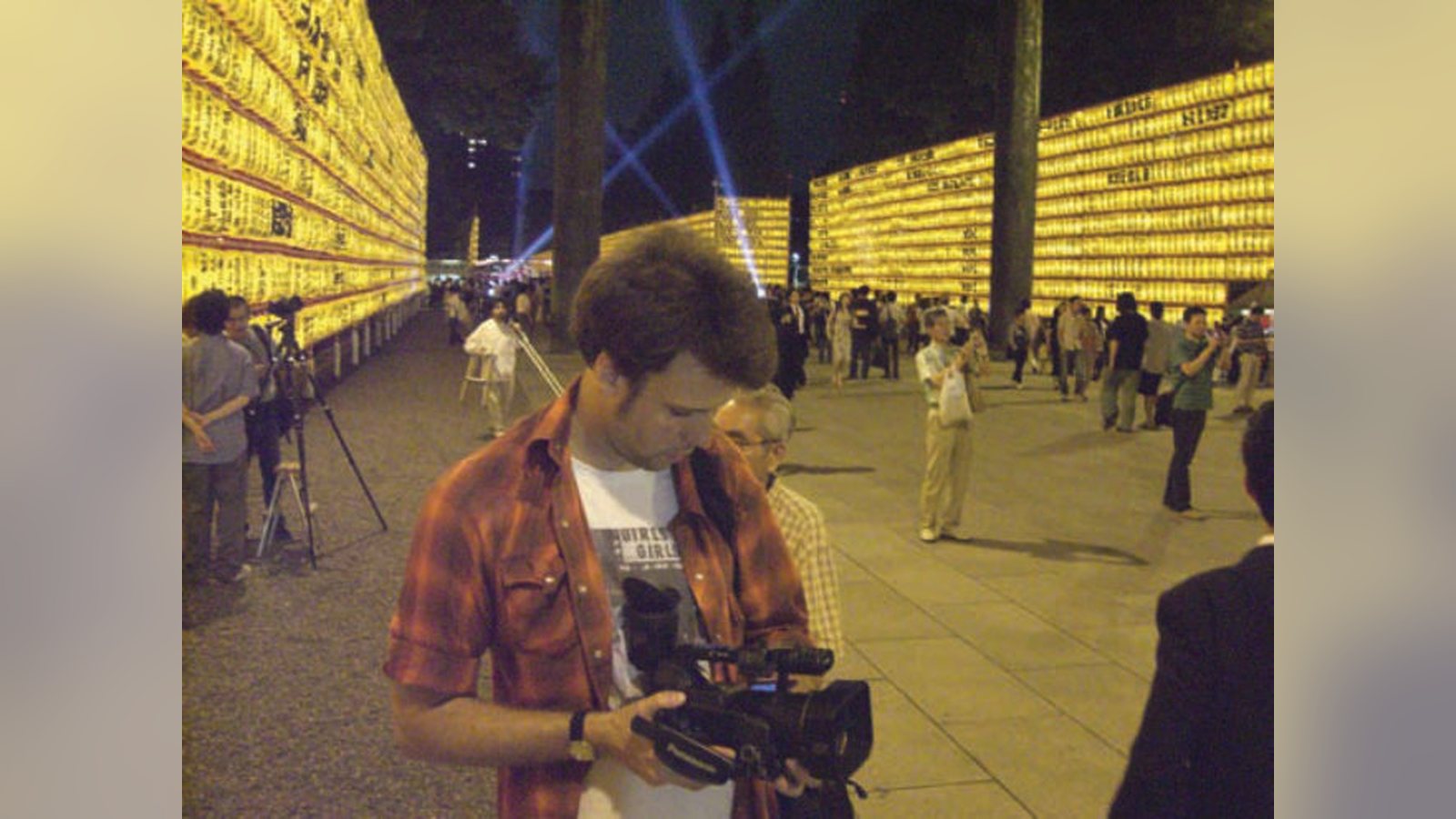
With several months of research under her belt, a list of contacts in Japan, and her cameraman at her side, she embarked on her journey. She worked for four weeks in Tokyo, a week in Shizuoka, spent a few days in Kyoto and Osaka, and took some day trips to Nikko and Tetsuno. In all it was a combination of highly urban settings and also a journey outside of the cities to mountains and fields, following the people who caught and kept bugs. Everywhere, she found enthusiasts and amateurs, devotees to beetles and other insects. For her, that was part of the excitement, to see people of all ages who shared her joy. These were neither scientists nor experts, just people whose everyday lives were filled with bugs as pets, as objects of study and fascination, mechanical objects, sculpture, and even video games. Everywhere in Japan she saw bugs, and she felt right at home.
Shooting
Sean Williams, Cameraman
“Cost was the first thing, I suppose, in the camera choice. Jessica has her own [Panasonic] DVX-100A and I have my old Sony PD-150. I promised her we could make the movie look nice between the two cameras. She believed me. As of that summer (2007) I hadn’t really seen anything shot on any of the pro-sumer HD cameras that I thought looked any better than stuff I had shot on the DVX. I liked working with the HDV Sony Z-1 on Scorsese’s Shine A Light, but I just didn’t think it would be worth the purchase. So we went with the little guys. I used the PD-150 during low light scenes. I love its gain, crummy and soft. When shooting with such small cameras, it is always the temptation to shoot wild and off the tripod. Plus, we kind of wanted it a bit punky and spunky. I am a huge fan of the Japanese 80’s super-8 punk films. In no way do I try to emulate film when I shoot video, but I certainly try to keep the spirit of little money and big freedom. I did have my Bolex with me, we shot a little film. I was hoping to shoot a lot at the top of Mt. Fuji but I got sick from the altitude. I am a swamp dweller, not a mountaineer. As for filters, I think we used none. Maybe a polarizer, I don’t remember. Jessica used a microscopic camera that plugs into the computer for some of that stuff. I had a macro extension for some of the close-up shots of butterflies. The night sequences may have been better if we had a bigger camera. Those things can practically see in the dark now!”
DVX-100A and PD-150
“I always set the PD-150 with the shutter speed at 1/24. It softens the harshness of the movement. I usually do this with the DVX too, but not rigidly. The shutter speed affects the eye of the viewer with video more than the fps. The two cameras give completely different pictures. I think the PD-150 is so singular looking. Nothing will ever look like that again. I am sure it will be fetishized some day. The DVX looks like a step towards higher definition, but the PD has a romance.”
Digital vs. Film
Williams adds, “Keep in mind, I am not a technician at all. I barely cope with the technology that I have to work with. My father was an auto mechanic, and I love the old machine. Machines that worked within the complexity of the human logic. Computers are a leap that the average human can’t understand. I think this is a bad step. It is a road that we are traveling too far down. We become completely dependable and lost when alone. I prefer film, not just because it looks better, but I like the discipline that goes with it. I love the respect I feel for a roll of film as if it is alive. After I shoot it, I may not treat it well, but that’s why I am not a father.” “I am only as comfortable as I am from shooting all the time. Most of what I shoot will never see the light of day. I think that shooting video is completely disposable. The good stuff will stick, but I can’t really think, while shooting that any of it automatically has integrity. When I shoot film, it is only slightly different, but I do feel like film brings something to the subject, where video takes away something. It is simple. Film responds to nature, video reacts against it. It tries to imitate the image and makes it that much cheaper. Film is light and science. So I embrace the harshness and the flaw of video. Sometimes it gets the world right. But I rarely would use the word, ‘beautiful’ for something I see on video. There should be a new vocabulary to suit it.”
Tape Stock
The decision to stay with mini-DV cameras was one of cost and ease. But her ideas of personal rigor extend to the amount of footage, as well. Before she even got on the airplane to Japan, Oreck had already determined in advance that they were not going to shoot any more than 50 hours of footage. She had bought and packed only 50 tapes. She felt that the discipline would keep them on track and provide for a faster and easier edit. In the end, she and Williams did relent and purchase another 10 tapes in Tokyo as a buffer, and they did use seven of them, though a person must admire her willpower.
Editing
Although Oreck did use an editor for three weeks to cut down the 57 hours of footage to an epic three-hour version of her movie, ultimately, she cut most of it herself in Final Cut Pro in her office. The editor she hired had given her sequences to work with and had helped her see the film that she wanted lingering under the surface. She cut away, one sequence and one vision of bugs and humanity at a time, juxtaposing everything from road workers with flashing lights on their vests to fireflies and fireworks.
Kawa bakari, Yami wa nagarété – ?
“Is it the river only?
Or is the darkness itself drifting?
Oh, the fireflies!”
All of it, to Oreck, is the interplay of man and insects and the rest of nature. Whether moving or sitting still, eating, resting… emerging from the earth, or building communities to live… or even man and insects interacting, it is all nature Méshi doki mo Modori wasurété, Tombo-tsuri!
“Even at the hour of the noon-day meal they forget to return home… the children catching dragonflies!”
While most first-time editors might stare agape at the kind of footage she worked with, she is gifted with a vision of a film that flows in eddies and currents, like a dream. To her, it is the unity of all of life, without the rigid boundaries that others might see, and so it is that her editing takes the viewer from one image to another with no apologies or explanations, life unfolding naturally.
Nate Shaw, Sound
As part of Manhattan Producers Alliance and a musician and composer in his own right, Nate Shaw works from his studio Brooklyn. He came on board in the last several months to bring the sound together. He shared some thoughts about the project, and also some insights about the director and her special needs in the film.
“Jessica was interested in making a documentary that was ‘like no doc you have ever seen!’ I liked that level of adventure but it can be difficult. Sometimes a desire to have the music and sound design be so unique means a fair amount of back and forth. She knew what she didn’t want: standard synth beds that sound tense and emotionally obvious. But sometimes finding that sound that worked took time. It means from my end being fearless to just try stuff and hope one of them hits home. For example, there is scene where gardeners are pruning Bonsai trees and I ended up using the sound of underwater bubbles with some wind… She loved it! Different, but good to her ears.”
Organic Sound
Shaw says, “My studio has a Steinway grand piano, a Farfisa and Hammond Organ… plus lots of percussion from Africa. I like to use live sounds as much as possible rather than synths from within the computer. One cue called Sonic City at the end of the film features a butter knife scraping over the low A string of the piano… Just an ice cold sound that sits underneath the VO. Works great… feels good too because you hear the live string vibrating and the sound board of the piano resonating. It’s real! Organic equals good.” SCREENING AND BEYOND Audience
Jessica Oreck adds some final thoughts about the audience: “I don’t believe in the dumbing down of ideas in order to beat an audience over the head with them. I believe that a general audience is capable of understanding much more than we give them credit for. Well-placed analogies and clarifications of complicated thoughts can be welded like a sharp scalpel, cutting away superficial deposits of facts in order to expose raw and complete truths. It is the precision that is granted with use of language against image that allows us to uncover more that what we may have sought.”
Trailer, Press Kits, Festivals http://www.beetlequeen.com/
An iconic rhinoceros beetle and the Japanese flag adorn her website, and the trailer’s blend of reflection and fast-paced editing by Oreck have the power to transport the most hardened critic to think differently about insects and people for those fleeting seconds. It allows us to unscrew the cap on the jar of the world, and stare down at ourselves and our insect brethren.
Now, as the film moves from post and onto festivals, she is preparing press kits and keeping up the pace required to take a film out into the world. She has already been accepted and at some important festivals across the US, but she also knows that she wants to take the film to Europe, Asia, and of course Japan as soon as she can. Although American audiences may relate to parts of the film, and even be awe-struck, revolted, or mesmerized, she feels that the other parts of the world may find in it a life and world that they already know and understand, a reflection of their own lives rather than a look into the world of others.
What’s Next?
Jessica Oreck may be only 24 years old, but she has a lifetime of films already planned out to explore. She wants to expand and to create a series of film in her own genre: where the human elements of culture, language, history, and religion meet with the rest of nature in all of its complexity and diversity.
The second film she is planning in the series will be on mushrooms in Eastern Europe. Or as she calls it, “an ethno-mycological film”. Although that phraseology might be a lot to put on a movie poster, or more than most of us can decipher after even three cups of coffee, she already has it storyboarded, budgeted, and ready to go.
AUDIO: Listen to an excerpt of this interview with filmmaker Jessica Oreck at networking.studentfilmmakers.com
Related filmmaking guides
- Film directing: getting good performances
- Coverage and the master shot
- Camera angles in film: a beginner’s guide
Keep learning filmmaking
Want more lessons like this? Join StudentFilmmakers free for live webinars with working pros, and stream on-demand filmmaking classes in cinematography, directing, screenwriting, sound and post.