By David Lent
Drawing on George Leonard’s ideas about mastery, cameraman David Lent explains five keys to mastering a craft like filmmaking, and why you must do them.
Celebrated author George Leonard, an architect of the Human Potential Movement and an Aikido instructor for thirty–four years, observed that those among his students who consistently excelled shared common traits. He called these traits “the five keys to mastery.”
In the November, 1989 issue of Esquire Magazine, Leonard published his discovery, using examples of top professional athletes who applied the five keys to their sport. The article triggered an electrifying insight. As a cameraman – a professional listener – for eighteen years, I had heard success formulas from hundreds of accomplished people in as many variations. But Leonard’s formula was revolutionary. By reducing a mountain of information about success into a simple pattern of five essential elements, he made mastery – even greatness – accessible to everyone.
With my partner Susan Burgess-Lent, I embarked on a cross-country mission to test Leonard’s theory. We shot interviews with sixteen extraordinary people, including BB King, Carlos Santana, Nobel Prize winners, Olympic gold medalists, entrepreneurs, an actor, a software architect and a fashion model. We asked each of them, “How did you become so successful?”
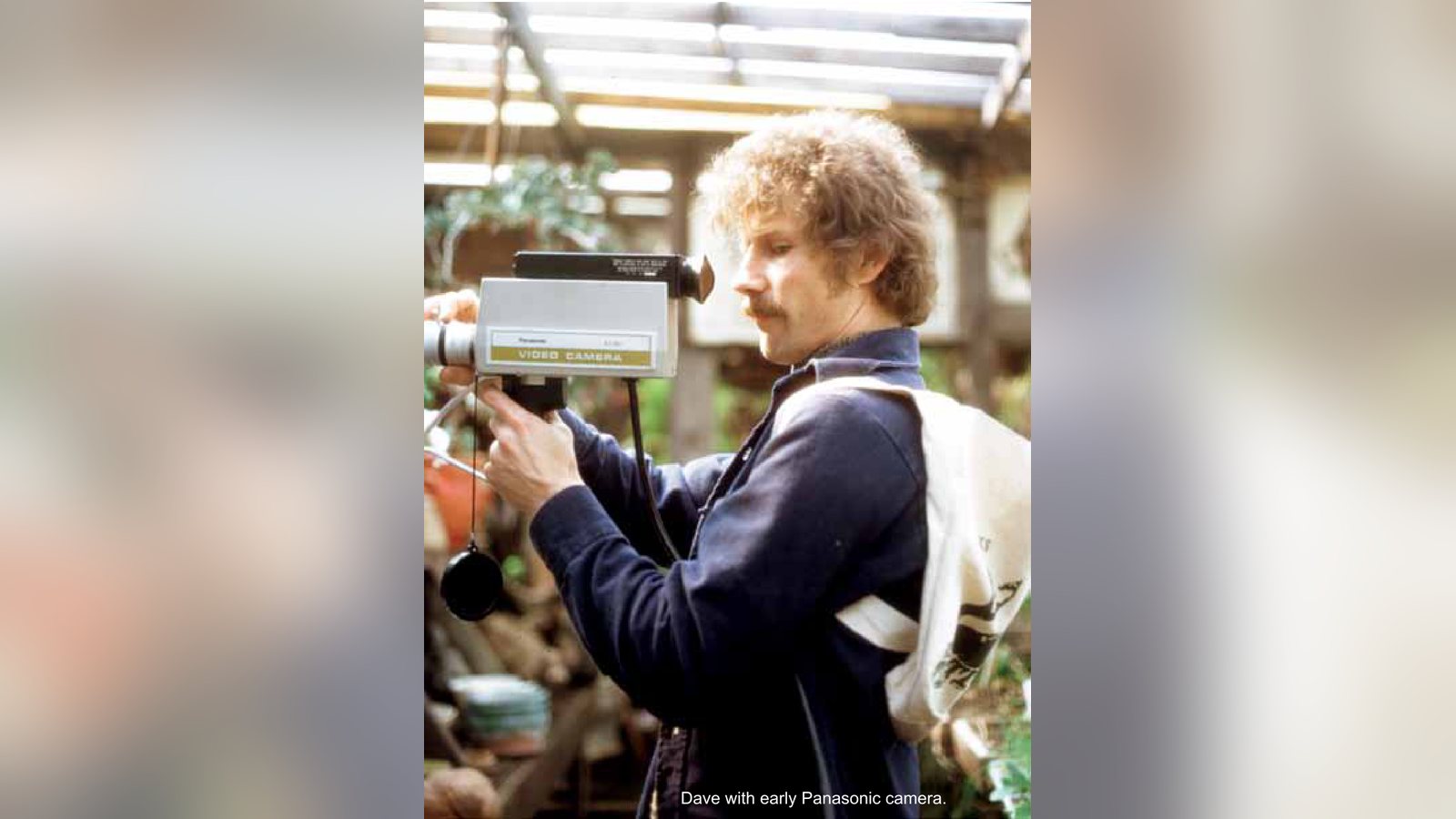
I felt as if the California sun was shining just for me one summer afternoon at Stinson Beach in 1971. That was the day I was introduced, to a Sony Portapac—the first portable video camera. He lent it to me for a week; It was love at first sight. This miracle-child of electronic technology became my constant companion, my meal ticket, my drug. After a thousand or so hours of intimacy and practice, I had acquired a working fluency with the camera and, more importantly, I had discovered My Voice.
Discovering your passion.
Imagine there is a piece of metal somewhere in your body. Outside your body is a large magnet. Think of the metal as a built-in proclivity— something in your genetic or environmental architecture that makes you uniquely receptive to certain activities, or pulls you in a specific direction. Perhaps you were born with a resonant voice, a million dollar smile or the grace of an athlete. Maybe you were raised in an environment that nurtured a critical eye, a love for working with your hands or a gift for problem-solving.
Each of us comes into the world loaded with gifts and the potential for great achievement. Like our one-of-a-kind faces and personalities, these gifts are ways to express ourselves to the world – our voice. Throughout our lives, this voice calls to us; sometimes in a whisper, other times as a roar. Recognizing it—or not, answering it—or not, determines the path we will take and the life we will live.
“When you follow your bliss, that thing that truly electrifies you, four things automatically happen: 1. You put yourself in the path of good luck; 2. You meet the people you want to know; 3. Doors open where there weren’t doors before; and 5. Doors open for you that wouldn’t open for anybody else.” —Joseph Campbell
Hearing these words, during a 1986 PBS interview with Bill Moyers, took my breath away. I knew from experience he was right, but I had never heard anyone articulate the concept. From that moment on, I never again doubted the wisdom of my decision to follow my passion for the camera.
Like most people, I’ve indulged countless passions: acting, inventing, underwater photography, football, pizza–making, blackjack, photography and video. Looking back, I see how these passions were part of a larger mosaic, a deeper, lifelong passion. Each expressed the connection and elation I feel when I turn people on. Turning people on is what I am designed to do.
If you haven’t yet discovered your passion, here are a couple of questions that will help point you in the right direction. Play along with me here.
Imagine that money is no longer an issue for you. You have all the money you‘ll ever need to support yourself and everyone you love for the rest of your life. You‘ve traveled everywhere you want to go. Now, how are you spending your time? Answer in the present tense. (Don‘t say, „I would be…“ or „I‘d like to…“ Instead, say, „I am…doing this.“)
Remember the last time you felt truly electrified by something you were doing. What about that experience made you feel so alive? Write it down.
When you follow your passion, good luck wants to come along for the ride. Three years into my fledgling career, I met and became partners with the gifted San Francisco photographer Marino Colmano, who taught me how to compose an image, work inconspicuously, and appreciate the beauty of natural light. Our third partner, John Antonelli, was—and is—a masterful writer and producer. While collaborating with Marino and John on a series of groundbreaking documentaries I learned the basic skill set from which I grew my career. And because they were Italians, we always ate well.
As my career unfolded, I often found myself working alongside some of the best shooters, audio recordists, producers and reporters in the world. I watched how they worked, picked their brains, and—because most people love to share their wisdom— was richly rewarded with new information.
How does one find a guide? One way is to identify a seasoned professional whose work you admire and ask for a mentoring relationship. If rejected, keep looking. Once you’ve found a guide, develop ways the relationship can benefit both of you. You may have skills to barter, such as marketing, bookkeeping or writing.
It was late in my career before I fully understood the value of a good teacher. Now I know that the level of competence I reached after twenty years could have been accomplished, with the guidance of a mentor, in ten.
“A practice (as a noun) can be anything you practice on a regular basis as an integral part of your life—not in order to gain something else, but for its own sake. It might be a sport or a martial art. It might be gardening or yoga or community service. A doctor practices medicine and an attorney practices law, and each of them also has a practice. But if the practice is only a collection of patients or clients, a way of making a living, it isn’t a master’s practice. For a master, the rewards gained along the way are fine, but they are not the main reason for the journey. Ultimately, the master and the master’s path are one. And if the traveler is fortunate—that is, if the path is complex and profound enough—the destination is two miles farther away for every mile he or she travels.” —George Leonard
George observed that if you study any activity, you’ll find people performing at four different levels of participation.
1. The Dabbler. The Dabbler’s meets an obstacle and then drops to zero. The dabbler gives up the activity and goes on to another, repeating the same curve.
2. The Obsessive. The Obsessive’s meets an obstacle, which The Obsessive tackles by redoubling his or her effort, getting more books and tools and trying to figure out ways to get better results faster and cheaper, and then burns out in a short while when s/he finds that the curve is not a straight line upwards.
3. The Hacker. The Hacker’s meets an obstacle or two and then plateaus out on a straight line. The Hacker doesn’t consider the need for more instruction or rising above that level. S/he is content with the level reached and plans to stay there.
4. The Master. The Master’s plateaus for a while, and with consistent practice, rises again with some regression and plateaus again for a while and so on. The Master knows that Mastery is a lifetime path. The Master enjoys living on the plateau. –GL
Love the plateau. Mastering anything takes as long as it takes. There will be times when you think you’re beating your head against a wall, not making any headway. But you are. It’s just hard to see because progress uses baby steps. Real progress is made on The Plateau. If you keep at it, you’ll experience a growth spurt. It might be a new client, an award, critical acclaim, a breakthrough—then you’ll realize you’ve arrived on the next plateau.
Do what you have to do. “Money gigs” is my term for jobs that pay the bills and finance the growth of your passion. While it’s a good idea to find money gigs that relate in some way to the work you want to be doing, do whatever you have to do to survive. Waiting tables, for instance, is a no-brainer: positions open up all the time, you learn valuable skills, meet a lot of people and always have cash in your pocket. And you never know who’s sitting at a table waiting to meet you.
Get a room. Make your desk/ office a place you like to be – clean, well organized, comfortable and homey.
Just Show up. Growing relationships is key to making a living as a shooter. Make time for prospecting. Dedicate an hour or so each week to contacting potential clients. Let them know who you are and what you have to offer. In this way you can begin to build relationships that can grow and prosper. The day you call just might be the day one of them needs help. It’s often a matter of timing.
Before moving from California to Washington, DC in the summer of 1990, I sent a half dozen sample reels to perspective news clients. One afternoon, while strolling through DC’s Union Station, I realized I was in the vicinity of a production company I had sent a tape to but hadn’t heard back from. I walked to their office and rang the doorbell. A producer opened the door.
“Hi, I’m Dave Lent, a freelance shooter from San Francisco. I’m running low on sample tapes and figured, since I was in the neighborhood, I could get my reel back from you?”
“So you’re Dave Lent! Want to go to Saudi Arabia?”
“Uh…yes!”
“Then go to the embassy, fill out your visa application, and stay close to the phone.” Seventy-two hours later I was on a flight to Riyhad for a lucrative thirty-day assignment at the mountaintop hideout of the exiled Kuwaiti government and royal family.
Get a foot in the door. The position you want may not be available but another, perhaps less fulfilling role, might be and may open a door to bigger and better opportunities.
During a lean period in the late 80s, I heard about a production company on the Sausalito waterfront just minutes from my home. Globe TV was doing stories all over the world for the A&E Network. “This is for me!” I decided. I called their office every week for a month or so, with no luck. I called again. “Dave, can you edit?” I said that I could and was hired on the spot. Between editing sessions I badgered Mike Cerre, Globe’s chief correspondent, about sending me to France to produce a segment about The Paris Air Show at Le Bourget Field. Mike soon warmed to the idea and gave me the assignment. That trip led to another shoot in Sudan. Once you get your foot in the door…
Be your own PR agent. Carry business cards. Record a professional outgoing message on your voice mail. Keep your phone turned on 24/7 and close to you at all times. Set up a website, blog or Facebook page with links to brief samples of your best work.
Visualization is the process of creating an image to represent the outcome of something you intend to do or to have. When you decide on something you want, create a detailed image of it in your mind. Think big, so you won’t be disappointed when what you achieve isn’t quite all that you had in mind. Then put it outside of your mind, in a tangible form that you will see every day, such as a photo, drawing, affirmation or scale model. Write on it, in the present tense, “My House,” “The view from our cottage in the Caribbean,” “My new camera,” etc. Playing the Edge begins by identifying your boundaries and pushing them outwards, eventually turning limitations into strengths. As the actor Stephen Tobolowsky put it succinctly: “If you find that you are comfortable, you’re doing something wrong.”
The BP Deepwater Horizon disaster in June, 2010 wasn’t a “spill.” It was an eruption—more like an underwater Mt. St. Helens than the Exxon Valdez. With producer Dave Hammelburg, I got an assignment to shoot the story for ARD German Television. One morning, at an air base in southern Louisiana, we joined several other crews on a Coast Guard CH144 for a thirty–minute flight to the gutted oil rig in the Gulf of Mexico.
The aircraft had a rear cargo door that opened downward, allowing each of us to have about a minute to shoot what remained of the rig and the cleanup operation. Our pilot made several passes over the site so each shooter would have a turn. I got decent shots, but felt frustrated. Just when the rig came into view, the airplane banked to the right, allowing little time for a sustained shot revealing the scope of this other-worldly scene. Had I the presence of mind to ask the pilot, “On the next pass, can you fly straight for just ten more seconds over the rig before making the turn?”, the answer might have been, “You betcha!” The lesson: When you think you have a chance to do something extraordinary, with only one shot at it, don’t hold back. Ask for exactly what you want. The boundaries might exist only in your mind.
A good way to think about The 5 Keys to Mastery is by imagining you’re an airplane. The 5 Keys are your engines. As you learn to use each one, you gain power and lift. When all five are purring in harmony, there’s no limit to how high and how far you can fly.
What you won’t find on a path of mastery are shortcuts or quick fixes. Believe me, I’ve looked everywhere. There will be countless pitfalls along the way, but don’t get too discouraged when you stumble and fall; that’s where the learning takes place. You’ll recover your footing and get back on your path, provided you’re willing to do the work.
With passion, guidance, practice, vision and willingness to stretch your boundaries, lifelong success is yours for the making. If you want proof, just do them.
David Lent’s career in television spans thirty-five years. David co-produced and shot the critically acclaimed PBS special “Life Without…Inside San Quentin.” With Susan Burgess-Lent, he co-produced the documentary feature “Staying Alive,” based on Studs Terkel’s best seller “Working.” David currently works as a news and documentary cameraman for numerous domestic and international clients including BBC, CNBC, BRAVO, FOX News, MTV, GRANADA, TV ASAHI, YLE, ARD, and ORF. David is the author of “The Laws of Camerawork” and soon to be released book, “Video Rules.”
Keep learning filmmaking
Want more lessons like this? Join StudentFilmmakers free for live webinars with working pros, and stream on-demand filmmaking classes in cinematography, directing, screenwriting, sound and post.