Before he directed Night Train and Double Threat or executive produced Gridiron Gang, Shane Stanley was a self-described failed musician whose friends in Poison asked him to direct a video. That job changed his life. In this class he explains how to win a band’s trust, find the brand behind the song, and shoot from inside the show, because a safe, tidy video is rarely the best thing you can give an artist.
How do you land a first music video?
Stanley didn’t wait to be asked. Early on he took B-roll other crews had shot of bands such as Van Halen at the LA Forum and cut his own videos from it. Today he still reaches out to the manager, agent or lawyer of a band coming to a casino near his home in the Palm Desert area: I’m at the show anyway, I have cameras and a couple of people, can we shoot you?
His advice is to take the path of least resistance. An unknown filmmaker is not going to get Bon Jovi. Instead, look at the roster of a venue like the Canyon Club in Agoura Hills, California: bands most people have heard of, 20 or 30 years into their careers, still touring smaller rooms. Offer three cameras and a finished piece for the tour, and he thinks you will be surprised at the answers.
Pick a genre and a band you truly like. You will hear the song around 500 times before it is done, through meetings, playback on the shoot and the edit. And remember why bands care: he cited a report of an artist who earned about $1,700 for 55 million streams. Most musicians earn their living on tour, so a video that builds the brand and the following matters to them.
What should you say, and not say, when you pitch a band?
Don’t tell an artist how much they need you. Tell them what their work means to you and how, together, a video could lift their brand. Stanley is openly against the pitch deck stuffed with promises.
“You always go in under promise and over deliver. That’s the goal.”
Over-promise and under-deliver, he says, and you fail someone who makes decisions, no matter how good the work is. Timing counts as well. The end of a tour is a hard time to ask, because the band is thinking about a beach in Hawaii and the next album. Pre-production for a tour or record is better, when they are choosing the single. Many bands tour from spring into fall, so winter downtime is often a good window.
What does a music video cost?
Less than most students expect, and Stanley says the bigger the name, the smaller the budget tends to be, while the appetite grows as the money shrinks. These are the numbers he gave in class:
| Situation | What Stanley described |
|---|---|
| Most videos | Around $5,000, $10,000, maybe $20,000 |
| A starter live shoot | Maybe $2,500 for three cameras plus the edit |
| His most recent video | A $20,000 budget; actors, crew and the show came to about $7,000 over two days of work |
| A favor for a band | Three friends with cameras, no budget, cut it himself |
Ask the client what they have budgeted, the way a publicist would, then sharpen the pencil. Be ready to say no. On one shoot the label set a hard cap, and the drummer kept adding requests. Stanley priced the wish list at another $17,000 and asked whether that was coming out of his pocket. He never heard about it again. If a band has no money, keep it simple: you will be paying to play, so know the commitment before you make it.
How do you find the brand behind the song?
Ask, and then listen. Does the artist want to underline the message of the song, or go somewhere completely different? A pop act whose live show is all lights and costume changes needs a different video than a plug-in-and-play rock band like the Black Crowes, who care about the music and nothing else.
Some songs carry a bigger story. Queensrÿche built Operation: Mindcrime as one story across a whole album, so a single from a record like that may sit inside something much larger. Stanley likes asking songwriters how the visuals could be thought-provoking instead of repeating what the lyrics already say.
His best branding story happened in a recording studio. An Americana band, the label and the marketing team could not agree on a first single, and the room was angry. Stanley asked for five minutes alone with the five core members, all in their late 50s. He told them the new album was a clear change from the formula of the past 20 years and asked what they wanted it to be. They threw out most of their old video ideas and started again. Sometimes, he said, you have to be the adult in the room without making the manager feel replaced.
Expect politics in the edit. Every member wants to look his best. Stanley once got a call from a big rock star’s assistant saying the bass player looked too good in the cut. Some videos end with seven or eight final cuts.
How do you shoot a band live so it doesn’t look like amateur hour?
The samples Stanley gets most often are a live show shot from the crowd on a tripod. It’s in focus and well framed, and it runs out of gas, because you end up cutting from the same angle to the same angle. Get permission to go on stage and in the wings. Put a camera behind the drummer, between the ride cymbal and the floor tom, under the hi-hat, over the guitarist’s shoulder on the fretboard.
“People don’t talk about, oh, I was in the audience, you know, 50 yards back watching. Nobody ever says that.”
He remembers standing five feet behind Tommy Lee at Long Beach Arena on Mötley Crüe’s Dr. Feelgood tour in 1989, wishing he had a camera. That is the view to give your audience. “That sweat should be coming down on your camera.” If a venue blocks you because it would charge the band $5,000, put a team on matching phones, vary the lens sizes, and keep moving. Don’t forget B-roll of the sound and lighting crews, so the editor has places to cut to. For another take on the same approach, see this piece on roving cameras at a live gig.
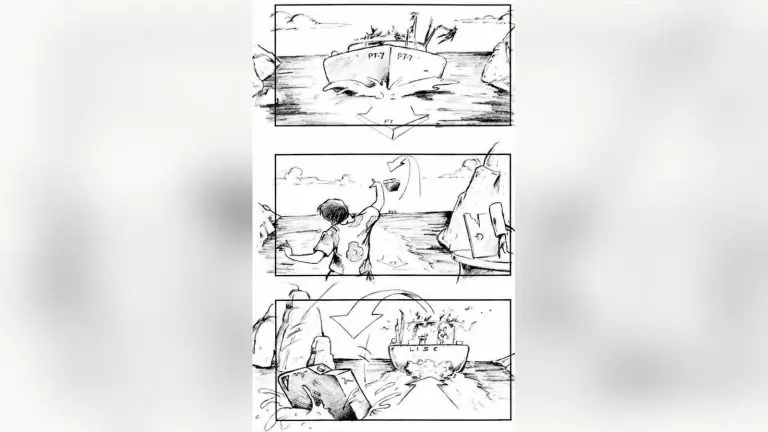
Storyboards? He rarely uses them for music videos, where his priority is the human connection with the artist, though boards can help a newer director explain a story idea to the band.
What can 16 hours of prep teach you about editing?
Stanley’s video for Bret Michaels’ “Go That Far,” the theme for the VH1 show Rock of Love, began with a three-way phone call on a Wednesday and a shoot on Thursday. No time for production design could match the loud look of the show, so he went the opposite way: an all-white stage at Panavision. “Now it’s on me to make this special,” he remembers thinking, and the answer came in the edit.
Coming off the drummer to the bass player, he flicker-cut two frames of the bass player into the drummer shot, then two frames of the drummer into the bass player shot, introducing each shot before it arrived. The opening, with the whole band frozen as Michaels walks in, used no visual effects. Tired musicians couldn’t hold perfectly still, so he laid an old film effect over the shot, and its natural weave hid the small movements.
When a student asked about software, he said to use whatever lets you cut quickly; he splits his time between Avid and Adobe Premiere. The tool matters less than the skill: “If you want to be a filmmaker, learn editing.”
Is a safe video good enough?
When a filmmaker in the class shared polished, well-lit work, Stanley praised it and then pushed: “A happy band with a product that is safe does not necessarily mean you did them the best you could have done for them.” Think of how videos helped make bands like Metallica and Van Halen, or how a simple one-take treadmill video could take off. His favorite videos are the ones with no notice and no prep, where the artist is in town for nine hours and you capture what happens. If commercials are a goal too, music videos can lead there, as this music video director’s first commercial shows.
In the full class, Stanley also takes questions on choosing a style with the band, mixing live footage with story, and building a music video business from one good job.