By Jody Michelle Solis
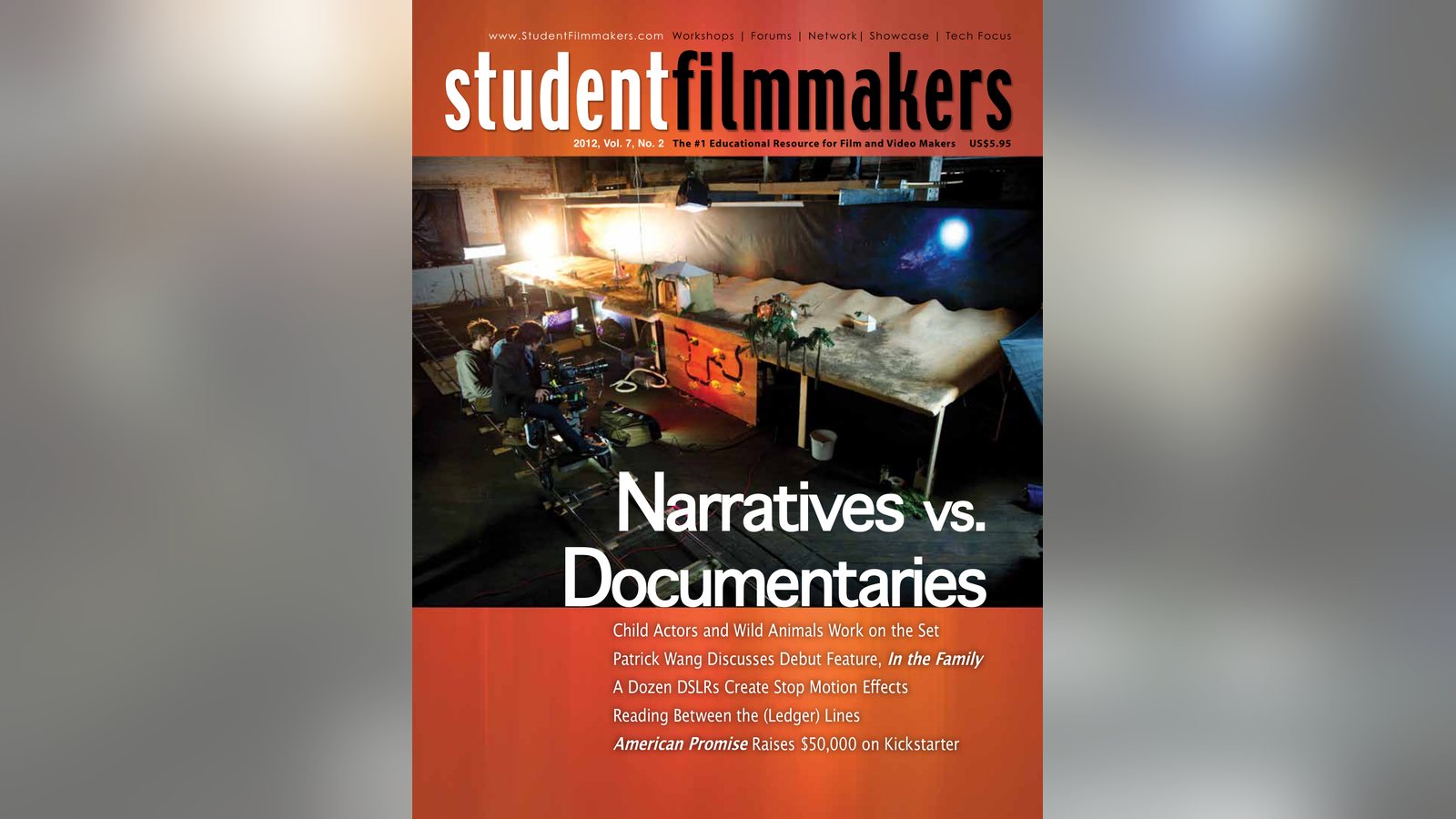
Writer-director-actor Patrick Wang talks about his award-winning debut In the Family, set in Martin, Tennessee, and how he made it independently.
In the town of Martin, Tennessee, Chip Hines, a precocious six year old, has only known life with his two dads, Cody and Joey. And a good life it is. When Cody dies suddenly in a car accident, Joey and Chip struggle to find their footing again. Just as they begin to, Cody’s will reveals that he named his sister as Chip’s guardian. The years of Joey’s acceptance into the family unravel as Chip is taken away from him. In his now solitary home life, Joey searches for a solution. The law is not on his side, but friends are. Armed with their comfort and inspired by memories of Cody, Joey finds a path to peace with the family and closer to his son.
Produced, written, directed by and starring first-time filmmaker Patrick Wang, “In the Family” has won awards, such as Best Narrative Feature and the George C.
Award at the San Diego Asian Film Festival (2011), was a New York Times Critics’ Pick, and garnered numerous nominations, including Best First Feature Nominee at the prestigious Film Independent Spirit Awards this year (2012).
Patrick Wang shares the benefits of writing, directing, and acting in his first feature film, methods of directing and acting, and working with child actors.
StudentFilmmakers Magazine: What were some advantages and benefits of writing, directing acting in your first feature film, “In the Family?” If there were any obstacles or challenges, what were they and how did you overcome them?
Patrick Wang: I like that you start by asking about the benefits, because the challenges are a little more obvious, the benefits a little more obscure. If I hadn’t acted in this film, a significant amount of my energy during photography would have been dedicated to communicating with the lead actor. On a shoot where every minute counted, closing this gap probably went a long way to helping us finish the shoot on time. Another wonderful tool from being in most of the scenes is I found I could direct the other actors from within the scene. If I was looking for something from a particular actor or if I thought the rhythm was getting off track, I could try to encourage a change by doing something in character as their scene partner. For a shooting style that was mostly long takes, this tool saved time and helped make almost every take usable. If I were not in the scene, I would have had to wait for the next take to direct the change.
From Lens to Post, capture edit-ready 10-bit footage direct from your camera.
Portable 10-bit 4:2:2 Flash Disk Recorder 10-bit 4:2:2 Recorder with Conversion
Ki Pro Mini Ki Pro
Mount Ki Pro Mini to your SDI or HDMI equipped camera and record native ‘ready-to-edit’ Apple ProRes or Avid DNxHD files to removable Compact Flash (CF) media, accelerating the path from camera to edit. Utilize AJA’s powerful hardware up/down/cross conversion technology and the extensive I/O connections of Ki Pro to bring different camera resolutions and formats together into a seamless Apple ProRes workflow.
Encode & Decode.
Free Download Now Available! RS-422 support for use as a 10-bit digital disk recorder. The big challenge in taking on all these roles is to make sure each job gets its due attention. And here the most important tool I had was time. I made sure the writing was solid before I got anyone else involved, and we ended up shooting a white script. I had nine months of pre-production and spent five months rehearsing just myself before I worked with any other actors. Also, I found that I had very different, sometimes conflicting views of scenes depending on whether I took the perspective of the writer, director, or actor. I tried to give those conflicts space to play out fully in my mind before making a decision as to how to resolve them. What methods of directing and acting did you prefer to use during rehearsals and filming for “In the Family?”
Patrick Wang: How I worked with the actors, and the degree of rehearsal, changed depending on what each actor [and role] needed. For myself, I started out video recording my rehearsals with myself, but I quickly switched to audio recording the rehearsals. I found I could just as easily hear a false performance as I could see it, and it gave me more physical freedom early on in developing my character. For some actors we discussed characters at length and rehearsed extensively, for others we just needed to get together once to get used to each other as scene partners. And for some characters I had no clue how much rehearsal was necessary. I started rehearsing with Trevor St. John a few months before the shoot, and after each rehearsal we decided together when it felt right to meet next. In the end, I think we only had about five rehearsals.
During filming, there were two practices that served me really well as director [and these apply to working with actors or with any other department]. First, when I witnessed a deviation from what I had expected or planned, I took the time to digest the deviation before making a decision what to do about it. Things move so fast on a shoot, sometimes you have to actively impose a patience so that you don’t crush a new opportunity or erase a beautiful accident. Second, think about how to close the gap between what is and what you want before you speak. How the director expresses himself or herself can impact the confidence, self-conciousness, behavior of everyone else. Proceed with consideration and simplicity. For example, I may watch a scene and notice five things an actor did that I didn’t like. Instead of just naming these five things (which may do more harm than good) consider other paths to a solution. Maybe the actor already knows the problems and just needs another take. Or maybe the solution is to give the actor a prop or a new idea rather than a list of everything that’s wrong.
SFM: How did you direct scenes you were in?
Patrick Wang: Rehearsal and preparation are key: both so that you get very fluent at doing your work and very fluent at evaluating your work. I spent a lot of time the first week of the shoot watching dailies to calibrate my performance. When shooting, some feedback mechanism is necessary, but it can come in many different forms. Sometimes on set, I would have to watch playback of entire scenes. Sometimes, I would ask my DP. Sometimes, I just needed to see a few frames. Sometimes, I just needed to listen to a few seconds of sound. Sometimes, I could just look at the faces of the crew, and I knew.
Was working with Sebastian Brodziak your first time working with child actors, and was he the youngest you’ve ever worked with? What kinds of unexpected challenges came up during filming, if any, and how did you overcome those challenges?
Patrick Wang: I had worked with child actors before, but Sebastian was the youngest I’ve worked with [six years old when we shot], and he had the most demanding role of any child actor I’ve worked with. There was really only one surprise with Sebastian on set, and that was that it didn’t occur to me I would kind of be acting as his dad between takes as well as during takes. He would want to go wherever I went, and so I was carrying him around all day. It was exhausting but wonderful. You have a kid that great who wants to spend time with you, you just find the energy.
SFM: How did you cast the role of Chip Hines, and what important qualities were you looking for during the casting process?
Patrick Wang: Our director Cindi Rush pre-selected about 15 actors for us to see for the role of Chip. There were a few qualities I was on the lookout for: a killer memory [Chip has a lot of lines in long scenes]; an emotional understanding of the scene; precociousness; a big heart; confidence when under scrutiny; and the ability to play and adapt a performance based on what another actor is doing. When I first met Sebastian, he started with a very cute, commercial mode of delivery. But he was able to change into a more realistic mode very quickly, and as I read scenes with him, he followed all the turns and twists I threw in and seemed to have a ball playing the game.
SFM: Could you share with us any special ‘Do’s and Don’ts’ in relation to working with child actors?
Patrick Wang: I think the first thing I would suggest is not to expect any less of them than anyone else. There are probably even reasons why you should expect more. Make sure they have time to get used to being around the people they will be working with most. A safe and comfortable environment is very important. Remind the crew not to speak of kids in the third person when they are right there. Try to engage them, maybe with games and exercises and questions, rather than issuing commands. Take the time to have kids explain things to you; it will at least be entertaining, at best illuminating.
SFM: Did scenes or lines in the script change during the process or during filming?
Patrick Wang: Very few lines changed from the script. I’m not a fan of textual improv. I like surprise interpretations of the written lines, but if someone can easily and at a moment’s notice come up with text better than the script, the writer has not done their job.
SFM: If you could share a piece of advice for aspiring directors and storytellers around the world, what would it be?
Patrick Wang: There is no shortage of people in this business telling you what to do. One of the most useful skills I feel I’ve developed is in learning how to separate the frequent noise from the occasional quality thought. Separate out the noise, and think through what is right for you. And God bless you if you feel compelled to do the thing everyone tells you not to do.
SFM: “In the Family” has won awards, such as Best Narrative Feature and the George C.
Award at the San Diego Asian Film Festival (2011), was a New York Times Critics’ Pick, and garnered numerous nominations, including Best First Feature Nominee at the prestigious Film Independent Spirit Awards this year (2012). What advice would you share with new directors in relation to getting their films in festivals and creating a multi-award winning film?
Patrick Wang: I can only give advice to people who are making personal films, the kind of film that is not a means to some other end. To these people I say don’t think about festivals or awards or distributors or box office. There was a time no festival wanted this movie and no one really liked the movie. Focus on the film. Protect the things that make it unique. Be its most intense critic. Figure it out. Spend your energy figuring out your film first. Then help it find its place in the world. It may take time and the path may be difficult and unique, but there’s nothing like fighting for a film you love without reservation.
SFM: What are you working on next?
Patrick Wang: I’ve written a film that is this tapestry of monologues and songs, each a portrait of very different people across time and place. It’s about what we can learn from our short, snapshot exposures to people and how we make sense of these seemingly unrelated series of snapshots. It’s an odd project to describe, but I’ve fallen for it, and I can’t wait to make it. I’m also working on writing my first adaptation of a novel. The novel is gorgeous and lives largely in dramatic space. With this strong dramatic core, I’m looking forward to experimenting and inventing some cinematic techniques for translating the novel’s complexity to film.
LLC.
Keep learning filmmaking
Want more lessons like this? Join StudentFilmmakers free for live webinars with working pros, and stream on-demand filmmaking classes in cinematography, directing, screenwriting, sound and post.