By Leonard Guercio
Writer-director M. Night Shyamalan talks about his eighth feature, his path from The Sixth Sense and his approach to writing and directing suspense.
The release of The Happening from Twentieth Century Fox marks M. Night Shyamalan’s eighth feature film as a writer/ director. His rise as a feature filmmaker is nothing short of phenomenal. Since the blockbuster success of The Sixth Sense, he has earned an autonomy that very few mainstream Hollywood film directors have been able to achieve. Yet, his films read more like those of an independent filmmaker. They are sometimes bizarre, yet always thought-provoking and emotionally engaging. To shed some light on the unique arc of his career, perhaps a personal anecdote is in order.
The first time I met Night was at a party the day before he was to begin production on Signs, which starred Mel Gibson and Joaquin Phoenix. Frankly, I was surprised to see him there, and I told him so. Quizzical, he asked why I should be surprised. I told him that if I were in his position, with a feature film starting the next day, I’d be too preoccupied to enjoy myself. He smiled gently and said: “Well, if you’re organized, you can make time to enjoy other important aspects of your life – like spending time with friends and family.” I was genuinely impressed and understood immediately that a large measure of his success is fundamentally tied to his balanced perspective on life and work. Of course, natural talent, confidence and self-discipline are some of his other proven attributes.
At the time of this interview, he had just signed a prospective three-picture deal to produce and direct the first of the big-budget, live-action versions of the Nickelodeon Channel’s anime series, Avatar. To avoid confusion with the upcoming James Cameron film of the same name, Shyamalan’s next film will be entitled, The Last Airbender, and is scheduled for a summer 2010 release. Finally catching up with him, I found him to be genial, warm and accessible. We talked about the making of The Happening and discussed other aspects of his filmmaking process.
The Happening is billed as a paranoid thriller. How did you come up with the idea for the story?
M. Night Shyamalan: I was on the New Jersey turnpike, believe it or not, on my way home from the mix of my last movie. It was late and I was in that hazy, half-asleep, half-awake zone. I saw this image of the highway with trees on either side when, all of us sudden, an entire plot to a movie erupted. The movie idea just came complete from beginning to end! It doesn’t happen to me that often, but I love when it does because it gives you a great confidence. Oftentimes, the process of birthing an idea into a useable form mimics how the process of making the movie will go and, to some extent, how the movie will be received, at least initially. I have to say that this was probably my easiest film so far.
Even though this movie idea came easy to you, did you write many drafts of the screenplay?
M. Night Shyamalan: Yeah, I did. I didn’t think I was going to but I ended up writing thirteen drafts.
From your first draft to the thirteenth draft, did the film story change completely or were there elements that remained the same?
M. Night Shyamalan: There are two fundamental things that changed. If I were to use comparisons to other movies, it went from an Independence Day structure – in terms of a very global event – to a Jurassic Park structure where they [the main characters] were trapped in a confined area; they couldn’t escape and had to survive. When that shift happened, it made it much more of a nightmare movie for me. How did you come up with the title?
M. Night Shyamalan: As the screenplay changed, the story became more of an ambiguous tale with the characters trying to ascertain the veracity of the different theories that are being thrown about. Because the plot was couched in that manner, the title had to have an eerie openness to it.
Were there any extraordinary challenges in making this film?
M. Night Shyamalan: Well, it was a big location movie. I had one other big location movie before – which was Unbreakable. This one was even more so. We literally started in Philadelphia and, as the characters moved out into the country, we went out into the country with them. We ended up in the last act at an old house.
Did you hit any snags in production or post-production?
M. Night Shyamalan: As far as my movies go, this was a pretty smooth ride. When I boarded the movie, it had a fluidity to it that was unnerving for me. I thought, gosh it can’t be this smooth because there is usually something that upsets me. Then, when we watched the final cut of the movie, it had the same kind of fluidity to it – it just goes. It’s ninety minutes long and, from beginning to end, it almost feels like you’re watching one scene, one long act.
Do you think this is a factor of you getting better with age and experience or that the gods were smiling on you with this one?
M. Night Shyamalan: I think that certain ideas are much more difficult than others. Take Raiders of the Lost Ark for example – now that’s a difficult idea. I don’t feel the instincts to know how to make that film. You have to find the right balance of the kitschy-ness, the supernatural, the adventure aspect; you have to be invested in who the villains are. That’s more about tapestry and tonality and that’s much harder to pull off. E.T. on the other hand – to stay with Spielberg’s films – would be much easier to execute. This is not to say which is the better film; I’m talking about which is easier to execute. E.T. has a simplicity – an inherent movement – to it. You’re not dealing with 4,000 extras in a field. It’s about a child relating to another kind of child.
You obviously have great self-discipline. Do you have a daily regimen or philosophy to manage your lifestyle and work schedule?
M. Night Shyamalan: Yes. I try to fill up my waking time with positive uses of my energy. For example, I won’t spend three weeks to write only ten pages of a script. If I get blocked in one area, I throw myself into another activity – whether it be developing another screenplay or returning phone calls – whatever needs to be done. I always try to make constructive use of my available time.
With each successive film, do you try to push the envelope in your aesthetic or technical approach?
M. Night Shyamalan: I do get into those ruts or traps of trying to be more complex, to have one more layer of symbolism, to push the blockbuster envelope and be more arty. I don’t want to feel the burden of that all the time so, every now and then, I do one just for fun. The Happening is probably a very pleasing balance of a fun-summer-ride and a more meaningful movie. One film where I think I tipped too far on the fun-summer-ride side was Signs; it was a hair too much for me.
James Newton Howard has written the music scores for all your films since The Sixth Sense. However, you often change editors, cinematographers, production designers on your films. Is this related to finding a style that fits the story, their personalities, or availability? Or is it a combination of those kinds of factors?
M. Night Shyamalan: I think it’s a combination of those things. Each person brings his or her own specialty to the table and some people are more accessible than others. Location is also a big factor. One of the things I always come up against is that I live in Philly. Besides me, the one person who stays on the movie the longest is the editor. From production through post-production, that’s almost eight months! If I lived in LA [Los Angeles], I’d be able to work with anyone over and over. But some of my editors are based in LA and, if I want to work with that pool, I almost have to do one-offs because it’s just too long for anyone to be away from family.
You’ve worked with cinematographer Tak Fujimoto, ASC on three of your films. The director’s relationship with a cinematographer is different, isn’t it?
M. Night Shyamalan: Yes. Choosing a cinematographer is almost exclusively about who is the perfect match for the material. Right now, I’m completely in the throes of selecting the cinematographer for my next movie (The Last Airbender). It has to be the right match. Before I really know the material, in choosing a cinematographer I’m committing to a look. Not that cinematographers can’t do different looks, but you do get a sense from looking at their body of work where their lean is. It’s a very difficult decision.
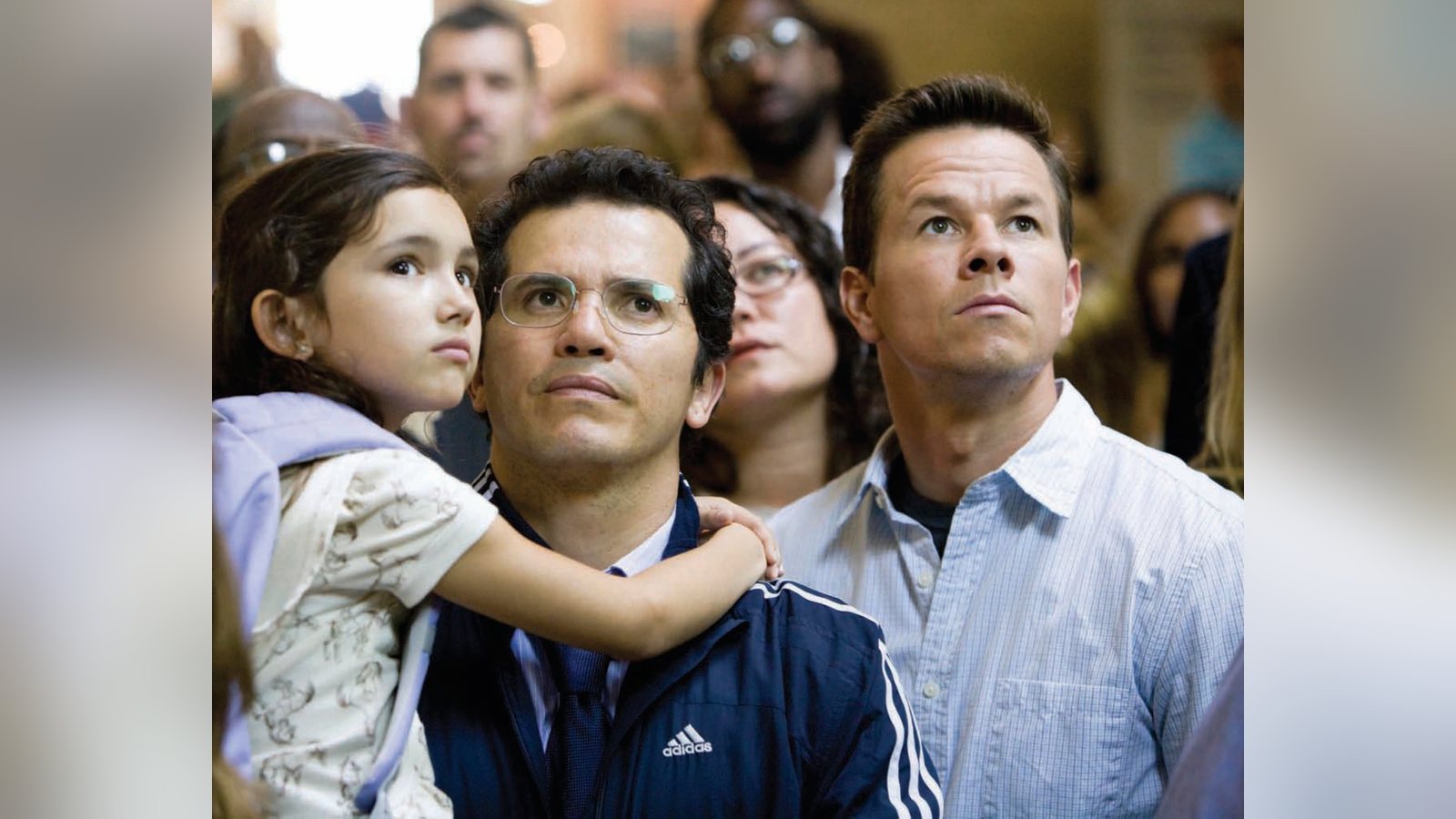
How about casting actors? I read that you wrote The Happening with Mark Wahlberg in mind for the lead.
M. Night Shyamalan: I write my scripts over a long period and, for me, casting lead actors happens organically. In writing The Happening, I asked myself who can do this. Who can do this kind of innocence, humor, and likeability? At one point I thought, this feels like Mark to me. I watched [Martin Scorsese’s] The Departed a few times. I know Mark as a friend and I always wanted to work with him. This movie is a lot like [Alfred Hitchcock’s] The Birds and I thought: Imagine Mark Wahlberg in the center of The Birds. That would be really cool. So I called him up and said, “Mark, I’m writing this script and it’s kind of like The Birds. Are you interested?” He said: “I’m in.”
As a boy, you made short video movies. Was there one defining moment – an epiphany – when you knew you wanted to be a filmmaker?
M. Night Shyamalan: Yes, definitely. It was seeing Raiders of the Lost Ark when I was twelve. But there were really two epiphanies. The other one happened when I read the book, Spike Lee’s Gotta Have It; I was around fifteen years old. I thought: Wow, you don’t need to know anybody [in the movie business]. You can actually make movies, and I knew that this was what I needed to do.
So did you plan back then to go to film school?
M. Night Shyamalan: At that time, the idea hadn’t formed 100% in a rational way. It was more in an irrational kid “I can do anything” kind of way. I wrote my first screenplay at fifteen – which as you can imagine was pretty bad. But, at the time, I thought it was perfect – with no re-writes, by the way! It just came out perfect! This is literally what I did – this is what a fifteen year old does. I opened up the phonebook, looked up “Motion Picture Producers”, saw two names, wrote a letter to them, telling them that I’d written a screenplay and that a lot of people were interested in it (a complete lie), and said that, if you’re interested in it, you should move fast. I was devastated when they didn’t write back to me!
It looks like that kind of persistence served you well, in many ways, later in life. On this subject, I wanted to ask you about your decision to study filmmaking at NYU. Both your parents are medical doctors. Was it difficult convincing them that you wanted to be a filmmaker and not follow in their path?
M. Night Shyamalan: There was a kind of quiet tension between us – like some kind of dagger that was going to fall on the family. Like, “Oh God, he’s going into film”.
Do you still get the feeling from them that, one day, maybe you’ll wise up, give up this frivolous activity and decide to go into medicine?
M. Night Shyamalan: Ha, ha! They’re so funny. I think just recently they’ve let go of all that – finally! When they go into a supermarket and they use their credit card and the cashier asks, “Are you related to…?” Now, with them it’s like, “I guess you’re doing okay”. When I told my mother that the President invited me to the White House, she said: “Well, I hope something good comes from this.” I said, “Mom, he’s not going to give me a country or assign me an area of the planet! What do you want him to do?”
Today, with the new digital tools and the democratization of the media, do you think it’s necessary for aspiring filmmakers to go to film school?
M. Night Shyamalan: Let’s put it this way – it’s less important. It really depends on which type of filmmaker you want to be. If you want to be the gathering filmmaker – where you gather all your footage and kind of figure it out in the editing room – then I don’t think so. You can come at that world in many different ways, like making music videos, for example. However, if you’re going to come at it from designing the movie, executing that design, and then, in the editing room, refining that original design, then yes, I think going to film school is necessary. This [method] is the old way – the classic way – to make movies.
I know you’re a dedicated film guy, but are you planning to make the transition from film to digital cinema anytime soon?
M. Night Shyamalan: I’m going to be the last man standing, as far as shooting film goes. I was persuaded to try a DI [Digital Intermediate] on The Happening. I didn’t like the look and feel of it; it was too cold. So we tried another and I didn’t like that one either. That’s when I said: “That’s it. We’re going back to film.”
You realize, of course, that a total digital cinema is inevitable in the near future?
M. Night Shyamalan: Yea, I know. I just can’t reconcile myself to that fact yet.
Related filmmaking guides
- Film directing: getting good performances
- Coverage and the master shot
- Camera angles in film: a beginner’s guide
Keep learning filmmaking
Want more lessons like this? Join StudentFilmmakers free for live webinars with working pros, and stream on-demand filmmaking classes in cinematography, directing, screenwriting, sound and post.