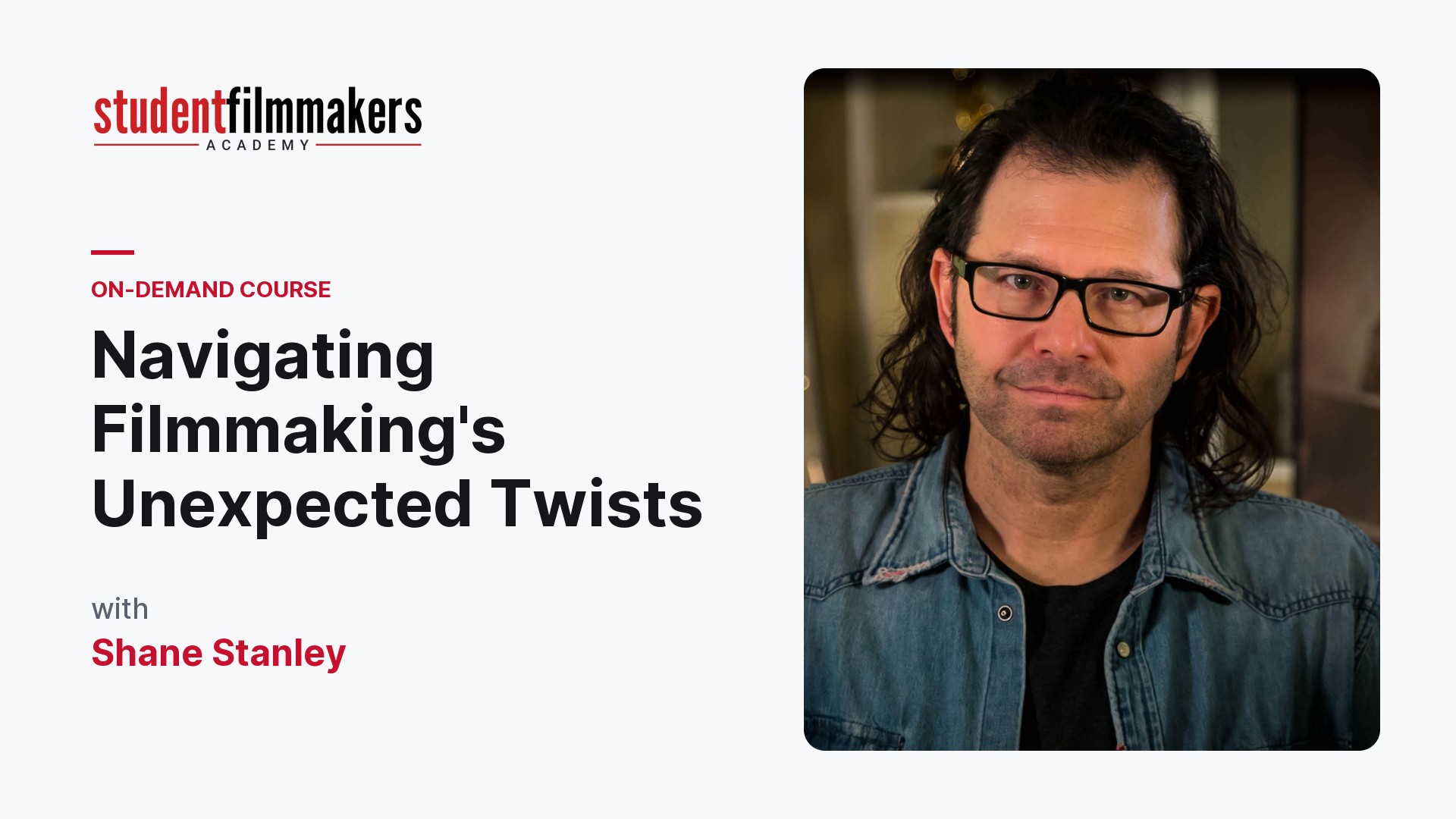
Shane Stanley, who has several Emmys as a producer and directed the indie thrillers Double Threat and Night Train after executive producing Gridiron Gang, says most problem solving on a film set actually happens weeks earlier, in prep. In this class he showed how he shot a 112-scene feature in 20 days with a single company move, and what he does when a location, a permit or the weather turns on him anyway.
Stanley started working as an actor at nine months old and has spent more than 50 years in the business. His view of a troubled shoot is blunt: get control early, because “once the wheels come off the wagon, it is impossible to fix.” Short of a lead actor dropping dead, he believes nearly everything is fixable if you over-prepare.
How much prep does an indie film need?
Studios and well-staffed production companies want six to eight weeks of pre-production, with seasoned line producers and location managers already in place. An indie team with fewer hands needs more, not less.
“I won’t do an independent film if I don’t have three months.”
He has never had a schedule or location problem when he kept that rule. He also warned against the opposite habit of pushing the date again and again until the film never happens.
His motto for the prep months is an old film saying he learned years ago: plan with optimism, prepare as if the worst will happen, and assume surprises are coming.
What really builds a shooting schedule?
Three availabilities: actors, locations and crew. Stanley’s first call after a green light goes to his DP to find a window. Then he fits cast and locations around it, like a jigsaw puzzle where you start with the picture on the box and the corner pieces.
The pieces keep moving. An agent may say yes to a script but ask for more money and a three-week push because the actor will be shooting in France. Then you decide how much you want that actor and start calling your DP, crew and locations again.
He had advice for writers, too. Producers can tell from a script when the writer has never been produced, because it ignores budget and logistics. A three-page scene sounds quick, but if 11 actors have lines, that’s a long day of coverage. He urged writers to work as PAs and watch how pages turn into setups.
How did he shoot 40 locations with one company move?
On his most recent feature, the plan was 22 days and the shoot wrapped in 20, covering 112 scenes and roughly 40 script locations. There was one company move in the whole film.
The trick is choosing places that hold several locations. A restaurant can play the restaurant. Its back area can be another scene. A market sharing the parking lot can be a third. The crew slides the camera carts from building to building and never moves base camp, sometimes finishing three or four script locations in a day.
He avoids company moves because each one costs far more than it looks:
- About an hour to pack trucks, dressing rooms and departments.
- Travel time that grows with traffic. In Los Angeles or New York, a 15-minute hop on the map can eat two hours.
- Another hour or so to level trailers, restore power and water, and rebuild hair, makeup, wardrobe, camera, sound and video village.
- Cast and crew are on the clock the whole time.
Outside big cities, he said, you can allow yourself a bit more grace.
How do you start each day so no one waits?
His order: bring in the cast with the camera department and block the scene first. While blocking happens, the rest of the crew sets up. When blocking is done, actors go to hair and makeup, and the DP lights while production design dresses the set.
“There’s nothing worse than a camera department that’s sitting around waiting. There’s nothing worse than actors sitting around waiting for camera.”
Getting that rhythm takes an experienced team. He likes to rehearse ahead of time when the budget allows, though SAG-AFTRA rehearsal days must be paid. He quoted football coach Paul Brown: a play not run in practice doesn’t get run in the game.
How do you keep a location from shutting you down?
Tell the owner the whole truth: how many scenes, actors, crew and trucks, and how long you’ll really be there. Don’t promise a homeowner the neighbors won’t notice. “I can promise you, the neighbors will know you’re there,” he said, with trucks, slamming tailgates and loud crews. If you think the work will take seven hours, add an hour in and an hour out and book ten. If you finish early, you’re heroes.
He told one story against himself. A producer offered his 6,000-square-foot house in Westlake Village. Halfway through the day, six police officers arrived after neighbors complained about 30 cars, and it turned out the house was bank-owned and in foreclosure. Stanley asked for grace. The officers gave him an hour to finish and asked the crew to look like they were loading out so the neighbors would be satisfied. The actors, told what was happening, delivered.
That fed into his answer on transparency: some people are on a need-to-know basis, but when you’re shooting on a favor, tell the cast so they can act accordingly. He has gone without an AD on most of his recent films, but on a large shoot he wants a trusted producing partner as a buffer, so nobody interrupts a take to ask the director when lunch is.
Can second unit rescue a tight schedule?
Yes, if you define the job clearly. For Stanley, second unit covers anything without the principal actors: building exteriors, car work, scenery. He keeps actors away from dangerous driving for safety and plans about two days of driving footage plus a day or two for everything else. Send good lenses and a range of focal lengths, and include a sound person even for car runs, so you aren’t rebuilding every engine and tire screech in post. A drone shot or two can let a film breathe, as long as you don’t overuse it.
When a crisis does hit, he stays calm and treats people well. His cast and crew know he has one planned “meltdown” per film, mostly as a joke. He reminds everyone it’s only a movie, and the crew tends to follow the tone the leader sets.
What about actors who want to improvise?
His deal with actors is simple: “Give me what I need as a filmmaker, and I’ll give you whatever you want.” Once he has the scripted beats, a fresh take is a bonus. He loves having the writer on set to work out changes with the cast. For new directors, his rule is to always get what you need first.
For more on planning, read Mastering Film Scheduling and On-the-Fly Solutions on Location (and Why Pre-Production Matters).
The full class also covers 48-hour film contests, what he looks for in a script before producing it, and why a market like AFM is the wrong place to pitch from a deck.