By Todd Debreceni
Makeup effects artist Todd Debreceni shares easy special makeup effects recipes, from blood to wounds, that look great on camera and fit a student budget.
The economy may be swirling around the toilet bowl, but I think this is really a terrific time to be an artist. The US Bureau of Labor Statistics lists theatrical makeup artists at #7 of the top 10 job growth fields in the US (2006-2016). Positions are expected to grow by 39.8% in the coming years! How can you, the aspiring makeup artist take maximum advantage of this information?
Technology has gotten to a place now where someone with even a modicum of computer skills can navigate the Internet and learn practically anything about anything. That has got to be making the brick and mortar schools a bit nervous. When you can go online to websites and become experts in the latest motion graphics software program, for example, or log onto sites to learn from the gurus, why would anyone spend thousands of dollars for university classes? The studios that are hiring (for the most part) don’t care where you gained your skills or if you even have a degree – they want to know, “Can you do what I need to have done?” I’m sure I’m going to get some angry email about this.
Of course, the above paragraph is an oversimplification of the working reality of the business. I think it’s always better to be able to have hands-on experience and live, one-on-one face time with an experienced teacher to really hone your chops than it is to rely only on books, DVDs or online tutorials for your education, but the point I’m trying to make is that the world is literally at your fingertips to learn and grow as an artist, if you just use a little of your innate creativity and imagination and explore what’s out there and available to you! In the right hands, the Internet is really a magnificent resource and reference tool.
In past articles, I’ve talked about a number of different makeup effects; what you need in your kit, and various tips and tricks for creating simple makeup effects on the spur of the moment. I’ve even told you how to make bondo using Pros-Aide prosthetic adhesive for creating cool 3D transfers. But what about some recipes for creating other simple makeup effects that will look great on camera? It’s often not enough to be able apply a makeup, but to be able to make the materials you’ll use for applying that makeup as well.
Age Stipple
If you’d like to try your hand at something a little different than simply stretching the skin and stippling on latex (this is especially good for actors who are allergic to latex), here are a few recipes you can try for a little variety in your repertoire.
Premiere Products’ Green Marble SēLr is one way to approach a subtle aging, but to achieve the finished result also requires subtle painting. You must use the Green Marble SēLr concentrate and not the spray to create the aging material. Added to the Green Marble SēLr is Attagel, a very fine clay powder used as a thixotropic agent in many cosmetics. The ratio is as follows.
Ratio (in ounces) of Attagel to Green Marble SēLr:
- 1 oz. to 3 oz. heavy ager on most skin types
- 1 oz. to 4 oz. medium-heavy ager
- 1 oz. to 5 oz. medium-light ager
- 1 oz. to 6 oz. light ager on most skin types
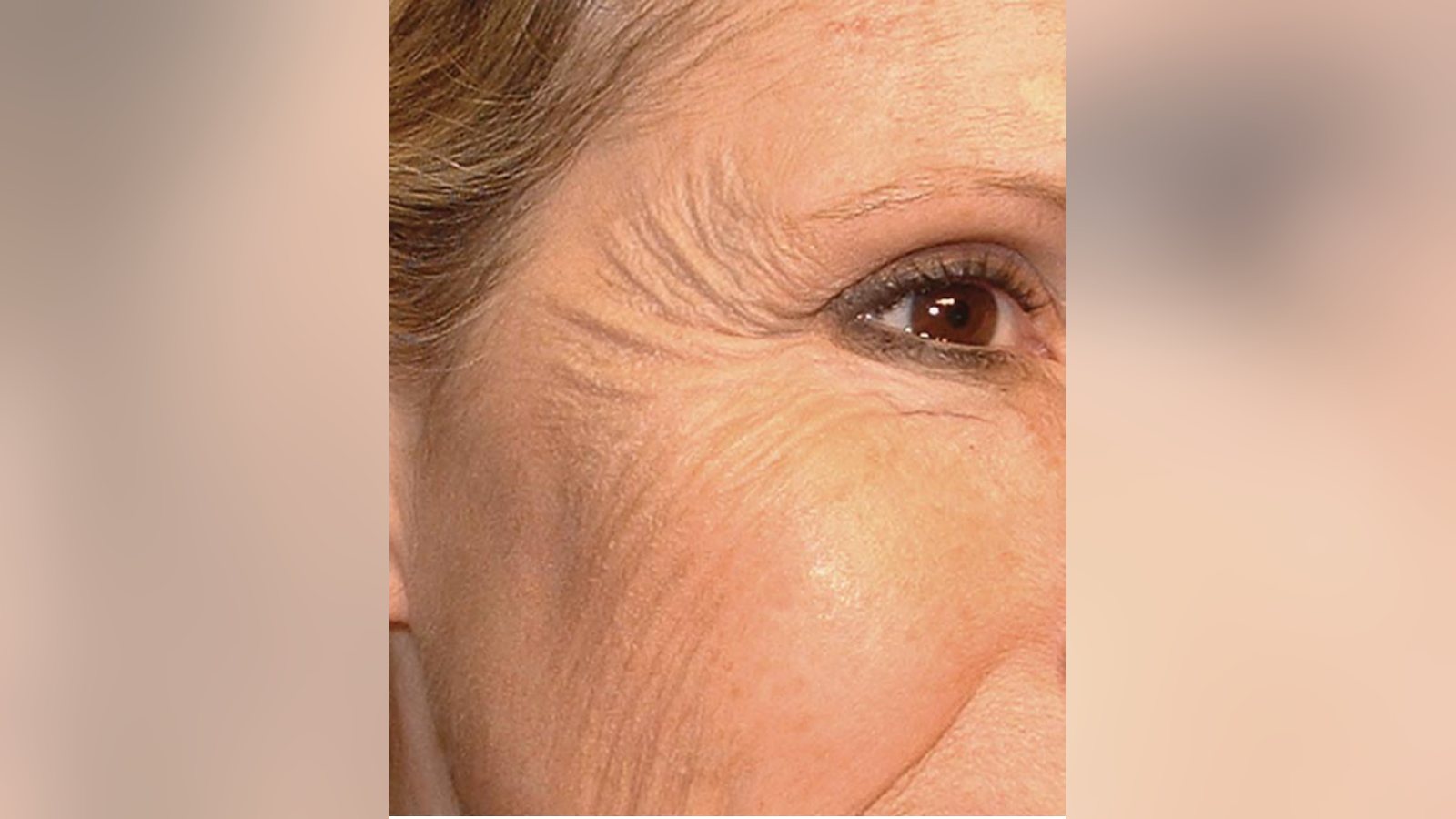
A 1:6 Attagel:Green Marble SēLr ratio will work as a fine- line wrinkle texture when used very lightly. Without affecting large wrinkles, this formula (1:6 ratio) changes the texture of the skin, which is excellent for subtle, close-up aging; even in HD. The application process is the same as with latex for stretch and stipple.
To remove the ager, the best material to use is isopropyl myristate. Ben Nye sells it under the name Remove-It-All; Premiere Products (PPI) sells it as IPM in a gel form. Either form is terrific.
Pros-Ager (the name is my invention, the formula belongs to Richard Corson) is a mixture of Pros-Aide adhesive, acrylic matte medium (I use Liquitex brand liquid), and either pure talcum powder or Cab-O-Sil to thicken the mixture slightly. Too much of either the talc or Cab-O-Sil will cause the material
Introduction to Lighting for Film & Video.
Green Screen Lighting
FREE Shipping
for All US Orders
2 DVD Combo/Package
studentfilmmakers.com/store
to remain white after it dries, which you don’t want. You want the material to dry relatively transparent so it can be used over set foundation makeup for a more natural aging technique.
Mix the Pros-Aide and matte medium 1:1 by volume. Thinner mixtures will result in finer wrinkles, whereas thicker mixtures will produce thicker, deeper wrinkles. Because Pros-Aide is part of the mix, it will dry somewhat sticky, so it will need to be powdered.
Many years ago, legendary makeup effects pioneer Dick Smith created a latex stipple formula that is still used today; at one time or another, almost everyone in the industry has used it. It’s a mixture of high-grade foam latex base, pure talc, pulverized cake makeup foundation, gelatin and water. Yum! Here’s the recipe from Richard Corson and James Glavan’s book Stage Makeup:
- 90 grams (100 ml) foam latex base
- 10 grams (5 tsp.) pure talc U.S.P.
- 6 grams (2 tsp.) loose powdered cake foundation (or pigmented powder)
- 2 grams (1/2 tsp.) Knox unflavored gelatin (or 300-bloom gelatin if you have it)
- 32 ml (3 tbsp.) boiling distilled water
- Acrylic gel medium (for medium stipple recipe)
- Pliatex casting filler from Sculpture House (for heavy stipple)
Once your mixture is prepared, you must store it in a refrigerator between uses; because it contains gelatin, it will need to be heated until it liquefies for application. This recipe can be modified to create a light wrinkler, medium wrinkler or heavy wrinkler. When you need something that will have a bit more sticking power, mix 1:1 Pros-Aide adhesive with the foam latex base.
Light recipe:
1. Mix talc, powdered foundation and gelatin in small mixing bowl
2. Add 3tbsp boiling distilled water to the powders – be sure to use distilled water; some tap water will change the pH of the latex and cause it to curdle. Add the water 1 tablespoon at a time, stirring after each, until the mixture is smooth.
3. Strain the latex through tulle or cheesecloth to remove lumps.
4. Slowly add the dissolved powder mixture to the latex, stirring quickly to avoid lumps.
5. Pour the mixture into 2oz or 3oz jars (plastic or glass); label them, including the date.
Medium recipe:
1. Combine the light recipe with either 60 grams of acrylic gel medium, or 50 grams of gel medium and 3 tablespoons of Cab-O-Sil.
2. Stir small amounts of the light stipple into the gel medium until they are thoroughly mixed.
3. Pour into small jars and label with the date.
Heavy recipe:
1. Combine one part medium recipe by volume with one part Sculpture House Pliatex Casting Filler.
2. Pour into jars and label with the date.
These should all be refrigerated after pouring into jars and sealed. Application of these formulas follows the same procedures and steps as for regular latex stipple.
Good luck, and happy aging!
Todd Debreceni began his career in entertainment with PBS while in graduate school at the University of Tennessee, and has worked at TBS in Atlanta, and 20th Century-Fox Television, Warner Bros., and Walt Disney Pictures in California. Todd has created makeup effects for many theatre productions, and is a recipient of a 2006 Denver Post Ovation Award for makeup. In addition to working in his Aurora studio, Todd conducts workshops and teaches at several Denver-area schools. His new book, “Special Makeup Effects for Stage and Screen: Making and Applying Prosthetics” has just been released by Focal Press.
FREE Exhibits Passport
If you’re passionate about creating great content, the NAB Show is the ultimate place to fi nd everything necessary to bring your vision to life. Experience a wealth of hands-on educational opportunities presented by the producers, directors and cinematographers infl uencing today’s edgiest content.
Visit the unparalleled exhibit fl oor to see, touch and test all of the technologies enabling HD and 3D. Here you will fi nd virtually every innovation driving production, editing, animation, gaming, widgets, social networking and more.
From big screen to small screen to no screen and beyond, professionals with creative passion come to the NAB Show to exchange solutions and strategies for developing award-winning content for local, national and global audiences. Join the community that shares your passion for creating excellence. For more information, visit www.nabshow.com.
www.nabshow.com
Submit Your Reel
at www.nabshow.com/submitreel today!
Keep learning filmmaking
Want more lessons like this? Join StudentFilmmakers free for live webinars with working pros, and stream on-demand filmmaking classes in cinematography, directing, screenwriting, sound and post.